Arthur Price
Arthur Price Biography
Arthur Donald Price was a Canadian sculptor, designer, and artist known for his work in wood carving, metalwork, and public sculpture commissions. Born in Edmonton, Alberta, Price attended Western Technical School where his artistic abilities earned him a bursary to study at the Ontario College of Art in the evenings. His instructors included notable Canadian artists Franklin H. Carmichael of the Group of Seven, George Pepper, and Frederick S. Haines. Price's creative interests extended beyond visual arts, as he also studied dance with Boris Volkoff and participated in theatrical productions as both a set builder and performer. He later expanded his technical skills by studying pattern-making and industrial design.
In 1943, Price joined the National Film Board of Canada as a set designer and part-time animator, working alongside renowned filmmaker Norman McLaren. It was during his tenure at the NFB that he met and married Dalila Barbeau, daughter of distinguished ethnologist and folklorist Dr. Marius Barbeau. This connection to the Barbeau family would prove significant to Price's artistic development, particularly his engagement with Indigenous art and culture. Through his travels, Price became deeply interested in Northwest Coast Indigenous art, visiting Indigenous villages where he documented traditional art forms through notes, photographs, and drawings. He played an instrumental role in establishing the Indigenous village at the University of British Columbia by arranging the purchase and relocation of totem poles, house posts, community houses, and other significant cultural artifacts.
Price established his own studio where he continued developing his wood carving skills, which became a central focus of his artistic practice. In 1950, he expanded his technical repertoire to include metalwork, beginning with wrought iron and copper before progressing to sterling silver. His expertise in large-scale sculpture was demonstrated in 1953 when he received a commission to carve two large totem poles and three additional major carvings for Jasper Park Lodge in Alberta. By 1954, Price had begun casting in aluminum, iron, and bronze, skills that enabled him to produce an extensive body of public sculpture commissions for government institutions, corporations, and industry.
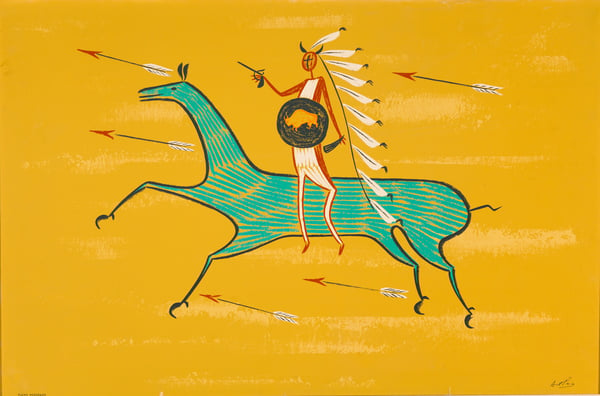
Price's involvement in the graphic arts came through his participation in the Sampson-Matthews Limited's Canadian Paintings series project from 1957 to 1963. He contributed seven works inspired by First Nations art, including "Iroquois Mask," all based on original images by First Nations and Inuit artists selected by his father-in-law, Marius Barbeau. These pieces represented interpretations of traditional Indigenous art forms across various media, demonstrating Price's commitment to preserving and celebrating Indigenous cultural heritage through contemporary artistic expression.
Throughout his career, Price achieved significant recognition within the Canadian art community. He became a member of the Sculptors Society of Canada in 1958, was elected an Associate of the Royal Canadian Academy in 1960 and advanced to full membership in 1973. He also held memberships in The Arts Club of Montreal beginning in 1958 and the American Craftsmen's Council from 1960. His works are represented in important corporate and public collections, reflecting his significant contribution to Canadian sculpture and public art. Price's career exemplified the versatility of mid-20th century Canadian artists who successfully worked across multiple disciplines while maintaining a commitment to documenting and interpreting Indigenous cultural traditions within contemporary artistic contexts.