Robert Newton Hurley
1894 - 1980
Robert Newton Hurley Biography
1894 - 1980
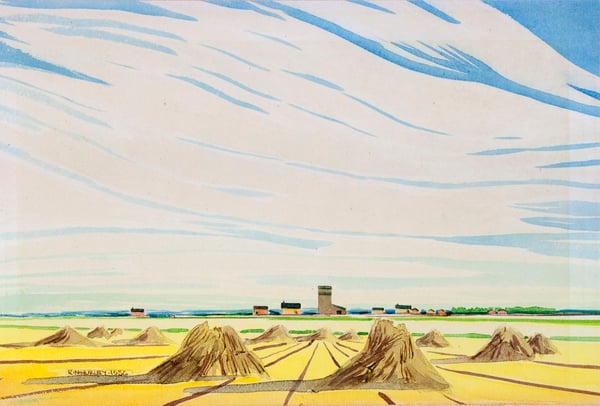
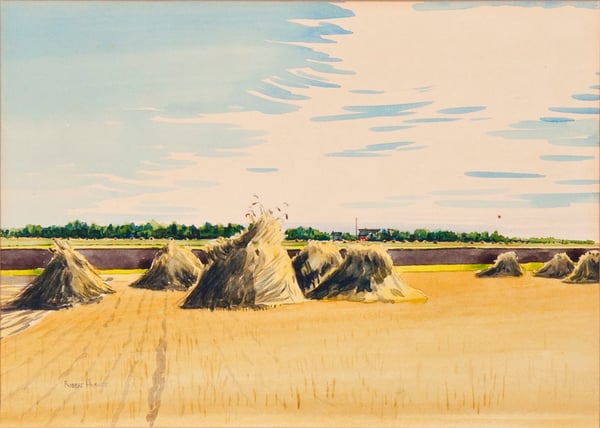
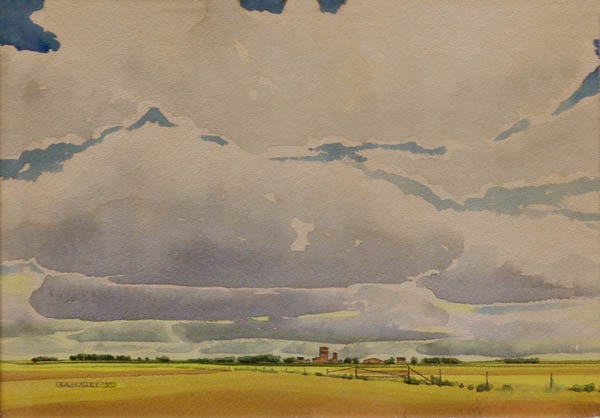
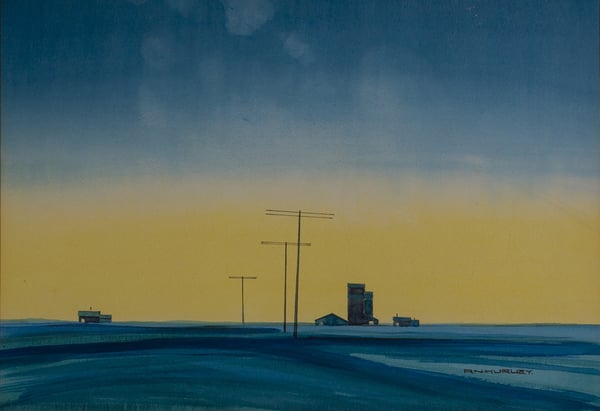
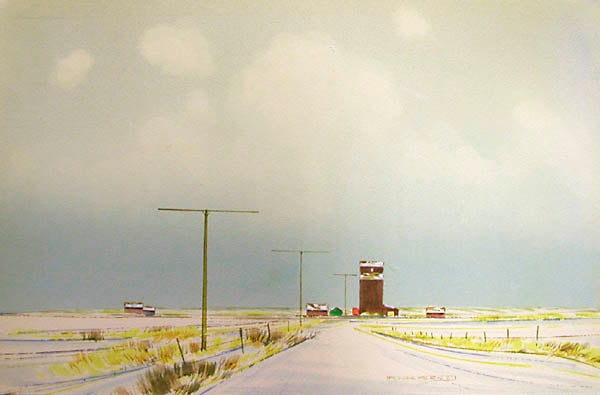
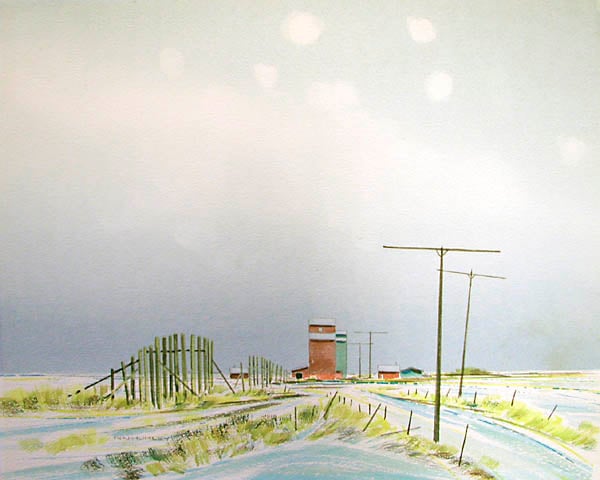
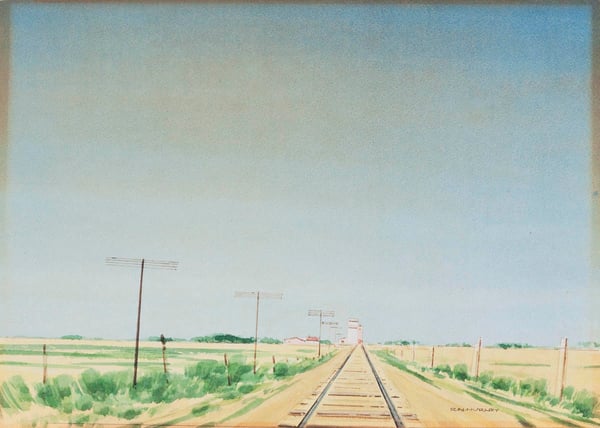
Robert Newton Hurley (1894–1980) was a British-born Canadian painter primarily known for his watercolour depictions of the Saskatchewan landscape. Born in London, England, he worked as an apprentice printer-compositor before serving in the Suffolk Regiment during World War I from 1917 to 1920. He immigrated to Canada in 1923 and initially worked for the Canadian Pacific Railway near Milden, Saskatchewan, before settling in Saskatoon in 1930. During the Great Depression, while facing unemployment, he began to paint using unconventional materials such as berry juices, newspaper, and toothbrushes.
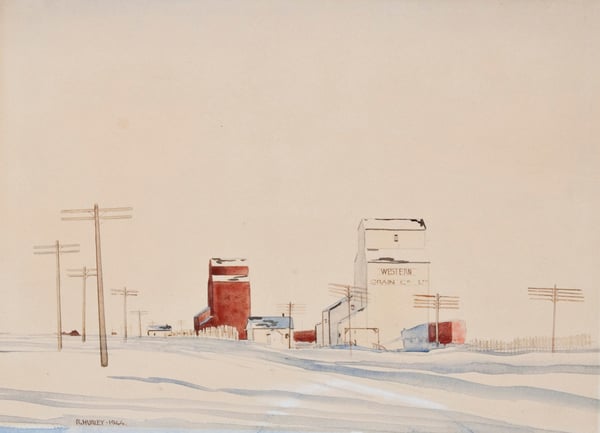
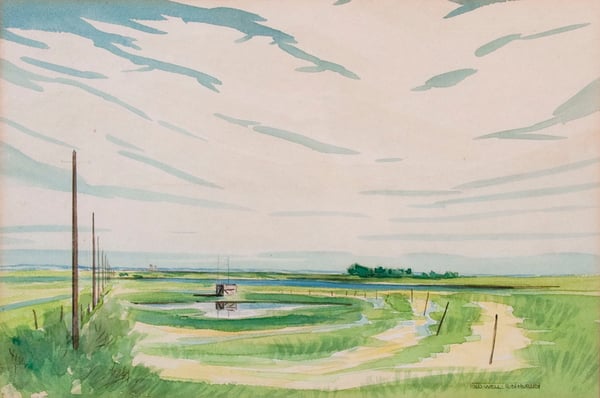
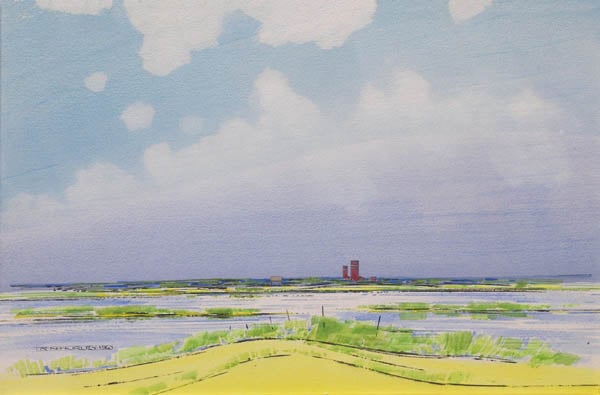
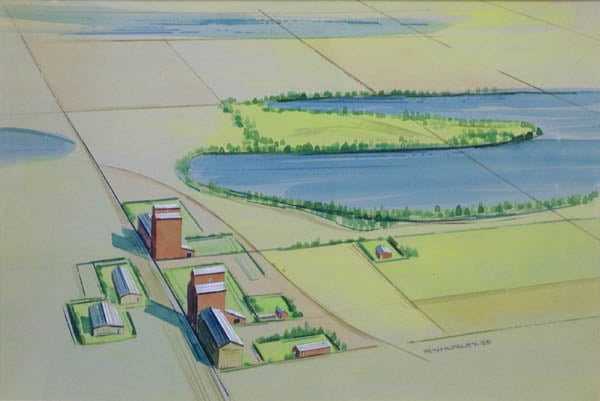
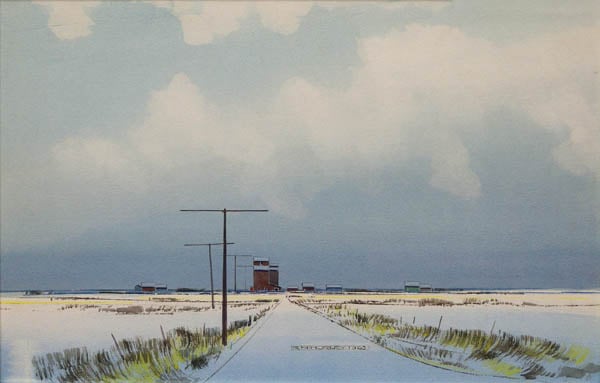
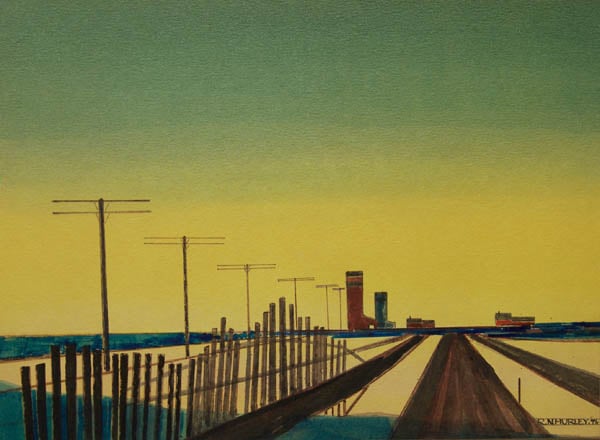
Though largely self-taught, Hurley’s formal artistic education consisted of night classes at the Saskatoon Technical Collegiate Institute from 1933 to 1935 under the instruction of Ernest Lindner. His first public showing occurred in 1935 at an exhibition in Winnipeg with the Manitoba Society of Artists. By 1940, his work had gained national attention for its distinct linear treatment of the prairie landscape, often featuring grain elevators, telephone poles, and receding roads set against vast, expansive skies. From 1942 to 1958, he held a position at the University of Saskatchewan while continuing to develop his artistic practice.
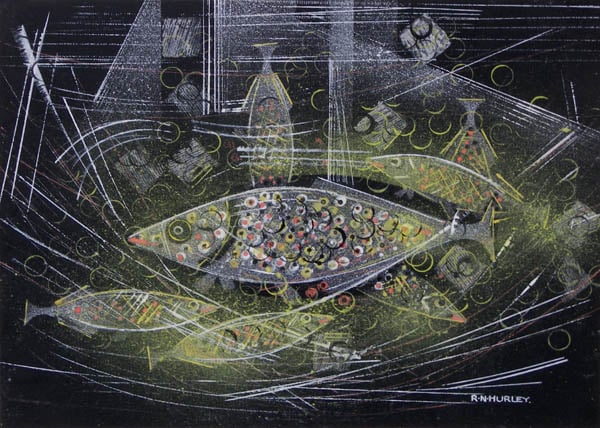
In 1958, Hurley received an artist’s grant from the Government of Saskatchewan, which allowed him to pursue painting on a full-time basis. His career was marked by a prolific output of watercolours and experimental works he referred to as "Hurleyniks," which involved pressing everyday objects like string and cardboard into paint to create transfers. His work was included in the 1971 exhibition "Watercolour Painters from Saskatchewan" at the National Gallery of Canada. In 1980, he was awarded an honorary degree from the University of Regina.
Hurley moved to Victoria, British Columbia, in 1963, where he remained active as an artist until his death in 1980. His paintings are represented in the permanent collections of several public institutions, including the National Gallery of Canada, the MacKenzie Art Gallery in Regina, the Remai Modern in Saskatoon, and the Beaverbrook Art Gallery in Fredericton.