Takao Tanabe
RCA, CM, OBC
Takao Tanabe Biography
RCA, CM, OBC
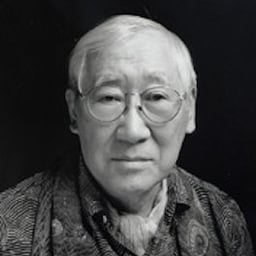
Takao Tanabe was born on September 16, 1926, in Seal Cove, a small fishing village in what is now part of Prince Rupert, British Columbia. The fifth of seven children, he was born to Japanese immigrants Naojiro Izumi and Tomie Tanabe in a predominantly Japanese Canadian community where most residents made their living as fishers. His father operated a commercial fishing boat and his mother worked in the local cannery. In 1937, when Tanabe was eleven, the family moved to Vancouver, where he continued his schooling. His early life was dramatically altered by the events of World War II. After the Japanese attack on Pearl Harbor in December 1941, the Canadian government declared war on Japan and invoked the War Measures Act, authorizing the mass displacement and internment of approximately 22,000 Japanese Canadians deemed "enemy aliens."
In 1942, Tanabe and his family were forced to leave the coast for Lemon Creek in southeastern British Columbia, where they were expected to build their own internment camp. Then a teenager, Tanabe's schooling ended abruptly and he began intense physical labor, helping his father construct and weatherproof camp structures, applying tar to roofs, and harvesting logs to extend their small cabin. After the war ended, Japanese Canadians were prevented from returning to the Pacific coast and were given limited options: resettle east of the Rocky Mountains or be deported to Japan. In 1944, Tanabe joined some of his older siblings in Winnipeg, where they worked as indentured farm laborers. He worked in a warehouse, cut peat in southeastern Manitoba, and spent a summer in an iron foundry, but soon realized he was not suited for a life of physical labor.
By 1946, aware that his career prospects were limited by his truncated education and seeking an alternative to completing high school, Tanabe discovered that the Winnipeg School of Art would accept students who had not finished high school. Although he had no experience with fine art, he enrolled in an evening sign painting class, viewing it as practical training that would provide employable skills. However, he became fascinated by the idea that art could exist outside of a commercial context and spent the next three years as a full-time student from 1946 to 1949. During his first two years, he offset tuition costs by working in the foundry on weekends, and in his final year worked part-time as the school's janitor. In 1947, the school hired artist Joseph Plaskett, who had just completed study with German American painter Hans Hofmann in New York. Plaskett became an important mentor and lifelong friend, introducing Tanabe to the work of Pablo Picasso and Henri Matisse.
From 1951 to 1952, Tanabe studied at the Brooklyn Museum Art School in New York with Hans Hofmann and Reuben Tam. Returning to Vancouver in 1952, he settled there and was well received, exhibiting at the Vancouver Art Gallery. In 1953, he received an Emily Carr Scholarship to travel to Britain—news delivered to him in a phone call from Lawren Harris—and studied at the Central School of Arts and Crafts in London from 1953 to 1954, traveling widely in Europe during this period. That same year, he completed his first commissioned mural for the University of British Columbia Art Gallery entitled "The World We Live In." From 1959 to 1961, Tanabe studied Japanese ink painting (sumi-e) and calligraphy at Tokyo University of Arts on a Canada Council Scholarship, working with Ikuo Hirayama and Yanagida Taiun, a practitioner of single-stroke Zen calligraphy on a large scale. Although beneficial, the trip affirmed his affinity for the West Coast.
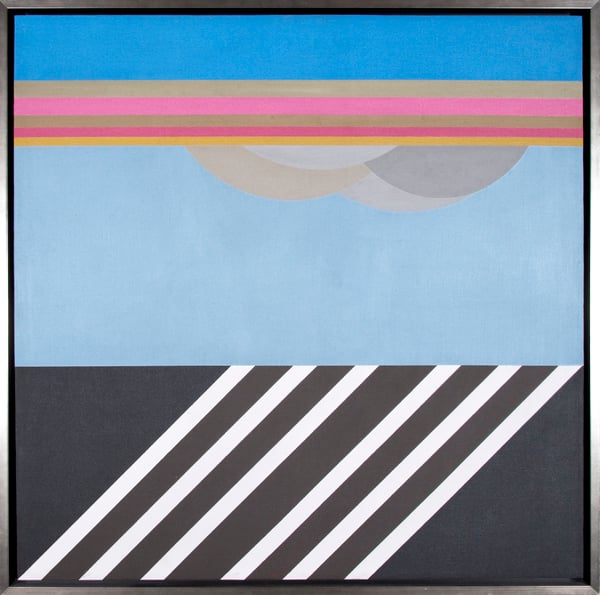
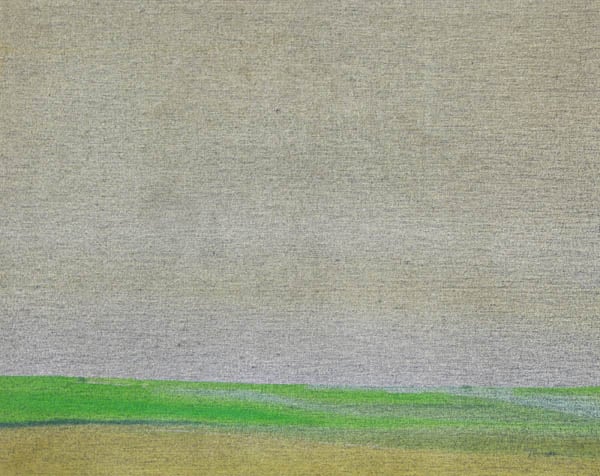
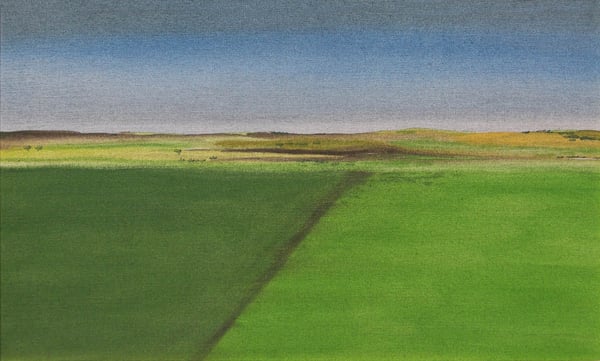
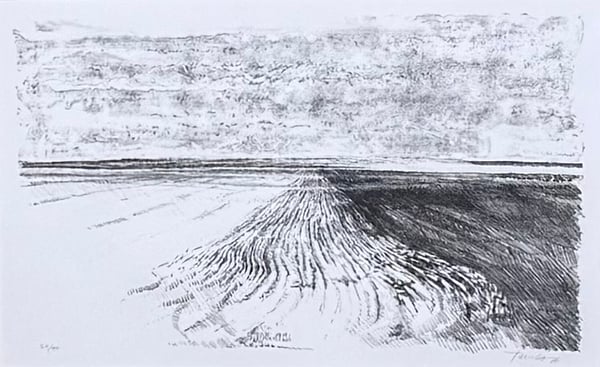
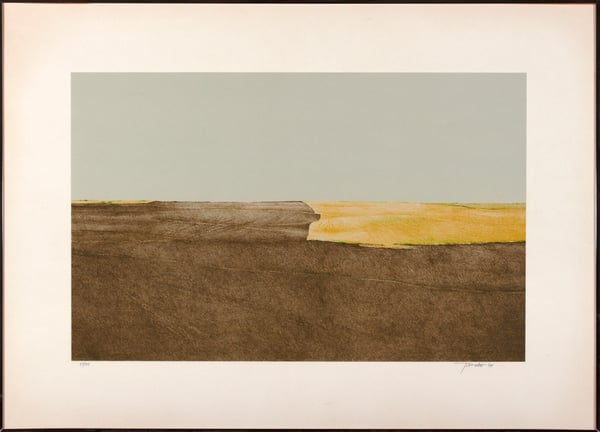
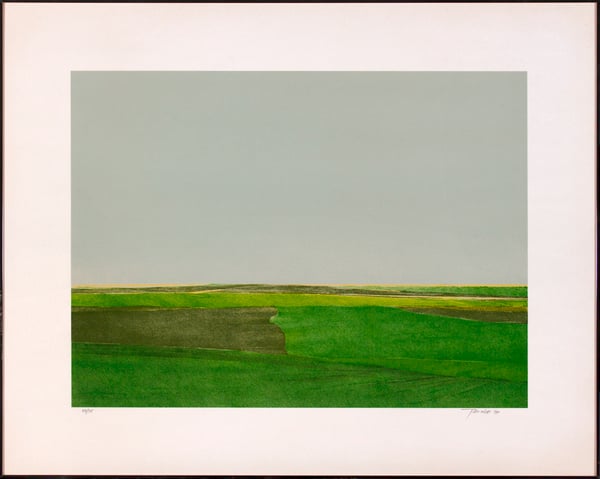
From 1961 to 1968, Tanabe taught at the Vancouver Art School, becoming head of the Commercial Art department. During this period, he became well-established in the Vancouver art world and painted large-scale murals in Ottawa, Winnipeg, Regina, and Edmonton. His work evolved through several distinct phases: in the late 1950s, his "inscapes" explored memories of lit interiors painted abstractly with calligraphic signs, often blurring the line between figurative and abstract painting. In 1968, he worked in Philadelphia before moving to New York City in 1969, where he lived until 1972 and painted hard-edge geometric abstracts in strong colors. From 1973 to 1980, Tanabe headed the art program and was artist-in-residence at the Banff Centre for the Arts (formerly the Banff School of Fine Arts), bringing new vitality to the painting program. During this period, he consciously considered landscapes as a subject while progressively eliminating references to the specific, developing a well-known series of prairie paintings.
In 1980, Tanabe returned to British Columbia to paint full-time, settling on Vancouver Island where he continues to live and work. He evolved from an abstract painter into one of Canada's most important contemporary landscape painters, developing a minimalist style uniquely his own. His landscapes of the British Columbia coast eliminate non-essential details and man-made elements such as cars, telephone poles, and architectural structures, creating serene compositions dominated by strong horizons and large expanses of water and sky. His work is appreciated for its transcendent light and atmosphere, fluctuating from delicate and misty to stormy and brooding. As Tanabe has stated, he favors "the grey mists, the rain-obscured islands and the clouds that hide the details," viewing the typical weather of the coast as a metaphor for life itself.
In 2005, a major retrospective of his work was jointly organized by the Art Gallery of Greater Victoria and the Vancouver Art Gallery, touring nationally to venues including the McMichael Canadian Art Collection and the Art Gallery of Nova Scotia. Tanabe's work is held in numerous public collections including the National Gallery of Canada, the Vancouver Art Gallery, the Art Gallery of Greater Victoria, the Art Gallery of Ontario, the Glenbow Museum, and the Tate Museum in the United Kingdom. He is a member of the Royal Canadian Academy of Arts and has received numerous honors including the Order of British Columbia (1993), appointment as a Member of the Order of Canada (1999), the Governor General's Award in Visual and Media Arts (2003), and the Audain Prize for Lifetime Achievement in the Visual Arts (2013).