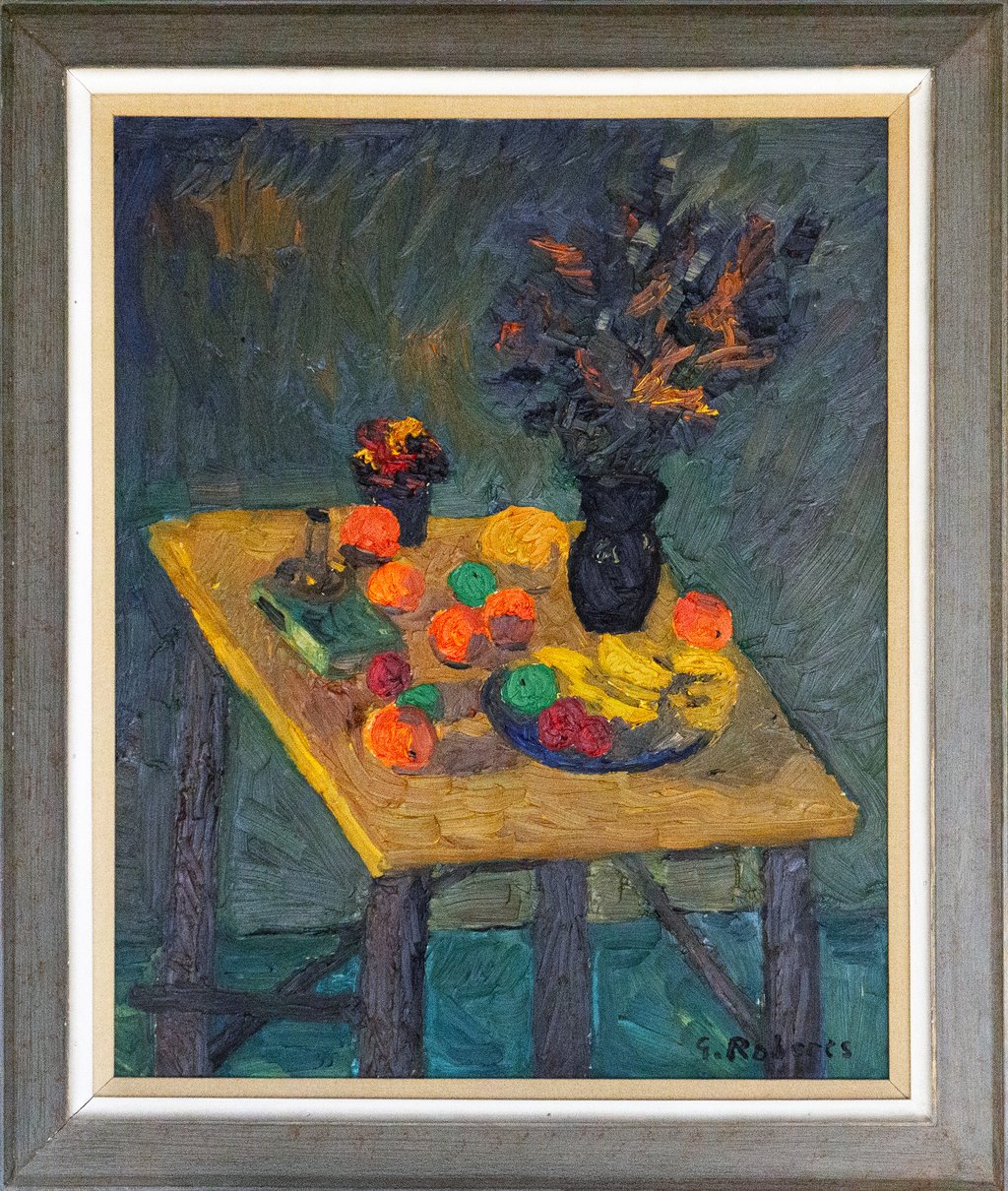
Still Life with Fruit and Flowers
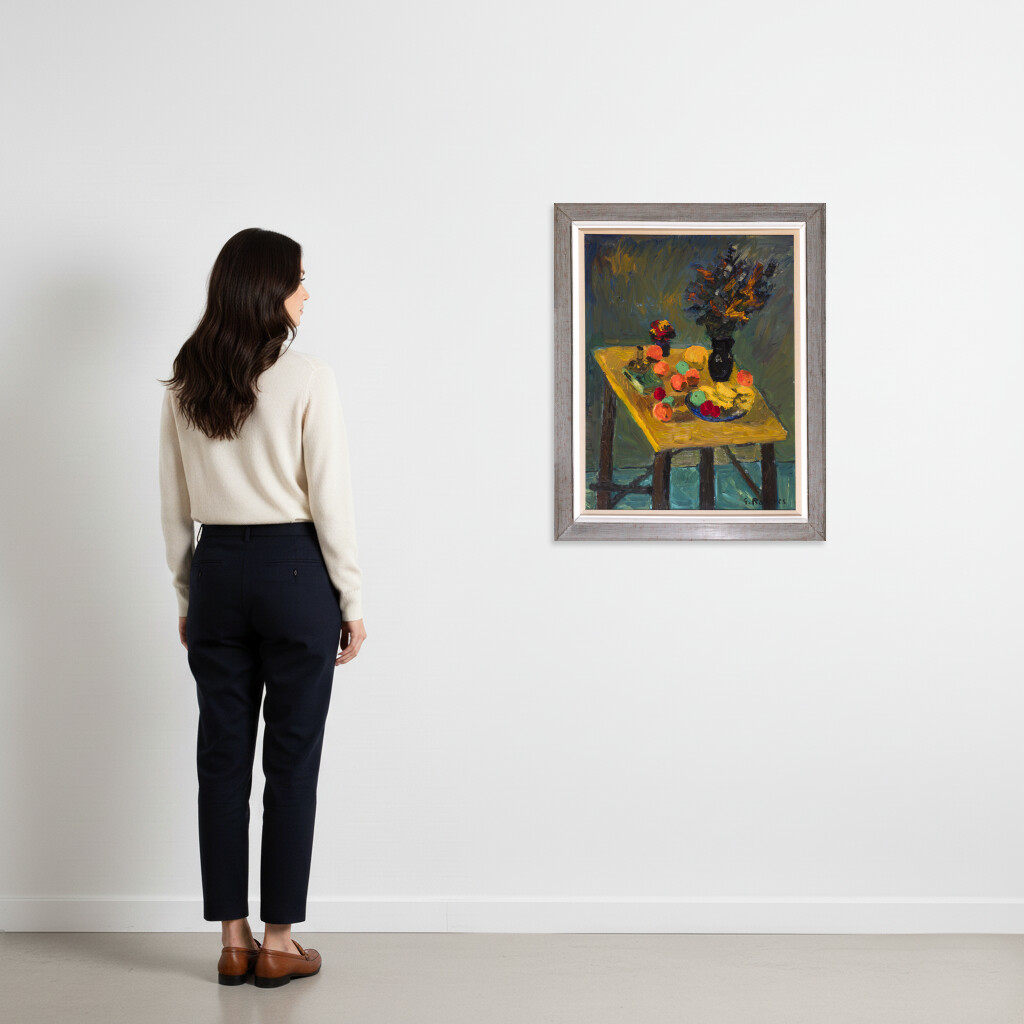
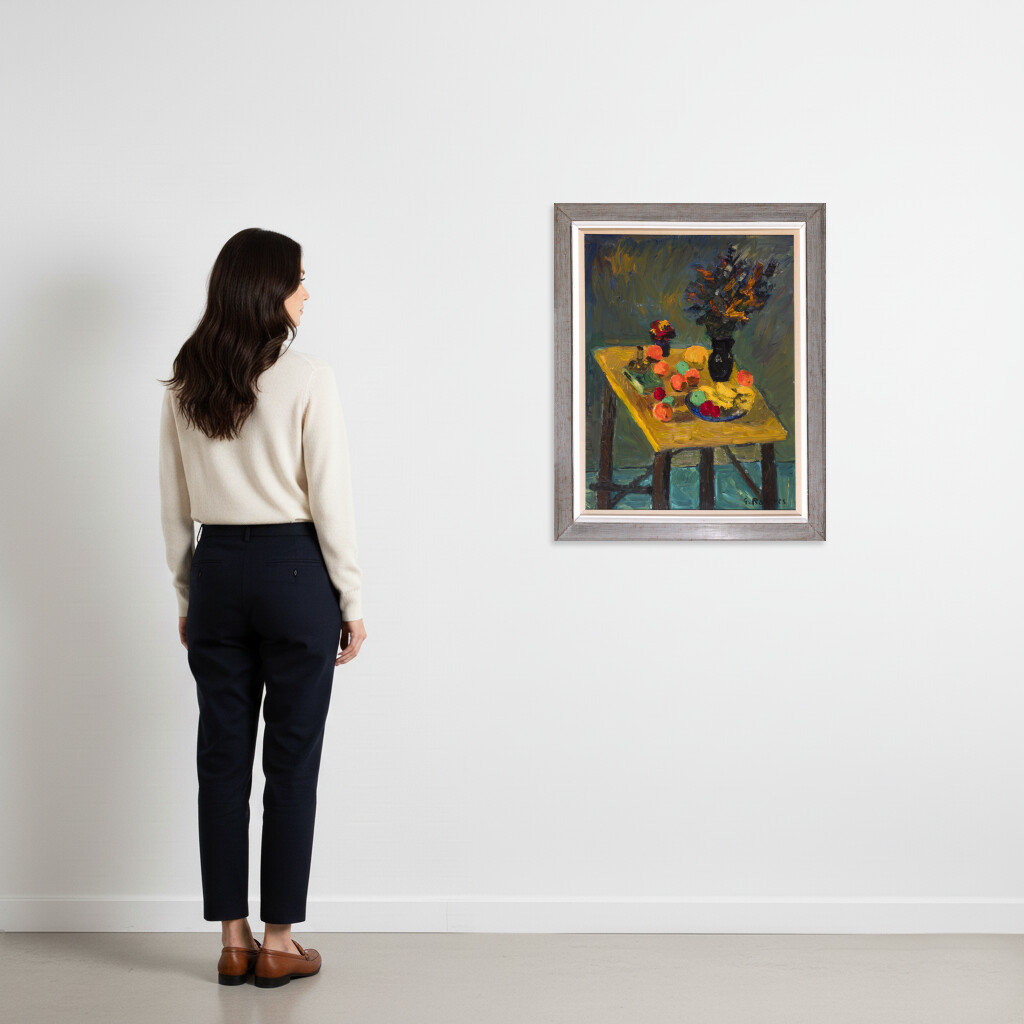
44 x 37.5 in (111.8 x 95.3 cm) including frame
Goodridge Roberts was one of Canada’s most versatile modernists, achieving equal distinction in landscape, figure, and still-life painting. While he is celebrated for his vast, summer landscapes of the Laurentians and Eastern Townships, Roberts generally worked indoors during colder months where he turned his attention inward, resolving complex compositions within the controlled environment of his home and studio. These interior works allowed him to experiment with the structural relationships between objects, light, and color, far removed from the transience of the outdoors.
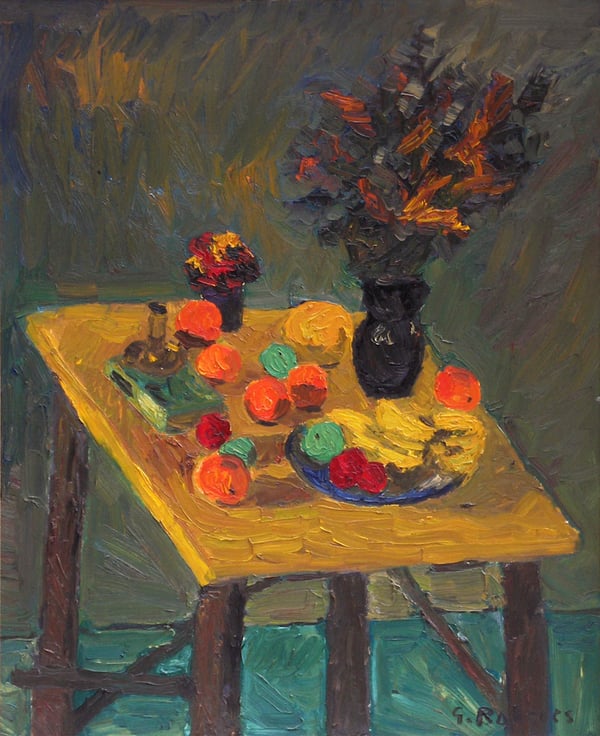
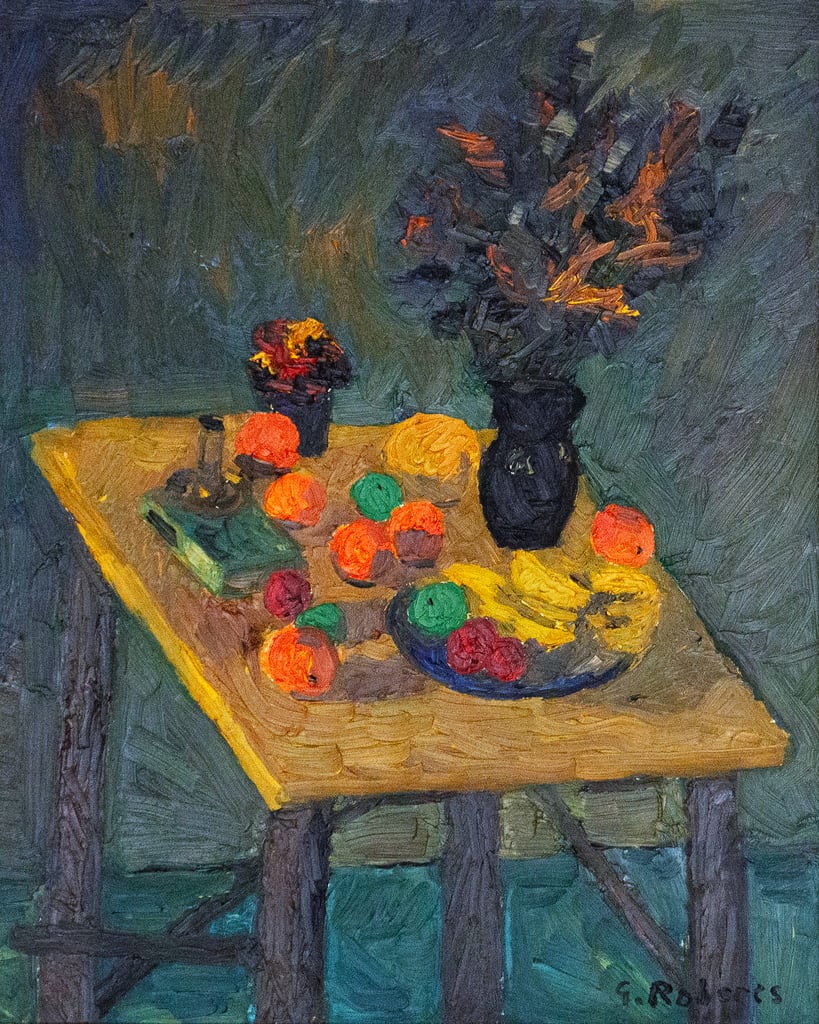
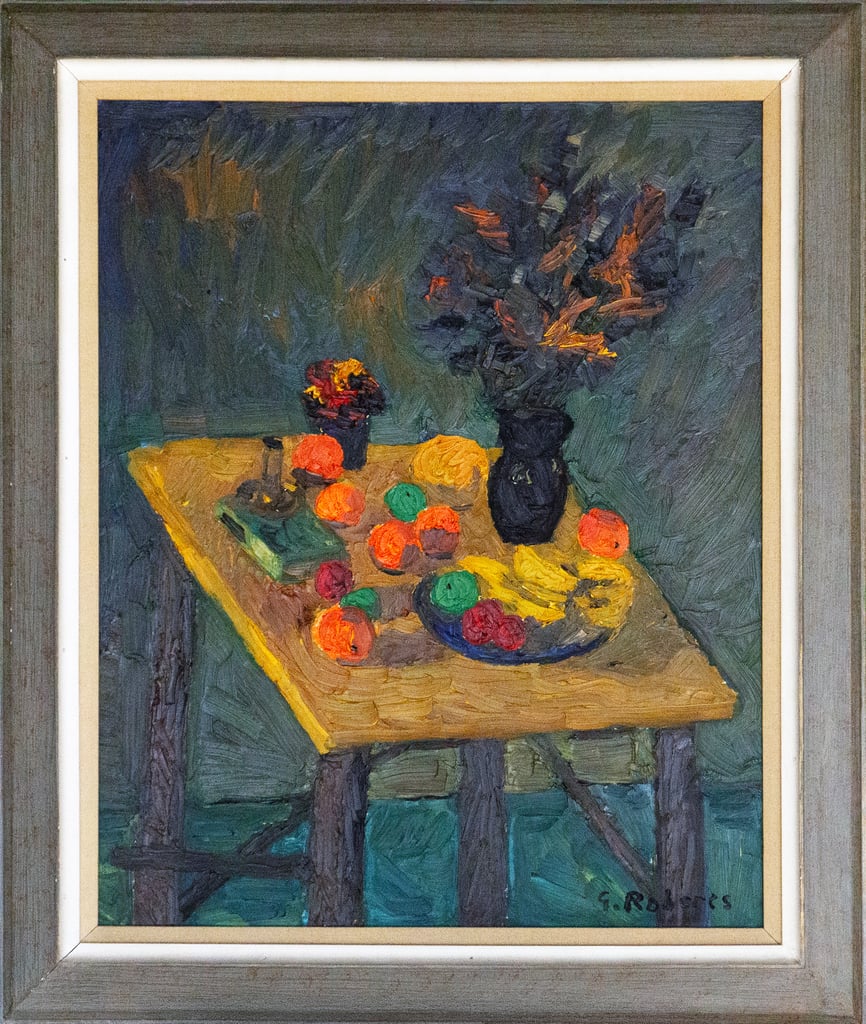
Still Life With Fruit and Flowers (circa 1961) is a vibrant example of Roberts’ ability to transform everyday objects into a monumental arrangement of form and light. A brightly lit table dominates the composition, acting as a stage for a rhythmic array of fruit, books, and flowers. The work is characterized by Roberts' signature thick, confident brushstrokes and a rich, expressive palette. The deep greens and oranges of the fruit contrast sharply with the warm ochre of the tabletop, while the dark, vertical mass of the floral arrangement provides a structural anchor for the piece.
In this work, the studio interior becomes a playground for color theory and balance. The simplified, blocky application of paint emphasizes the physical presence of the objects, a technique that reflects Roberts’ deep admiration for the French post-impressionist tradition. Rather than a mere domestic record, this painting is a sophisticated exercise in spatial organization. The tension between the heavy impasto and the carefully considered placement of each element showcases why Roberts remains a central figure in Canadian mid-century art, proving that a tabletop in a Westmount studio could hold as much dramatic power as any wilderness vista.
William Goodridge Roberts
1904 - 1974 RCA
William Goodridge Roberts was a prominent Canadian painter recognized for his contributions to landscape, still life, and figure painting. Born on September 24, 1904, in Bridgetown, Barbados, he moved to Fredericton, New Brunswick, at a young age. His family background was literary, as his father was the poet Theodore Goodridge Roberts and his uncle was the poet Charles G.D. Roberts. Roberts initially pursued artistic training at the École des beaux-arts de Montréal in 1923, before continuing his studies at the Art Students League of New York, where he studied under John Sloan and Max Weber.
Throughout the 1930s, Roberts settled in Montreal and became an active participant in the city's burgeoning modern art community. He joined the Contemporary Arts Society (CAS) and was a founding member of the Canadian Group of Painters (CGP). His practice during this period focused on developing a distinct approach to the Canadian landscape, moving away from the nationalistic styles prevalent at the time toward a more personal, contemplative interpretation of nature. He drew significant inspiration from the topography of the Laurentian Mountains and the Georgian Bay region.
Roberts held various teaching positions throughout his career, which shaped his influence on subsequent generations of Canadian artists. From 1930 to 1932, he taught at the Queen’s University summer school, and later, he served as a professor at the École des beaux-arts de Montréal from 1939 to 1943. In 1959, he was appointed the first artist-in-residence at the University of New Brunswick in Fredericton, a role he maintained until 1960. His pedagogical approach emphasized the importance of observation and the structural integrity of the painted composition.
His later career was characterized by a focus on still life subjects and figure studies, often executed with a refined palette and an interest in the tactile qualities of paint. His work received broad institutional recognition, and in 1952, he was selected as one of four artists to represent Canada at the Venice Biennale. Roberts continued to paint and exhibit until his death in Montreal on January 28, 1974. Today, his work is preserved in the permanent collections of major public institutions, including the National Gallery of Canada and the Art Gallery of Ontario.
More work by William Goodridge Roberts