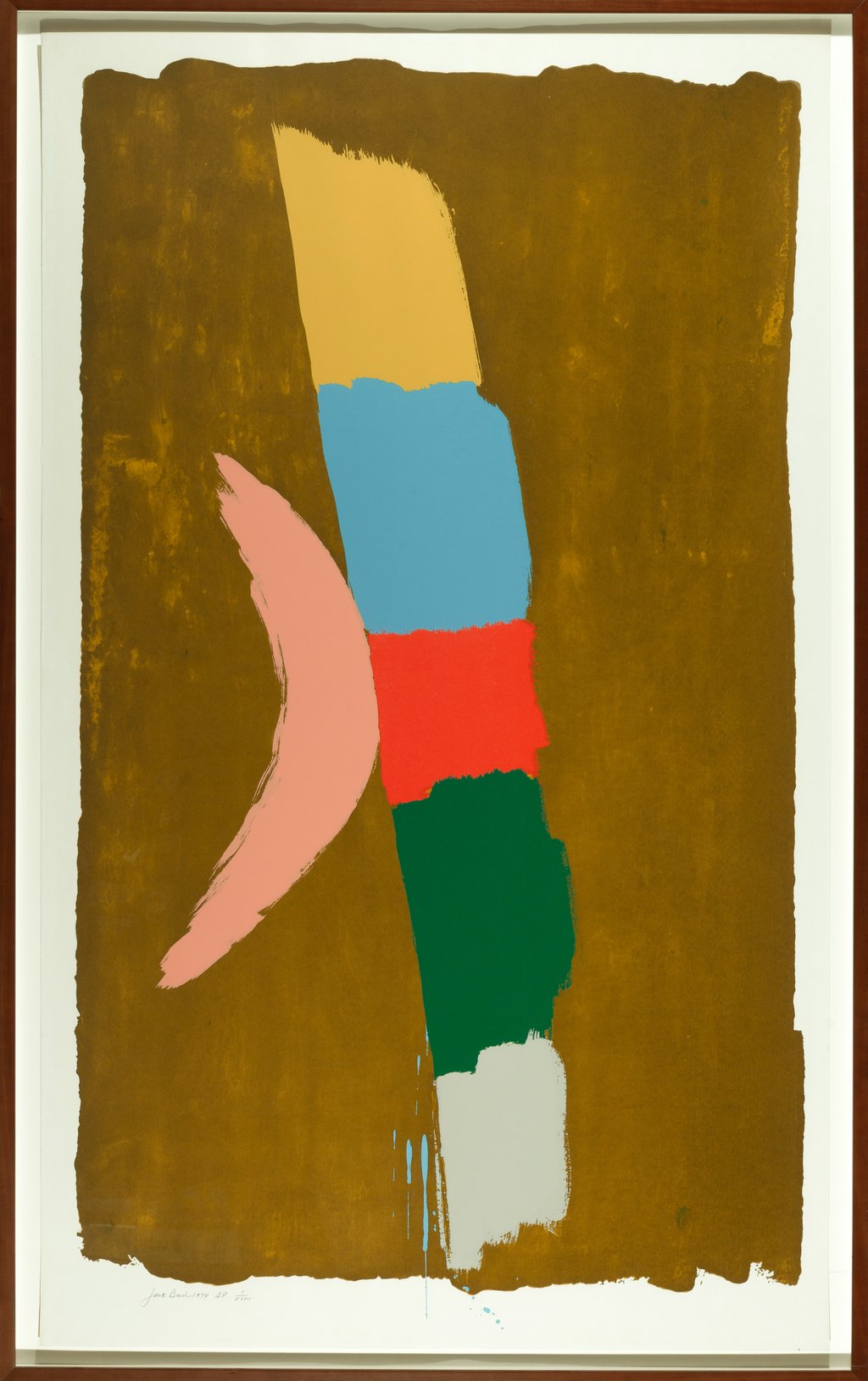
Lincoln Centre
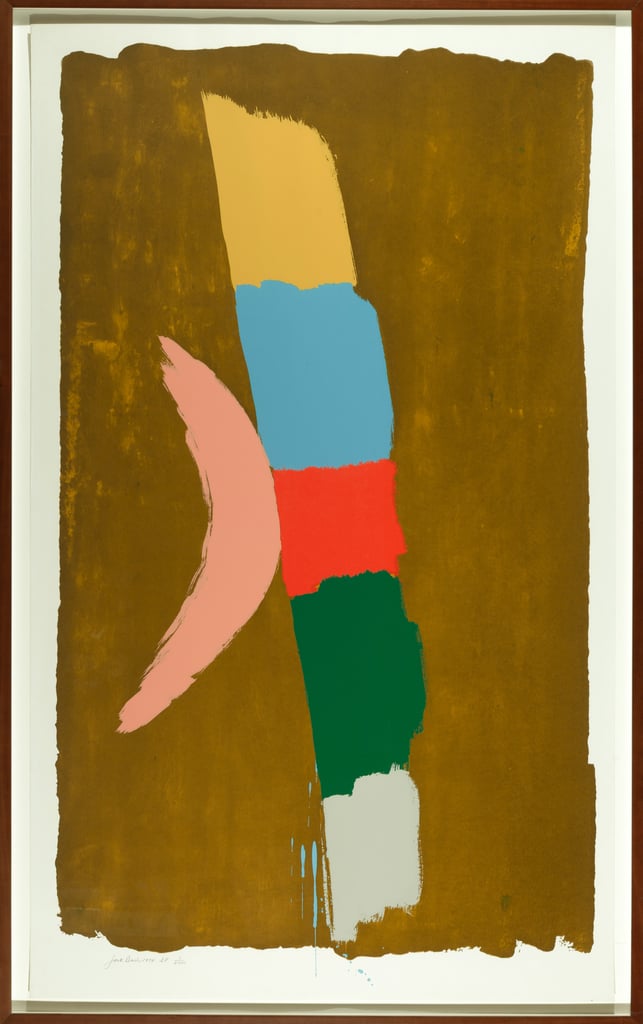
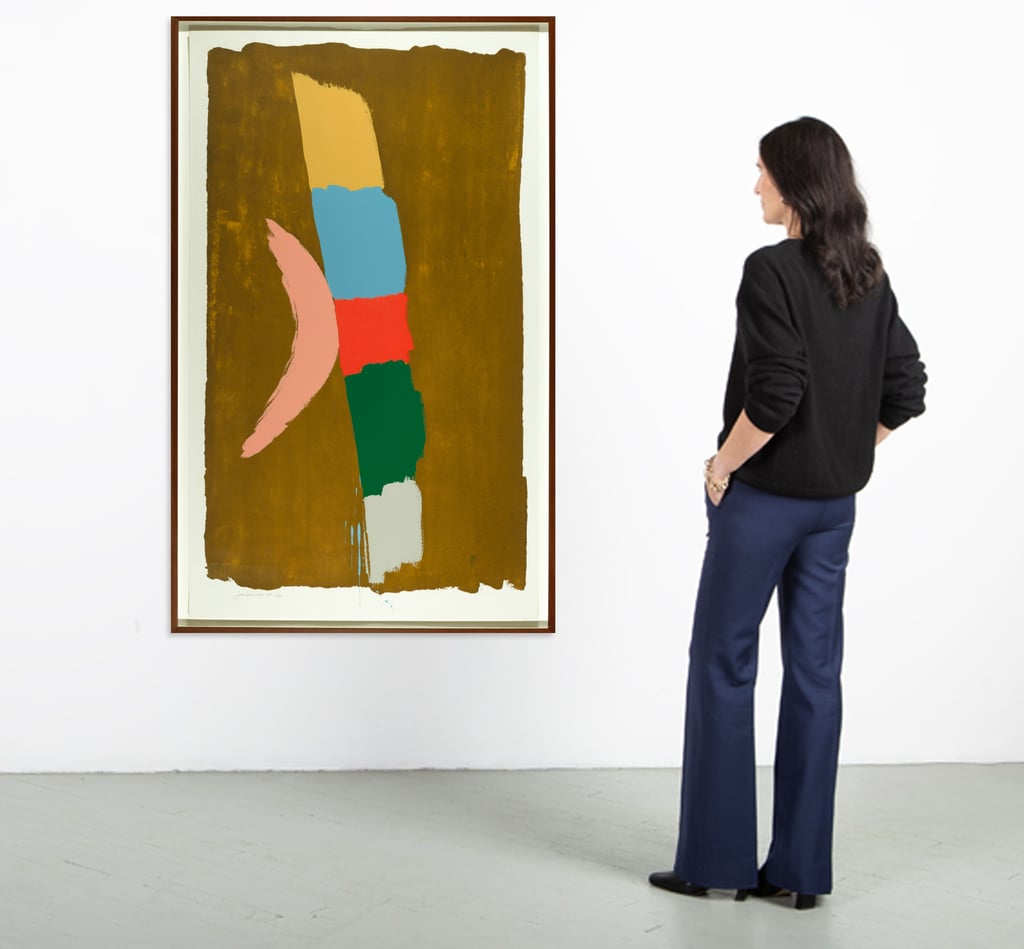
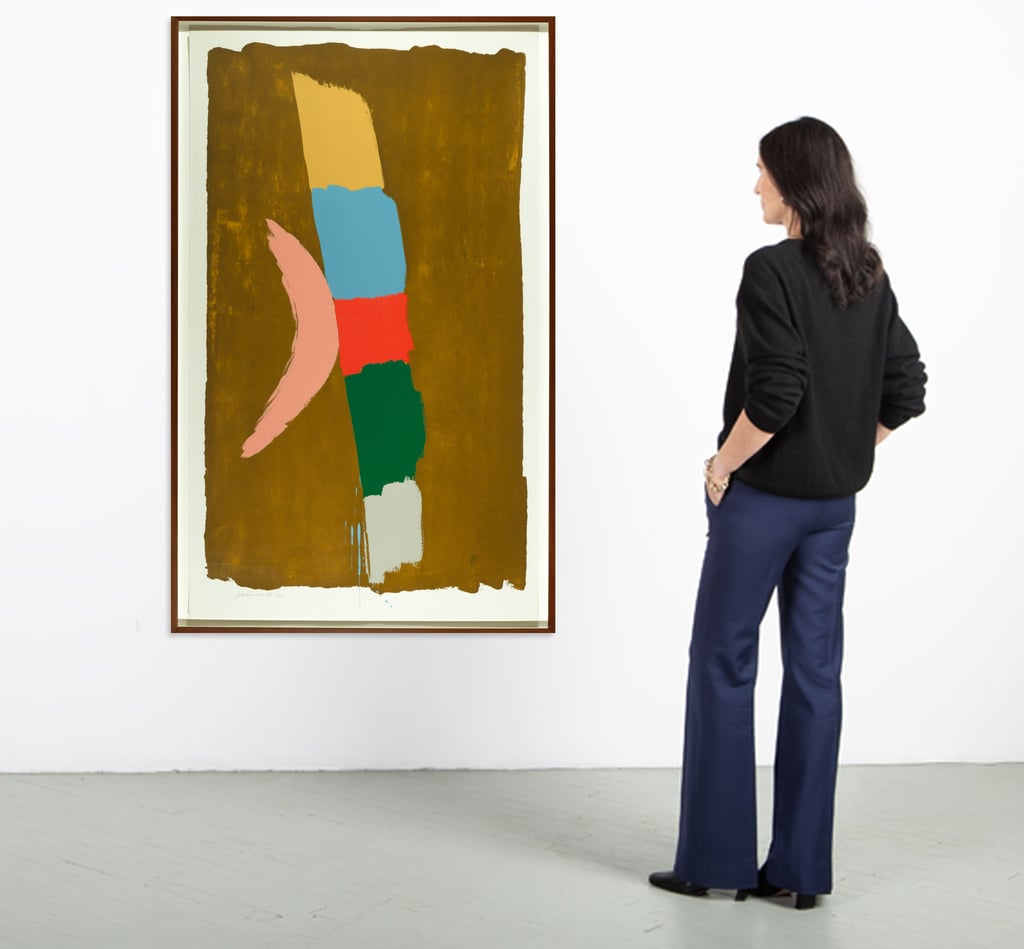
65 x 40.5 in (165.1 x 102.9 cm) including frame
Jack Bush is celebrated as a central figure in the Post-Painterly Abstraction movement and one of the most internationally recognized Canadian artists of the 20th century. A member of the Toronto-based group Painters Eleven, Bush’s career was transformed by his friendship with influential American art critic Clement Greenberg. Under Greenberg’s encouragement, Bush moved away from the heavy textures of Abstract Expressionism toward "Color Field" painting, where the focus shifted to the emotional and spatial impact of pure color. His work is characterized by a joyous, often musical sensibility, utilizing simple, hand-drawn shapes to explore the relationships between vibrant hues and open space.
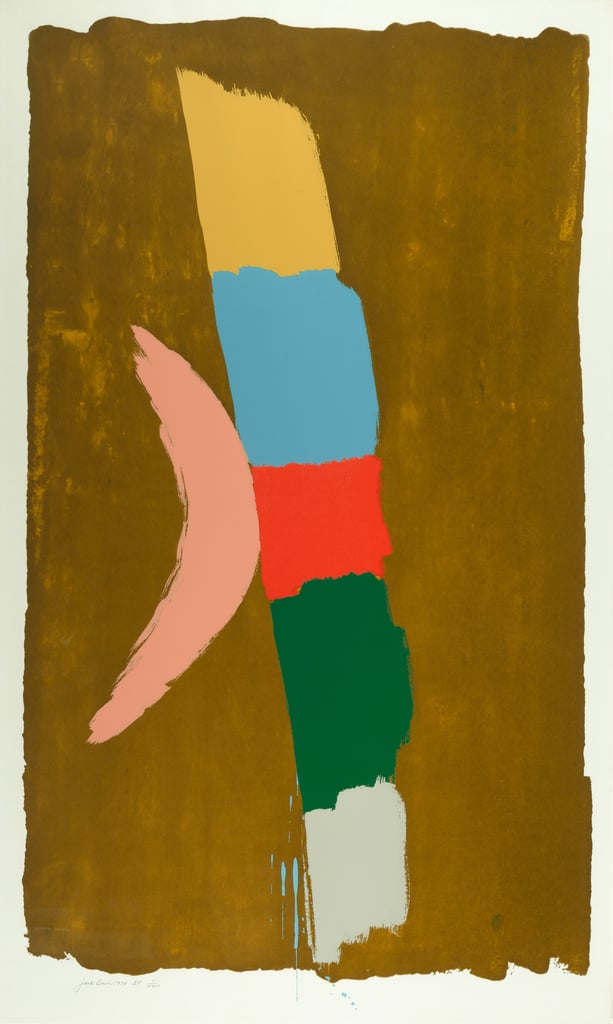
Lincoln Center (1974) is a definitive example of Bush’s late-career mastery, created during a period when he was translating his large-scale canvas motifs into the medium of printmaking. The composition features a stack of saturated color blocks—a signature Bush element—set against a muted, earthy background that allows the primary tones to vibrate. The inclusion of the sweeping pink "crescent" shape provides a rhythmic counterpoint to the vertical column, suggesting the artist’s frequent inspiration from jazz and botanical forms. This large-format silkscreen reflects the technical precision of his later years, capturing the spontaneous energy of his brushwork while maintaining the clean, flat surfaces essential to his aesthetic.
Jack Bush
1909 - 1977 CSPWC, OSA, RCA
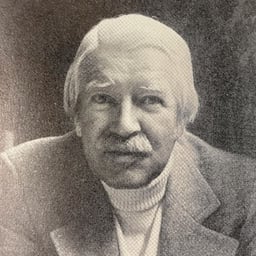
Jack Hamilton Bush was a Canadian abstract painter and a significant figure in the development of Canadian modernism. Born in Toronto, Ontario, on March 20, 1909, Bush initially pursued a career in commercial art. He studied at the Art Association of Montreal from 1926 to 1928 under Charles Maillard and Eduard Vysekal. For several decades, he balanced his career as a successful commercial illustrator with his practice in fine art, a discipline that informed his technical precision and understanding of composition.
In the early 1950s, Bush began to transition away from landscape and representational painting toward abstraction. In 1953, he co-founded the group Painters Eleven, an association of Toronto-based artists dedicated to promoting abstract art in Canada. His work during this period showed the influence of Abstract Expressionism. Following an introduction to American art critic Clement Greenberg in 1957, Bush refined his approach, moving toward the style of Colour Field painting. He focused on the expressive potential of pure colour, creating works characterized by thin paint application and distinct areas of tone.
Throughout his career, Bush maintained active roles in several professional organizations. He was a member of the Ontario Society of Artists (OSA), the Canadian Society of Painters in Water Colour (CSPWC), and the Royal Canadian Academy of Arts (RCA). His work was included in significant exhibitions at public institutions, including a major retrospective organized by the Art Gallery of Ontario and the National Gallery of Canada in 1976.
Bush continued to refine his painting technique until his death in Toronto on January 24, 1977. His artistic legacy is documented in the permanent collections of major public institutions, including the National Gallery of Canada, the Art Gallery of Ontario, and the Montreal Museum of Fine Arts. His contribution to the evolution of abstraction in Canada is recognized through his systematic exploration of colour and form.