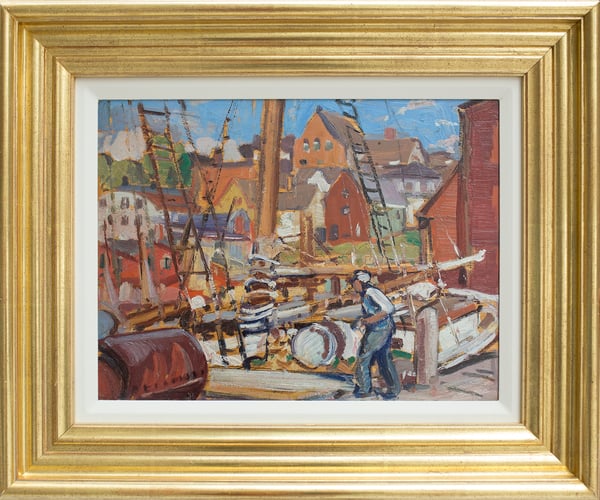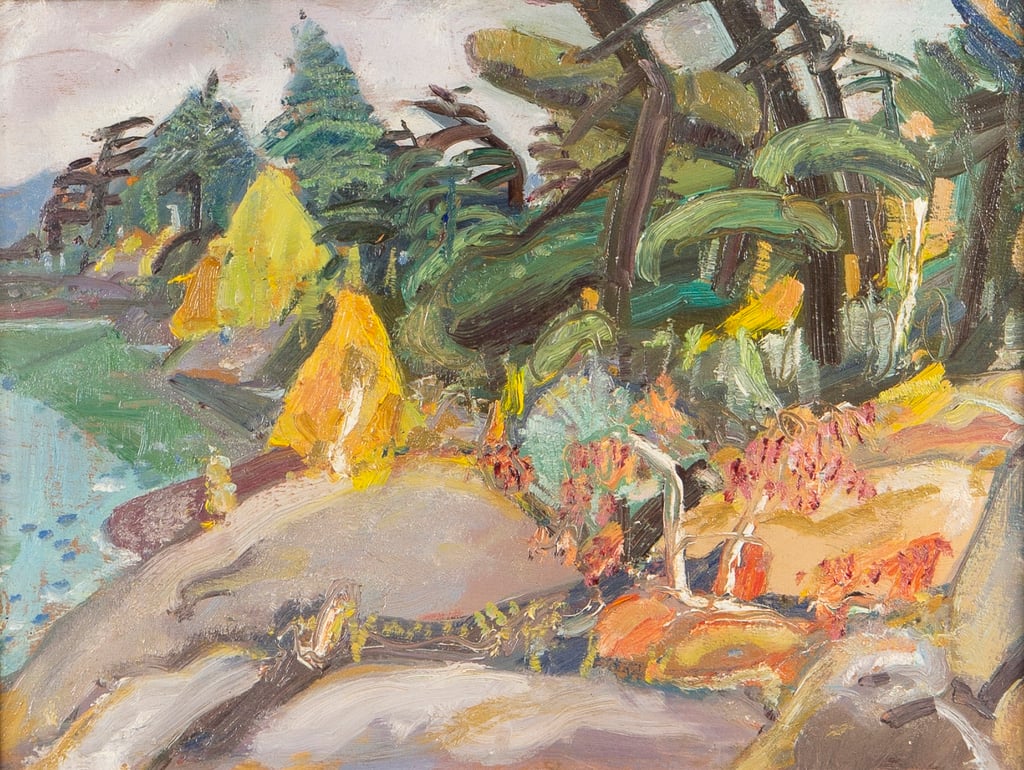
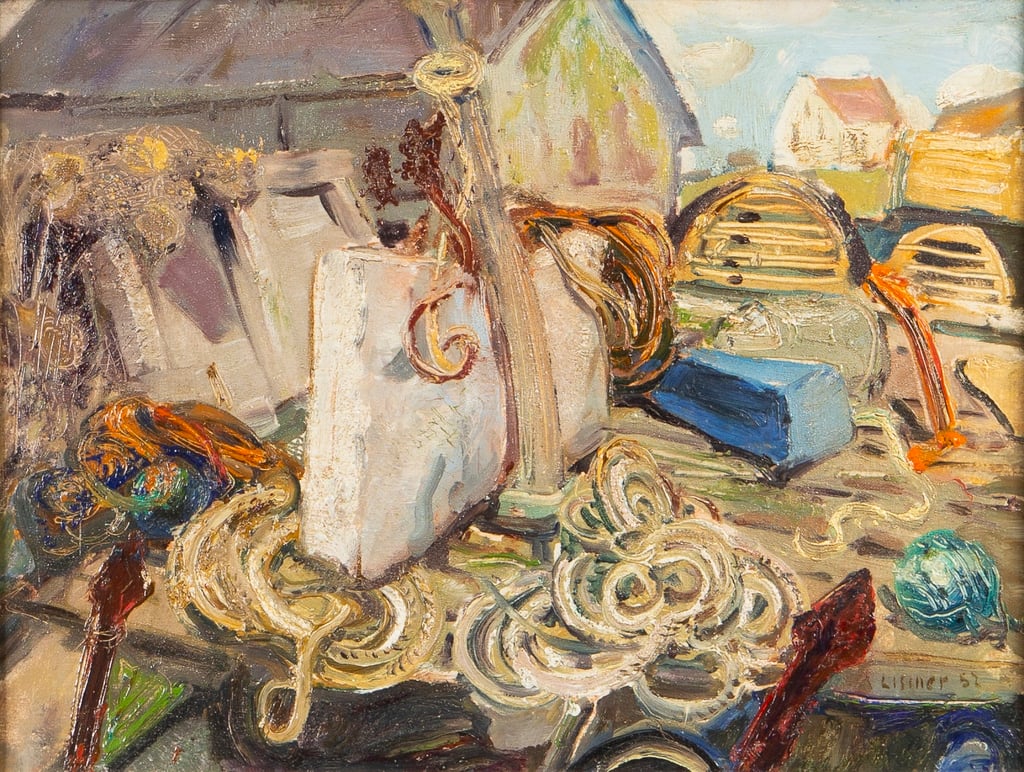
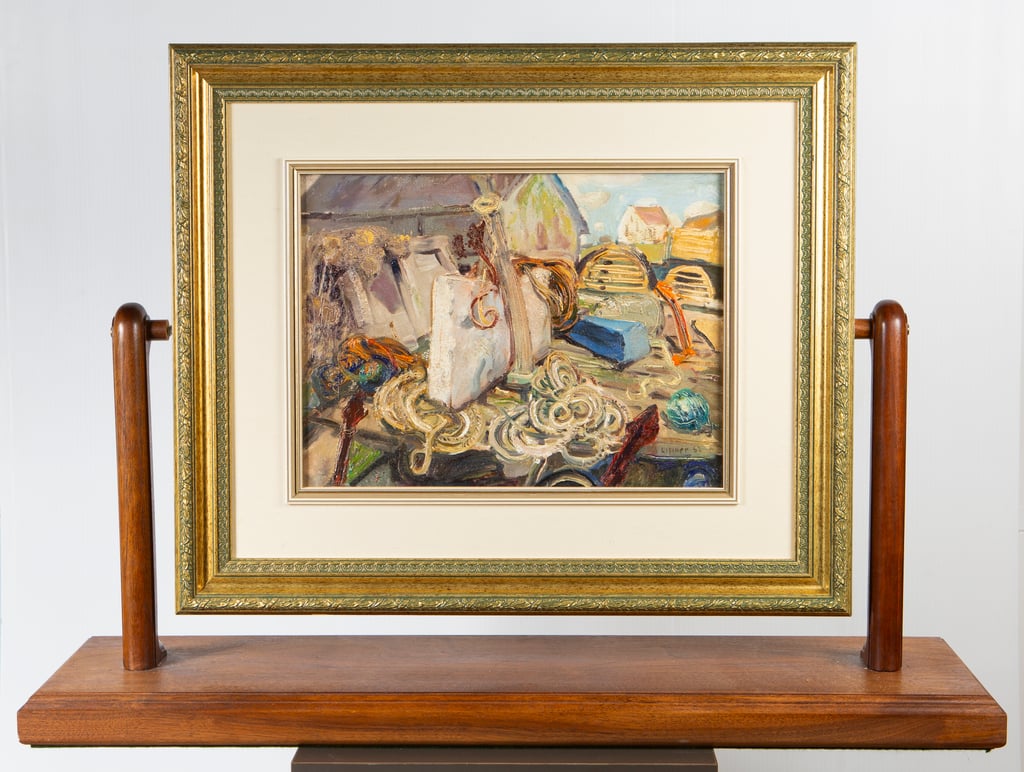
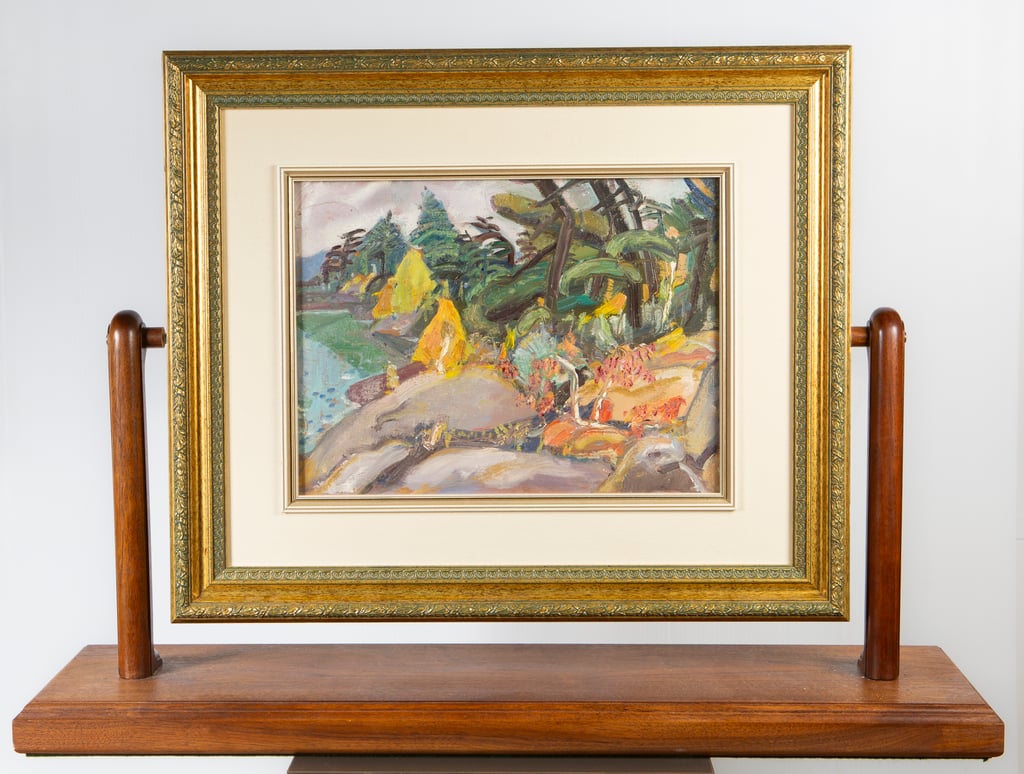
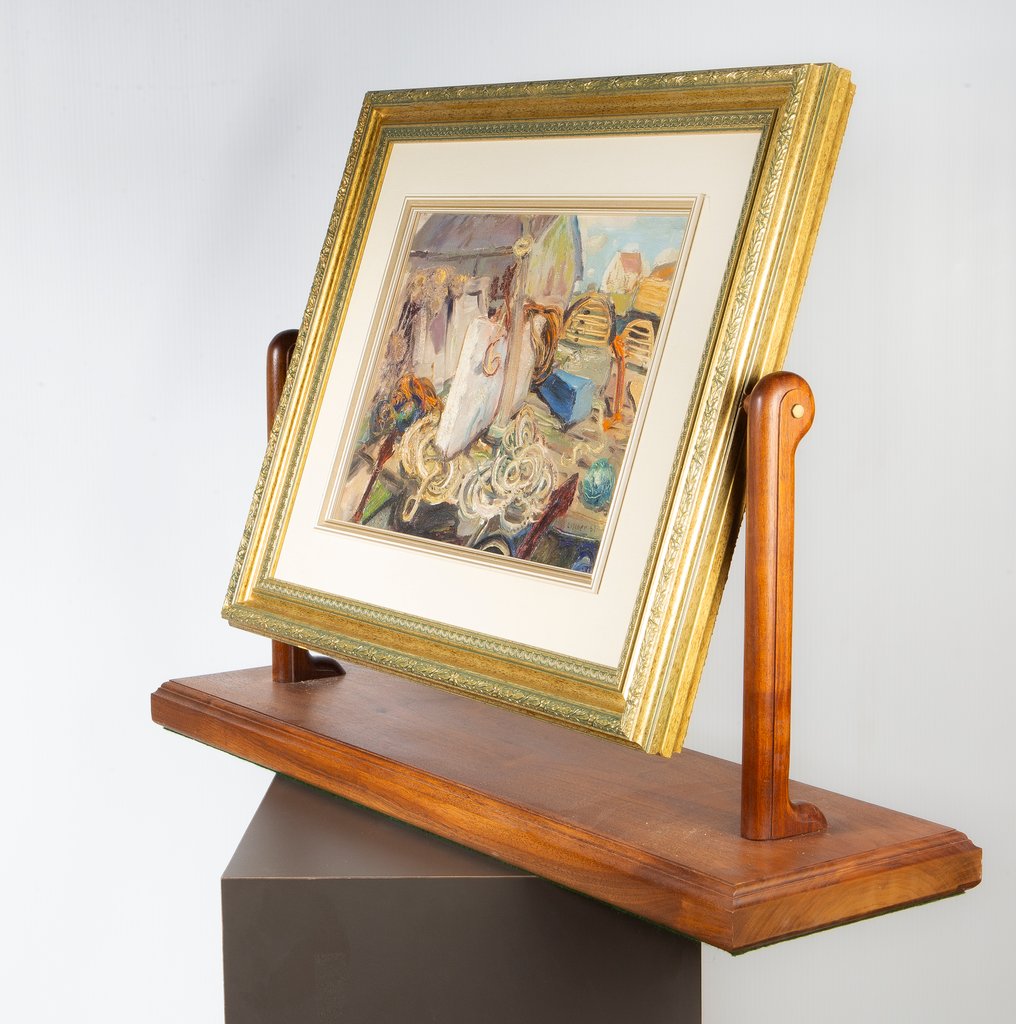
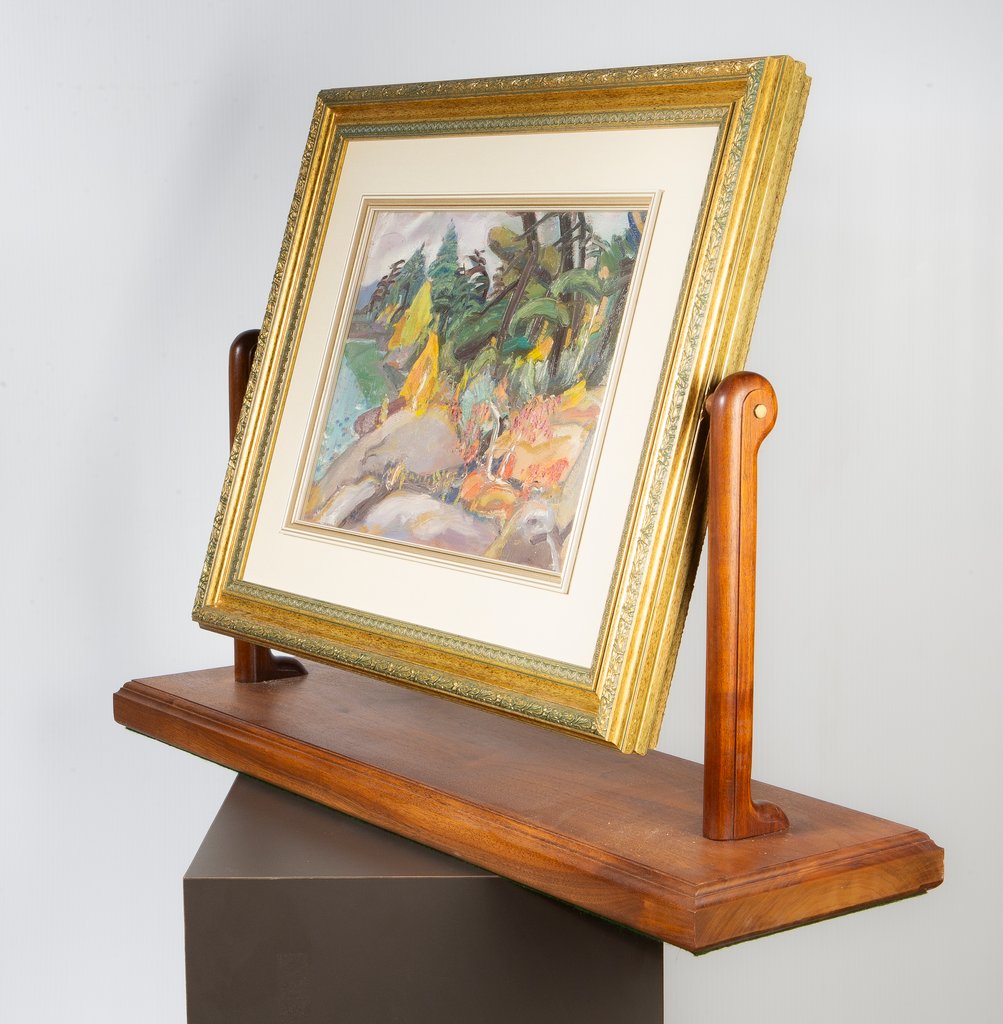
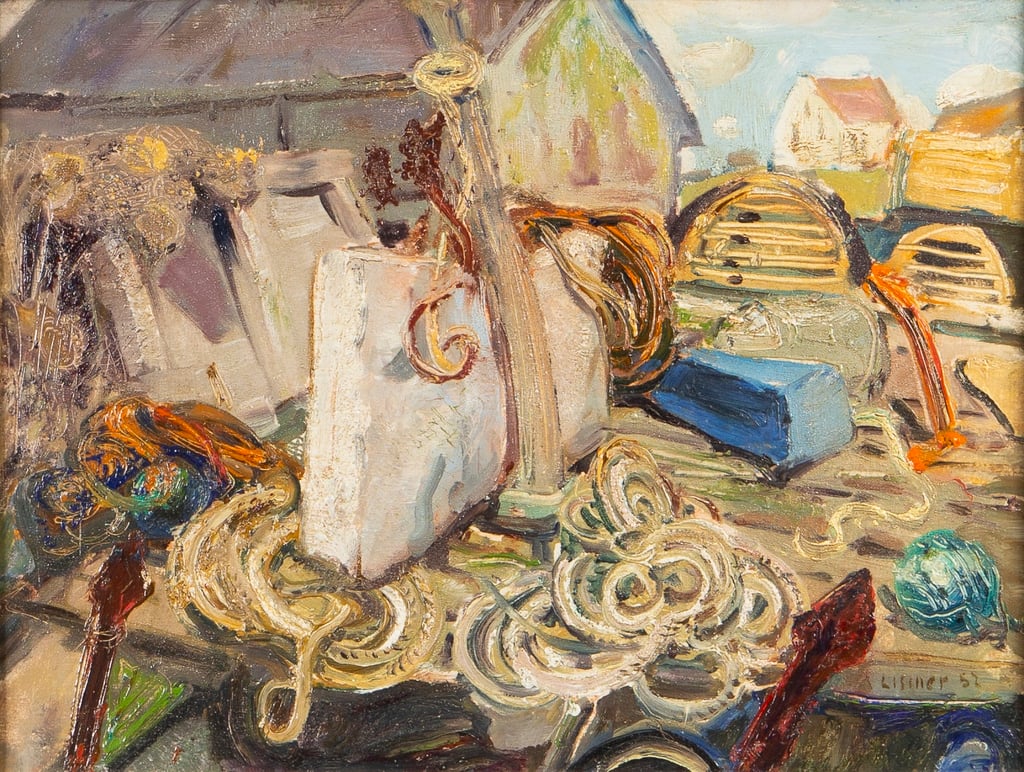
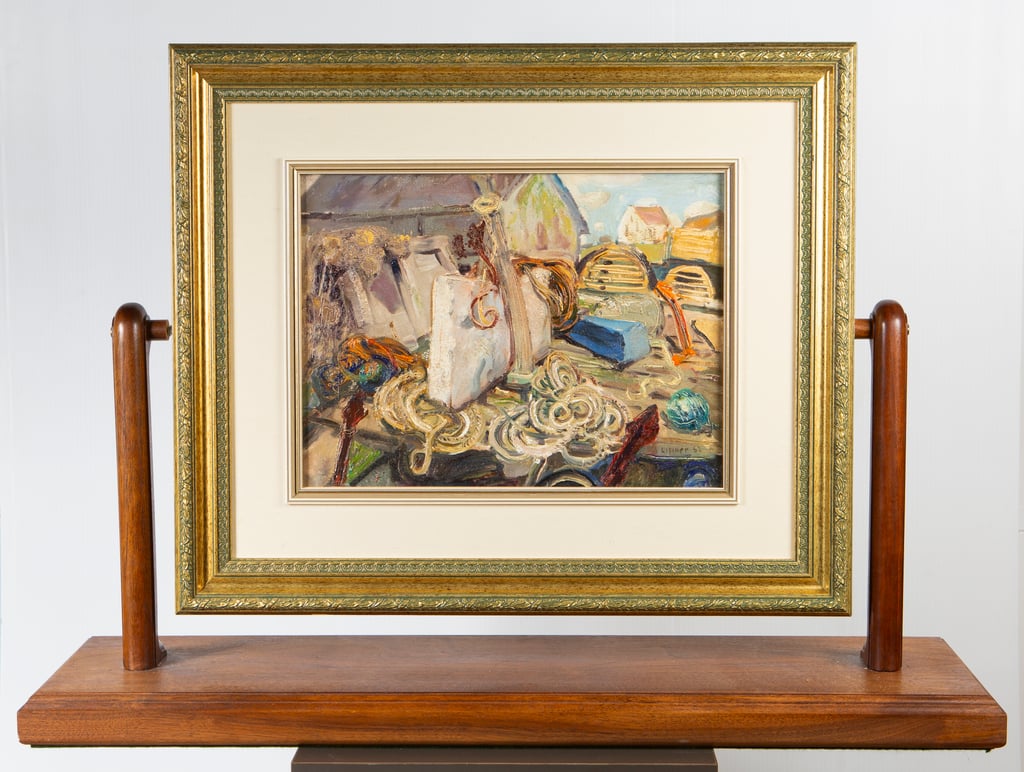
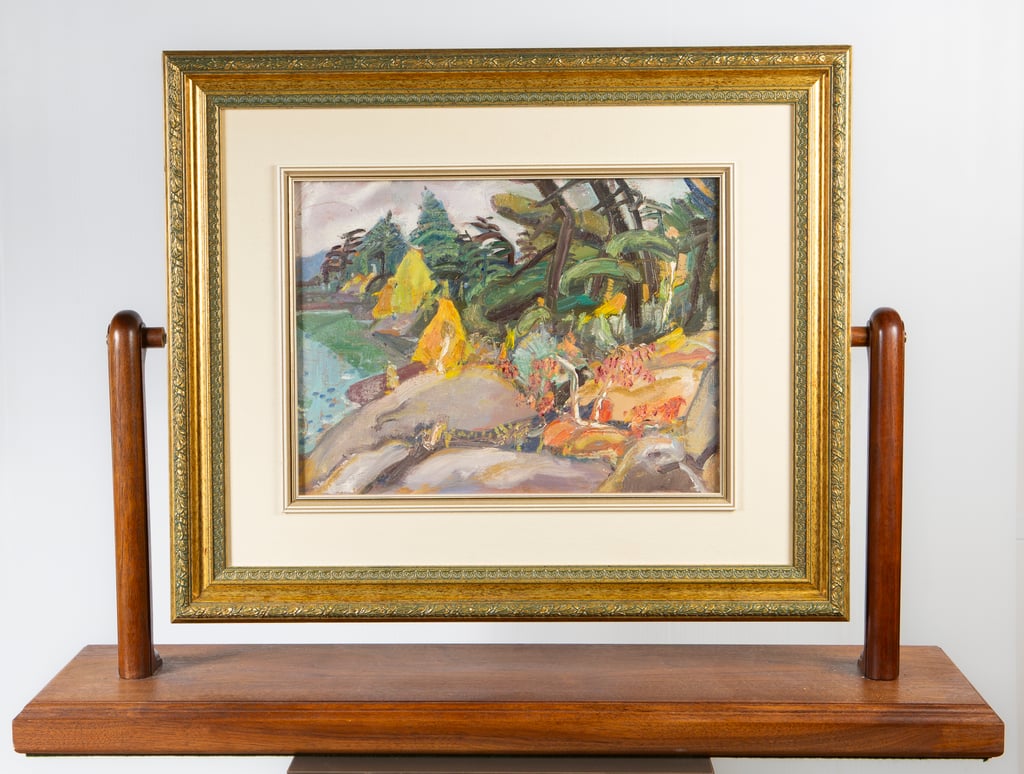
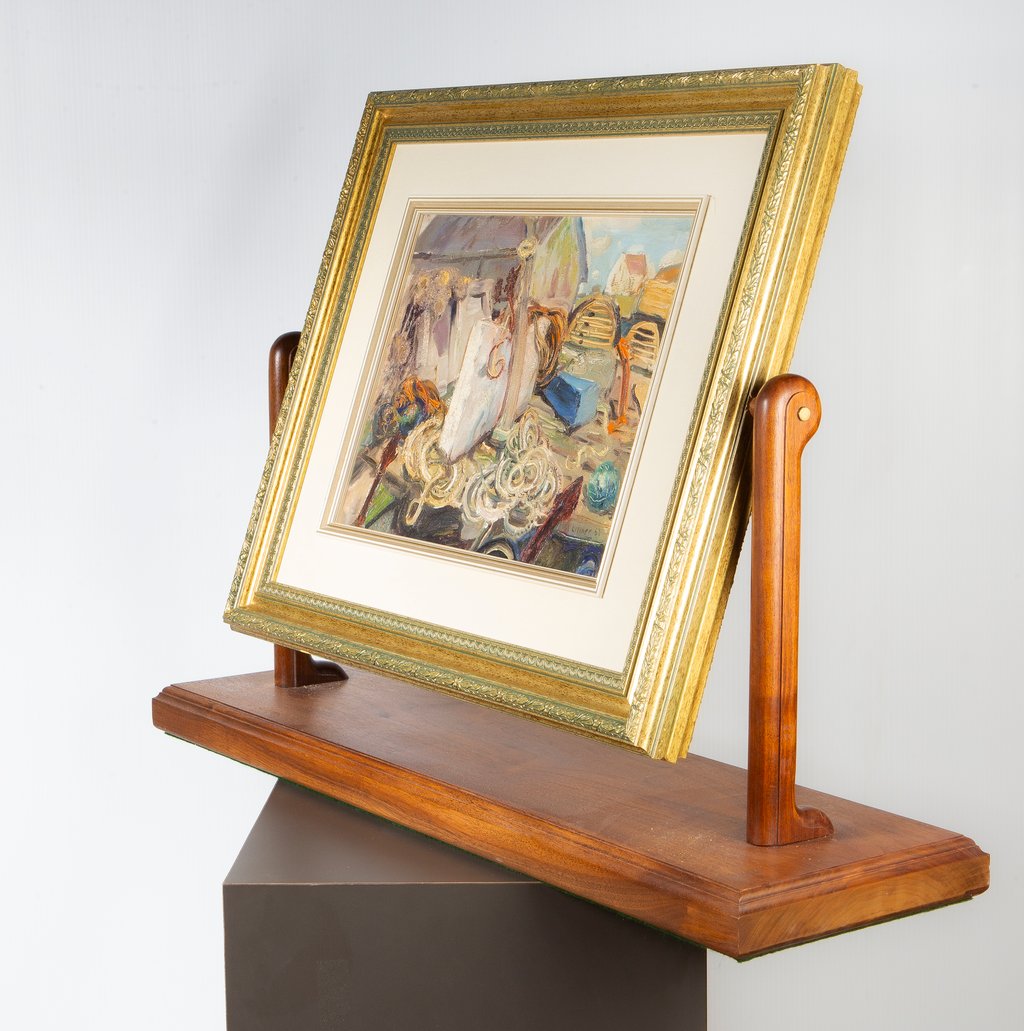
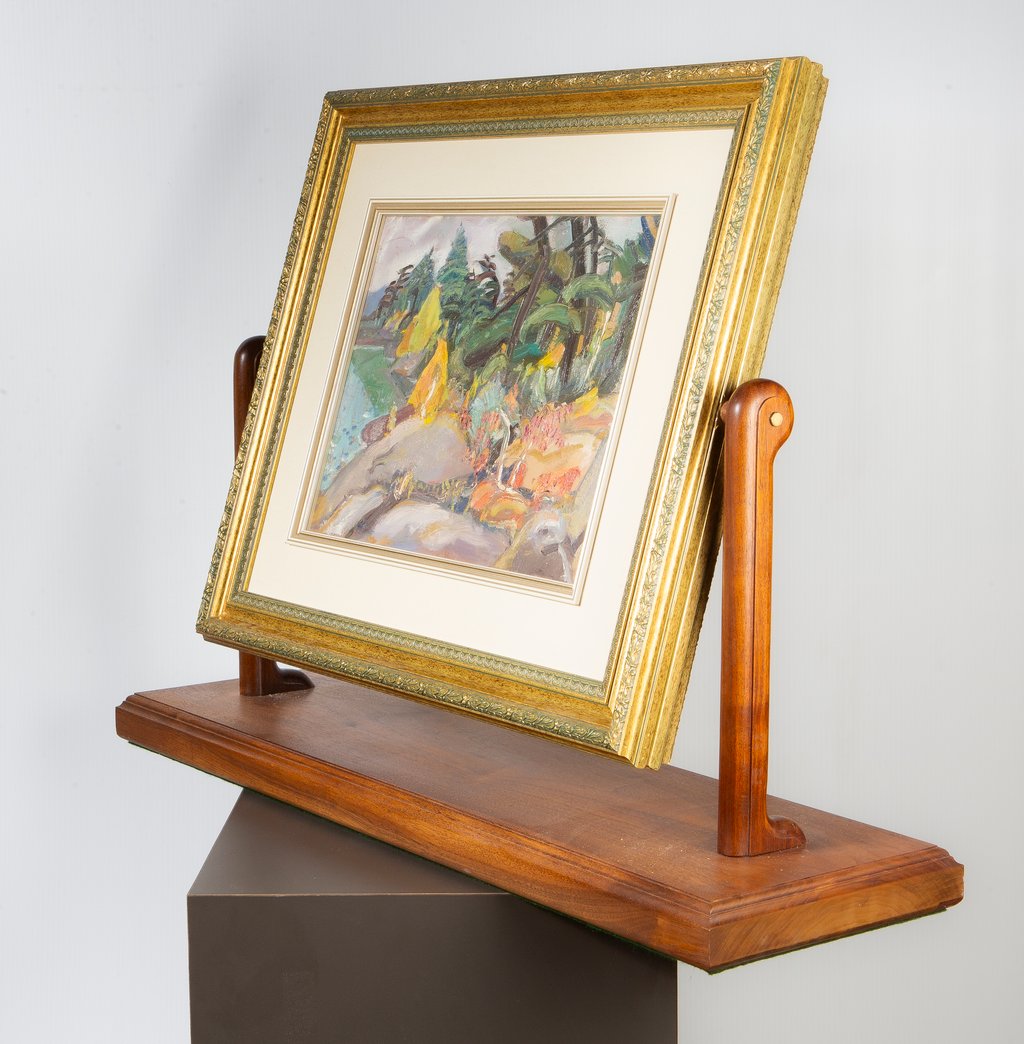
Cape Breton Dock, Georgian Bay (Double-Sided)
26 x 35.5 x 10 in (66 x 90.2 x 25.4 cm) including frame
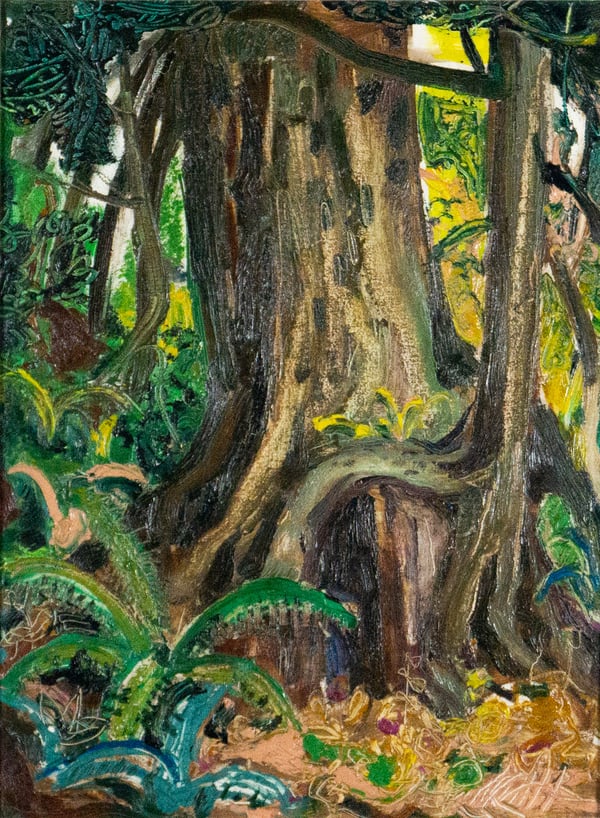
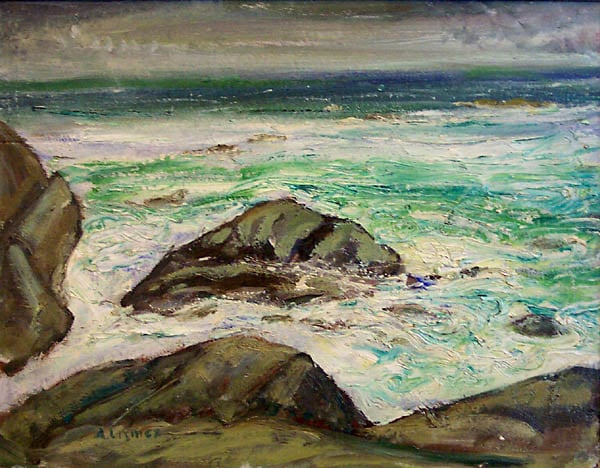
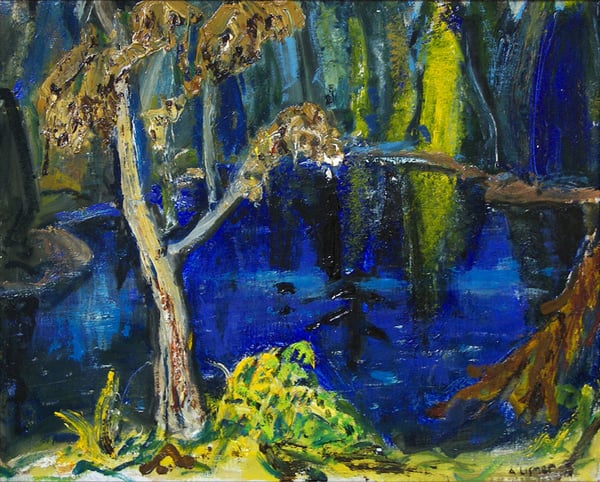
"Georgian Bay! Thousands of islands, little and big, some of them mere rocks just breaking the surface of the waters of the Bay - others with great, high rocks tumbled in confused masses and crowned with leaning pines, turned away in ragged disarray from the west wind, presenting a strange pattern against the sky and water." Lismer's vigorous and poetic description of Georgian Bay is equivalent to his visual interpretations. Never one to romanticise his surroundings, Lismer's methods were perfectly aligned with the fierce elements he found in the Canadian wilderness; his untamed brush-strokes trace the wind's haphazard path and his loose interpretation of form and colour mimics nature's own arrangement of wind-blown trees and jumbled rock. Jabbing the canvas with his brush and scratching into the paint layers, Lismer achieved a characteristic ruggedness and humorous expression in his sketches that matched the sensibility of the great artist. This double-sided painting has both an excellent example of Lismer's Georgian Bay work, and on verso what is likely a colourful Maritime harbour sketch.
Arthur Lismer
1885 - 1969 CGP, Group of Seven, RCA
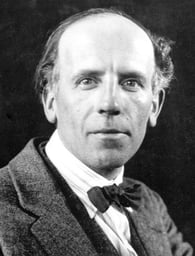
Arthur Lismer was a Canadian painter and a founding member of the Group of Seven. Born on June 27, 1885, in Sheffield, England, he received his formal art training at the Sheffield School of Art and subsequently at the Académie Royale des Beaux-Arts in Antwerp, Belgium. In 1911, he immigrated to Canada, settling in Toronto where he began working as a commercial illustrator at Grip Ltd. It was during his time at this firm that he established professional relationships with several other artists who would later form the Group of Seven.
Lismer dedicated much of his career to the documentation of the Canadian landscape and the development of Canadian art education. In 1916, he accepted the position of principal at the Victoria School of Art and Design in Halifax. During the First World War, he served as an official war artist for the Canadian War Memorials project, where he produced paintings and sketches documenting the war effort, including the activities of the Canadian hospital ships.
Upon returning to Toronto in 1919, Lismer became vice-principal of the Ontario College of Art. In 1927, he was appointed to lead the educational department at the Art Gallery of Toronto, now known as the Art Gallery of Ontario. In this role, he established innovative programs designed to introduce children to the fine arts, an initiative that influenced art education practices across the country. He maintained a commitment to teaching throughout his life, including later appointments in Ottawa and at the Montreal Museum of Fine Arts.
Throughout his career, Lismer was an active member of professional arts organizations, including the Ontario Society of Artists (OSA) and the Royal Canadian Academy of Arts (RCA). His work is characterized by his focus on the rugged forms of the Canadian Shield and his consistent interest in the social role of art. Arthur Lismer passed away in Montreal on March 23, 1969. His paintings and drawings are held in the permanent collections of major public institutions, including the National Gallery of Canada, the Art Gallery of Ontario, and the McMichael Canadian Art Collection.