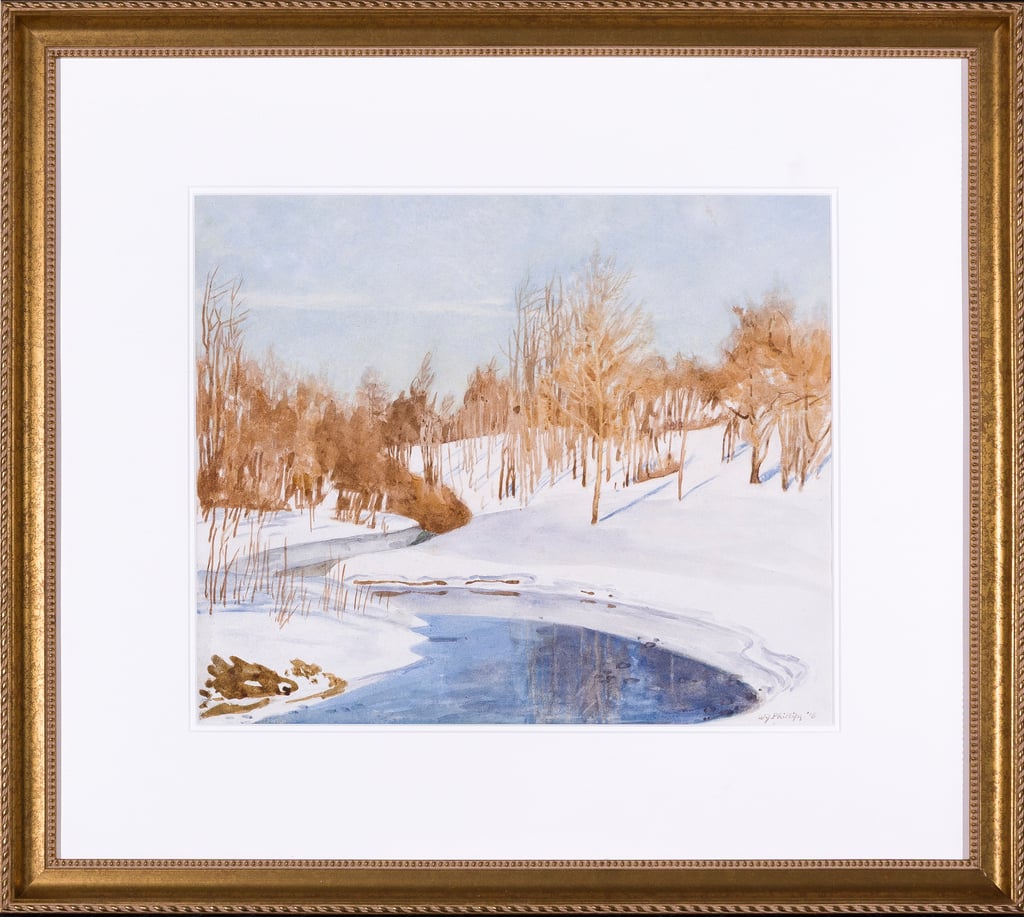
Stream in Winter
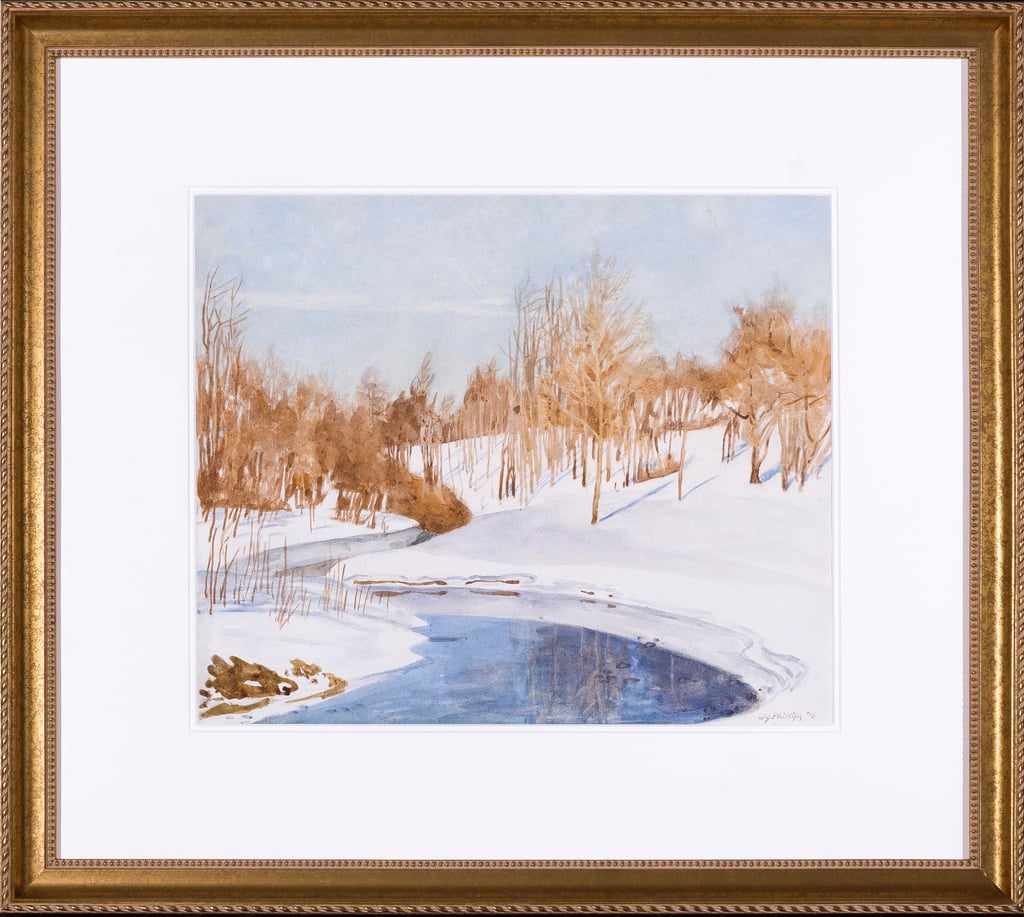
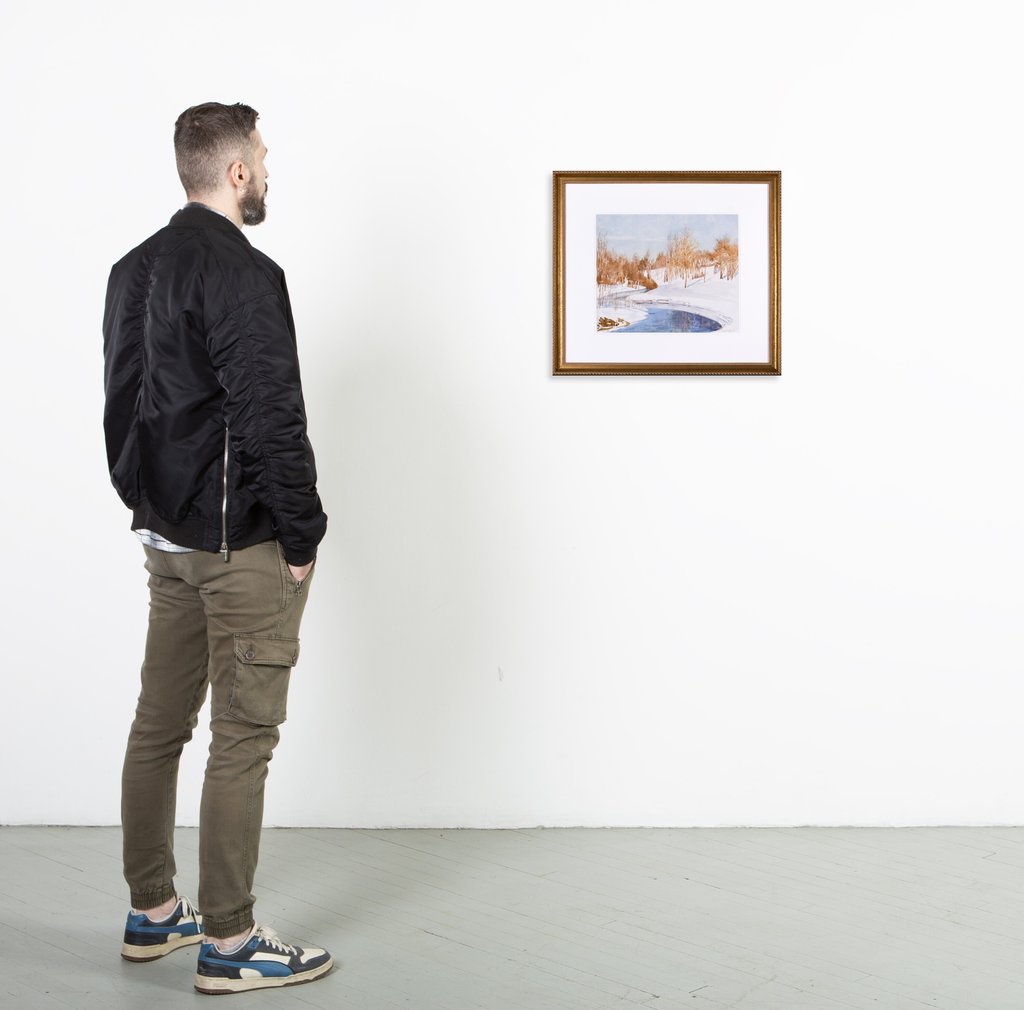
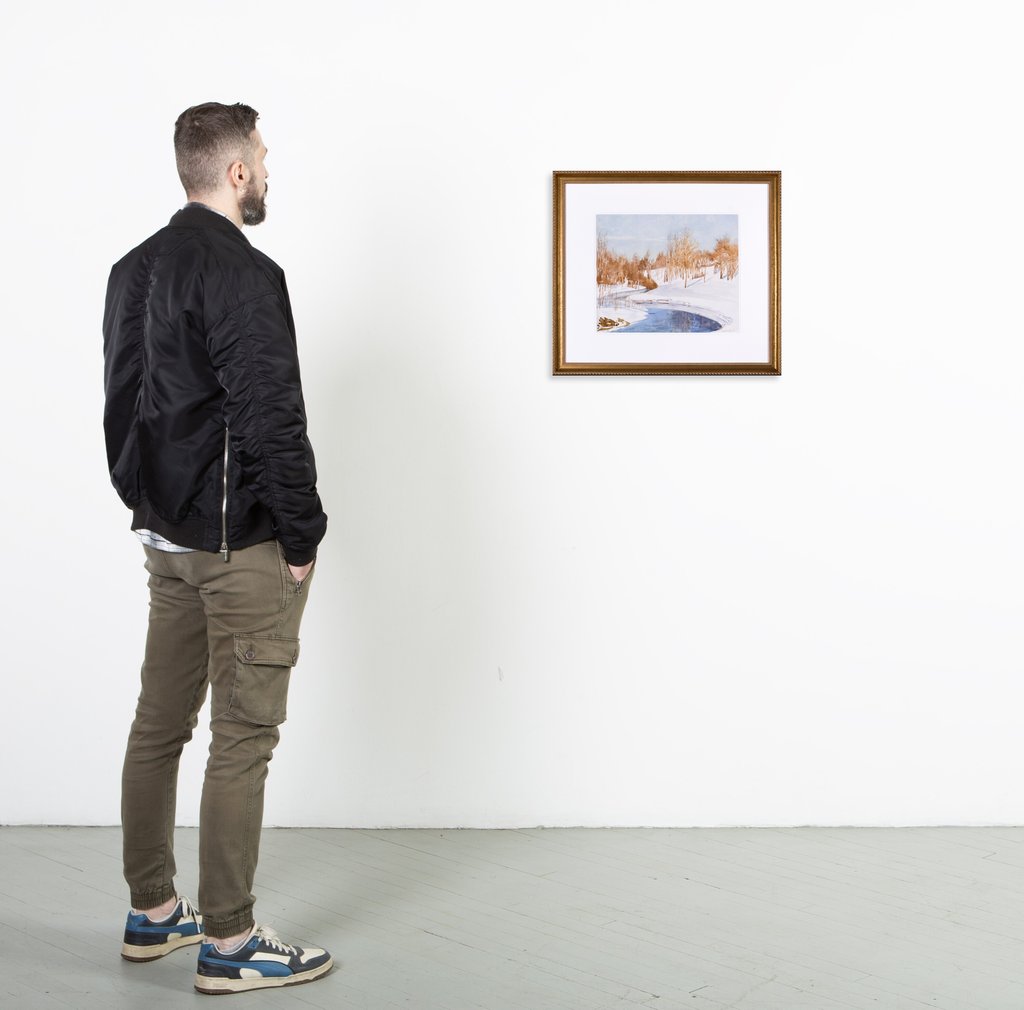
19.25 x 21.5 in (48.9 x 54.6 cm) including frame
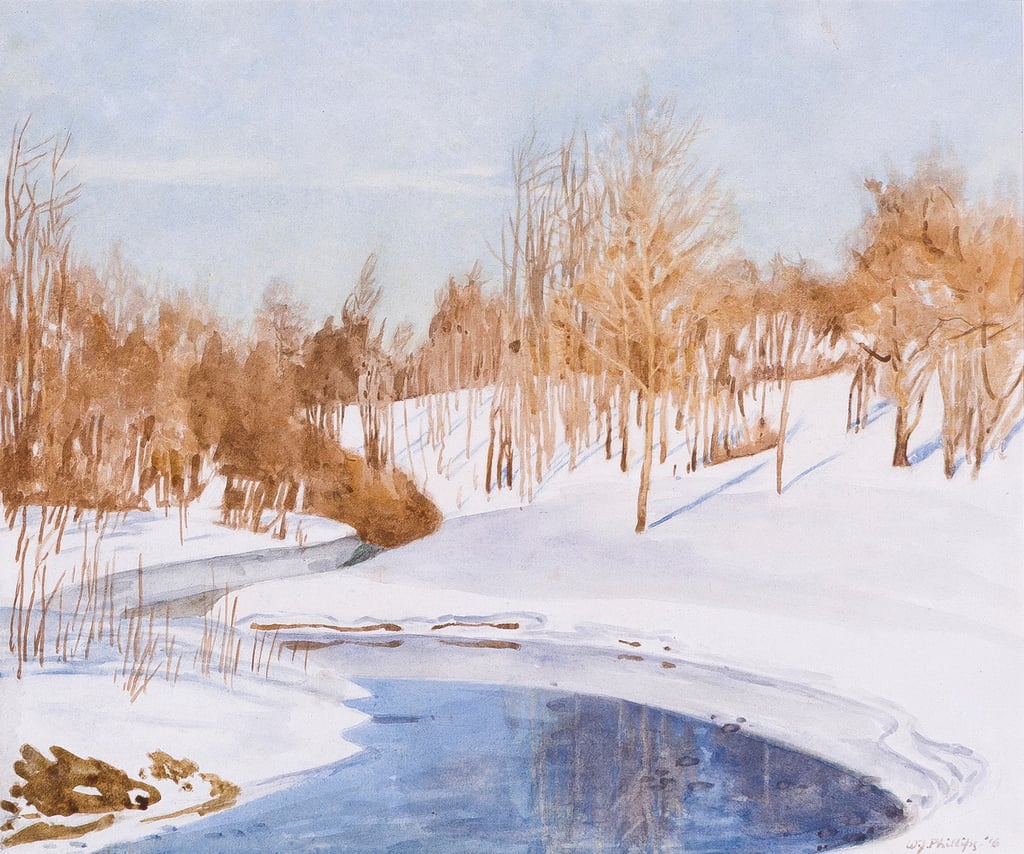
Walter J. Phillips was a key figure in Canadian art, known for his masterly watercolours and his role in bringing modern printmaking to Western Canada. After moving to Winnipeg in 1912, he lived in the Wolseley neighborhood and frequently painted nearby waterways. This 1916 watercolour, Stream in Winter, is a clear example of his skill in painting outdoors. It likely depicts Omand’s Creek, a short distance from his home. Phillips uses light blue washes and the white of the paper to perfectly capture the look of snow and the cold Manitoba light, showing his ability to find beauty in the local prairie landscape.
This watercolour is especially important because it served as the original source for his 1935 woodcut print of the same name. Phillips often used his best plein-air sketches as the basis for his complex prints. In this original version, we see the immediate, fluid brushwork that he later translated into the precise, layered blocks of the woodcut. The 1916 work holds the initial creative energy and composition that he would refine nearly twenty years later.
As an artist based in the West, Phillips offered a quiet, poetic view of Canada that differed from the bold style of the Group of Seven. He helped elevate printmaking to a respected fine art and showed that the subtle details of the prairies were a significant subject for Canadian art. Stream in Winter is both a beautiful record of a Winnipeg winter and a vital piece of the process that made Phillips one of the country's most famous graphic artists.
Walter Joseph Phillips
1884 - 1963 CSPWC, RCA
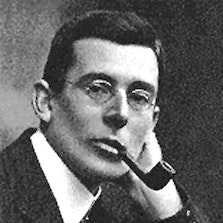
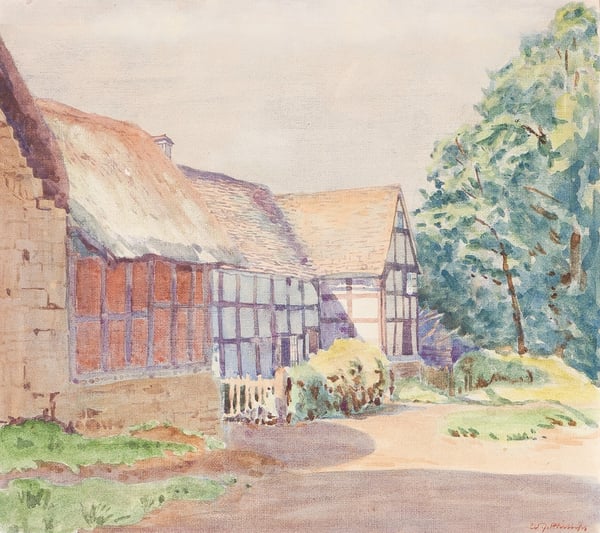
Born in 1884 in Lincolnshire, England, Walter Joseph Phillips embarked on a remarkable artistic journey that left a lasting impact on the global art scene. Trained at the esteemed Birmingham School of Art, he gained recognition for his captivating watercolour works in his homeland. His move to Winnipeg in 1913, accompanied by his wife Gladys, marked a turning point that led to international acclaim.
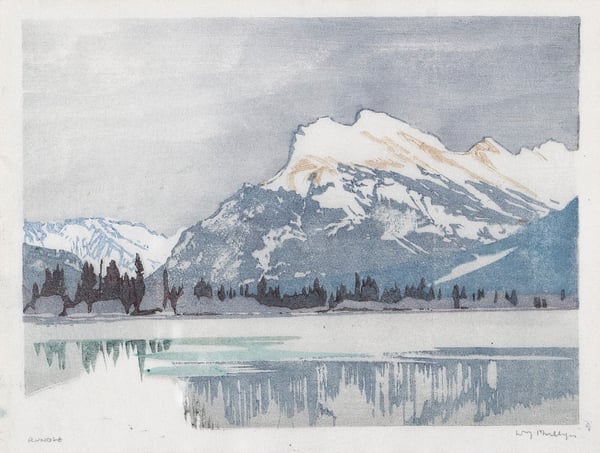
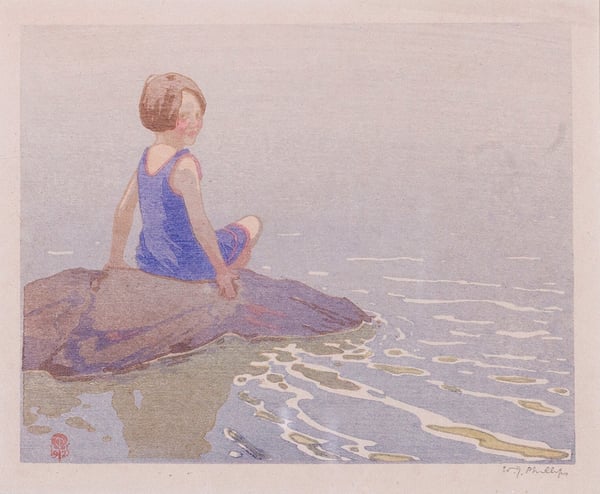
While watercolours were his primary focus, Walter's exploration of woodblock printing became a defining aspect of his artistry. This innovative approach expanded his horizons, resulting in some of his most cherished pieces. Notably, his depictions of family retreats at Lake of the Woods from the early 1900s to 1925 struck a chord with audiences.
Walter's legacy lives on through prestigious Canadian galleries like The National Gallery of Canada and The Winnipeg Art Gallery. His works also grace collections in London, Washington D.C., Japan, and beyond.
Walter's artistic journey began under the influence of his father, Reverend John Phillips, an itinerant Wesleyan Methodist Minister from a North Welsh farming family. Despite his father's aspirations for a ministry career, Walter's artistic leanings found support from his mother, Sophia Blackett of Leeds. His education took him to the Birmingham School of Art and Great Yarmouth's Municipal School of Art and Science.
In 1907, Walter returned to England from South Africa, where he pursued various occupations. Settling in Manchester and later London, he fostered artistic connections. An encounter with artist Ernest S. Carlos marked a turning point, and his role as Art Master at the Bishop's School in Salisbury introduced him to Gladys Pitcher, whom he married in 1910.
In 1913, the couple settled in Winnipeg, where Walter thrived as an educator and dedicated watercolourist, capturing Winnipeg's urban and natural landscapes. A pivotal shift occurred in 1915 as he explored etching, eventually delving into the colour woodcut medium. His expertise flourished, and his works gained recognition.
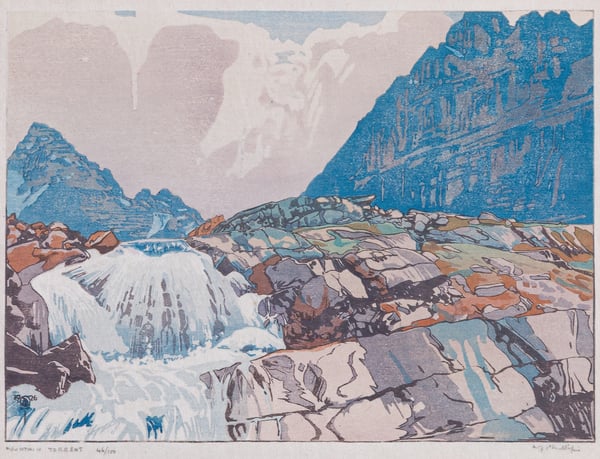
Walter's creative journey was punctuated by visits to the serene Lake of the Woods and explorations of the Canadian prairies. A transformative visit to the Rocky Mountains in 1926 ignited a new artistic direction, inspiring his work for the next decade and a half.
In the 1940s, he taught at the Banff School of Fine Arts and the Provincial Institute of Technology and Art in Calgary. Despite vision challenges, he continued producing remarkable watercolours, culminating in his move to Banff. His legacy lives on through the Pavilion Gallery Museum in Winnipeg, where the Crabb collection of his extensive works is showcased, allowing generations to experience his artistic vision.
Walter J Phillips' artistic journey stands as a testament to his boundless creativity, mastery of watercolours and woodblock prints, and profound connection with the landscapes that shaped his work. His art continues to captivate audiences worldwide, inviting all to explore nature's essence through his brushstrokes and woodblock impressions.
More work by Walter Joseph Phillips