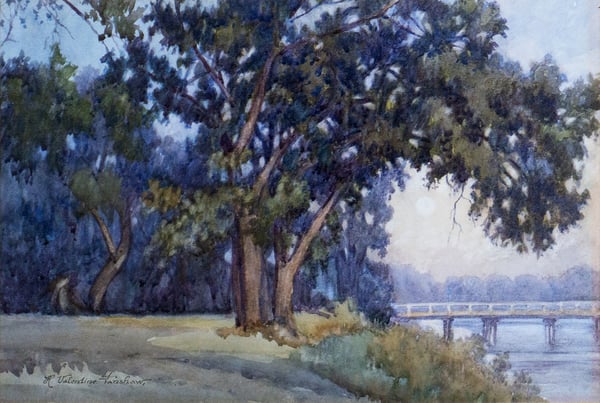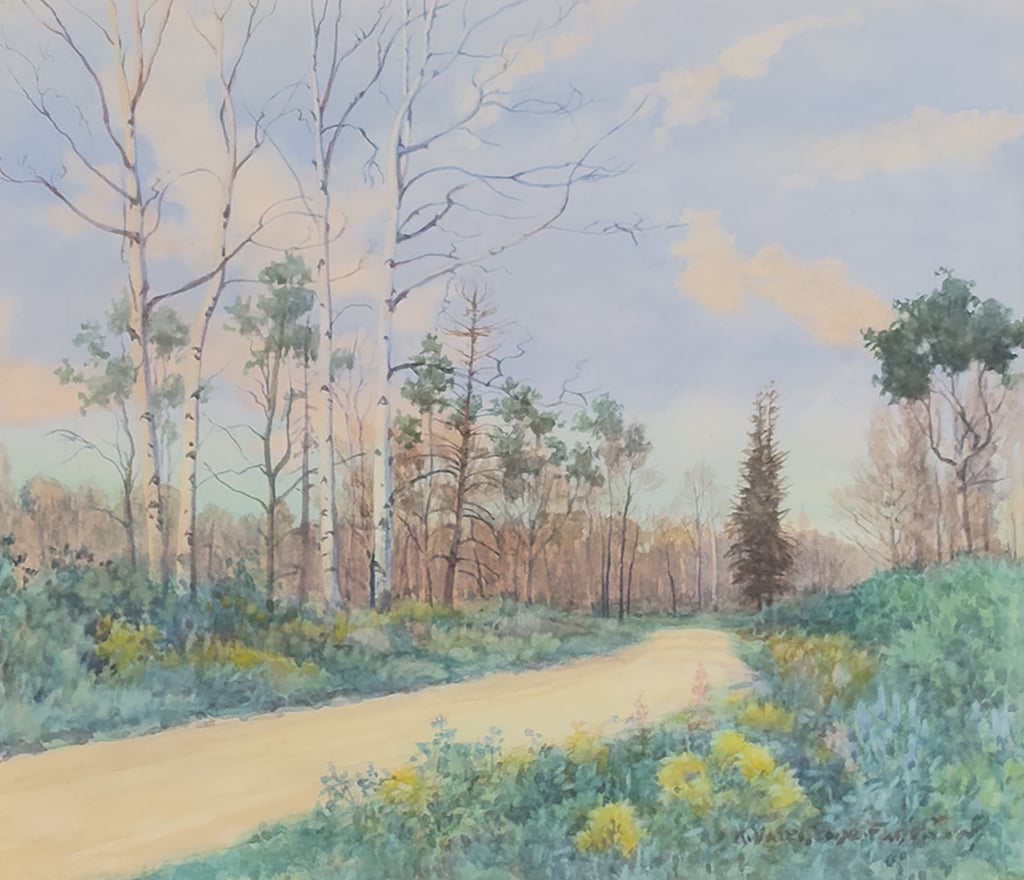
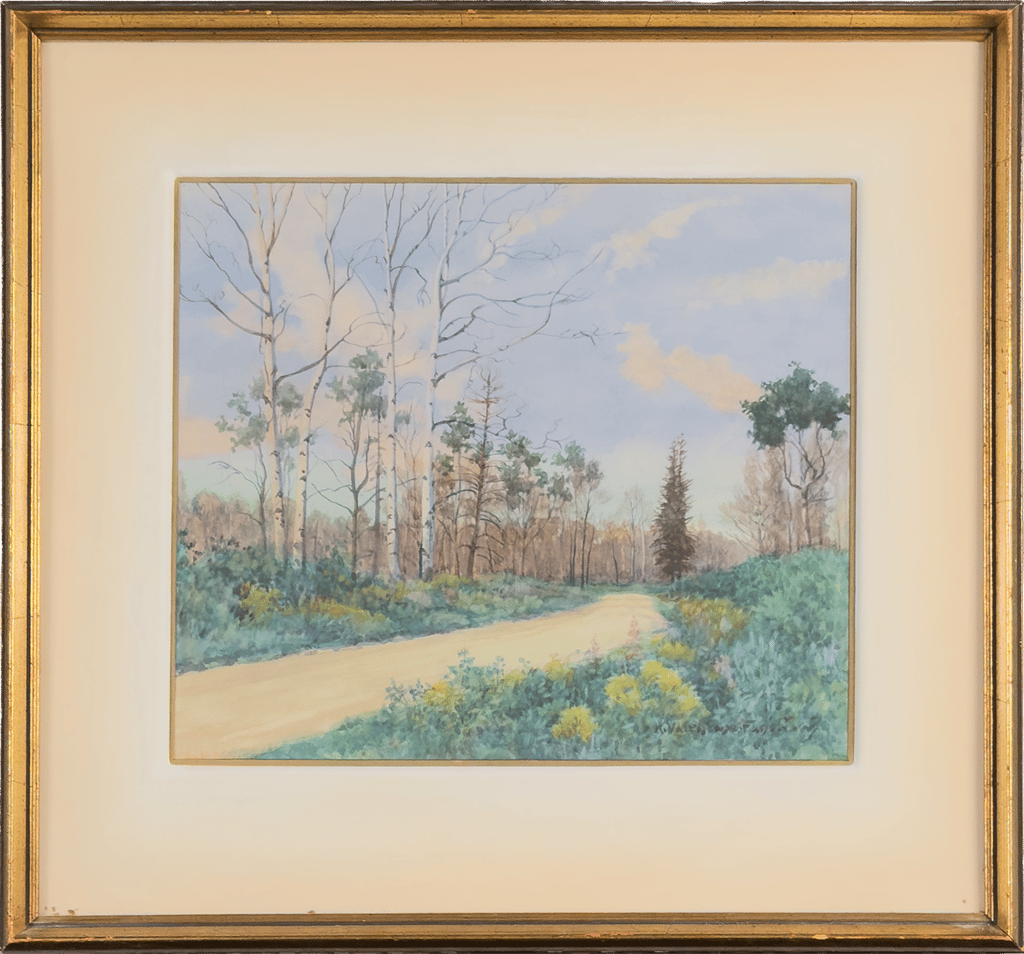
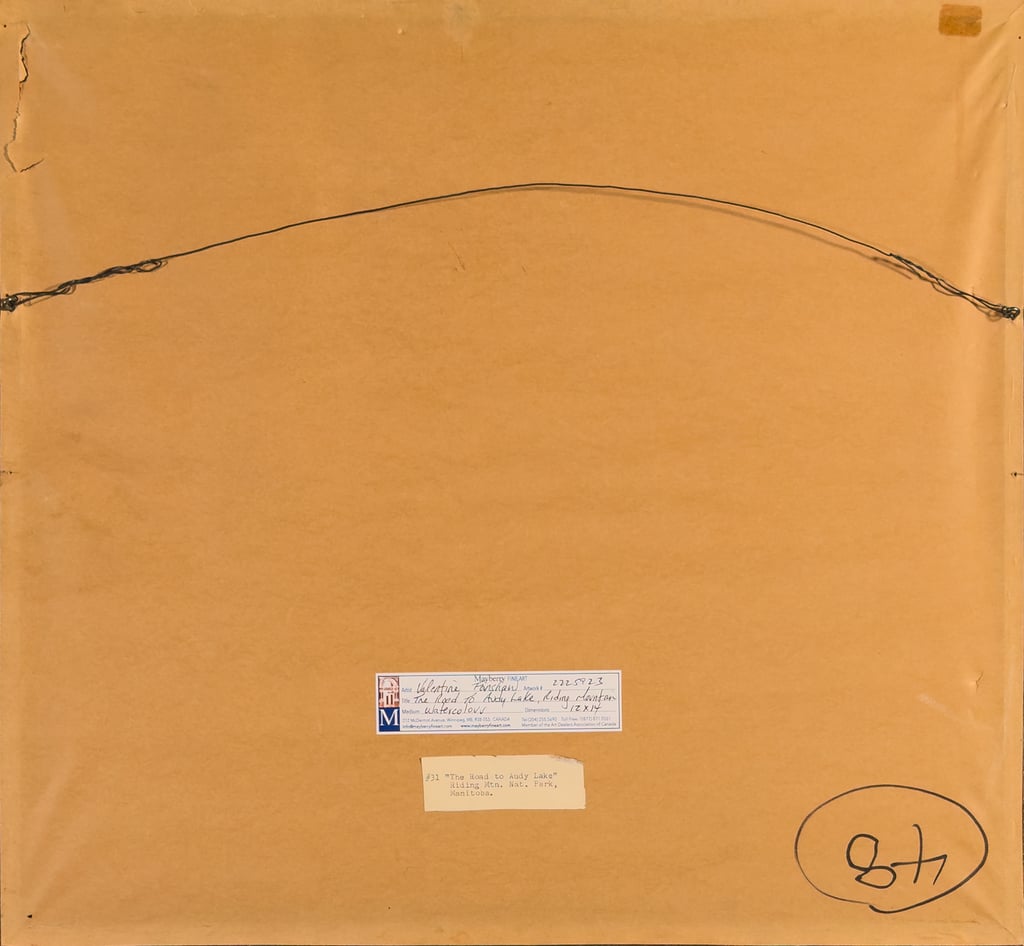
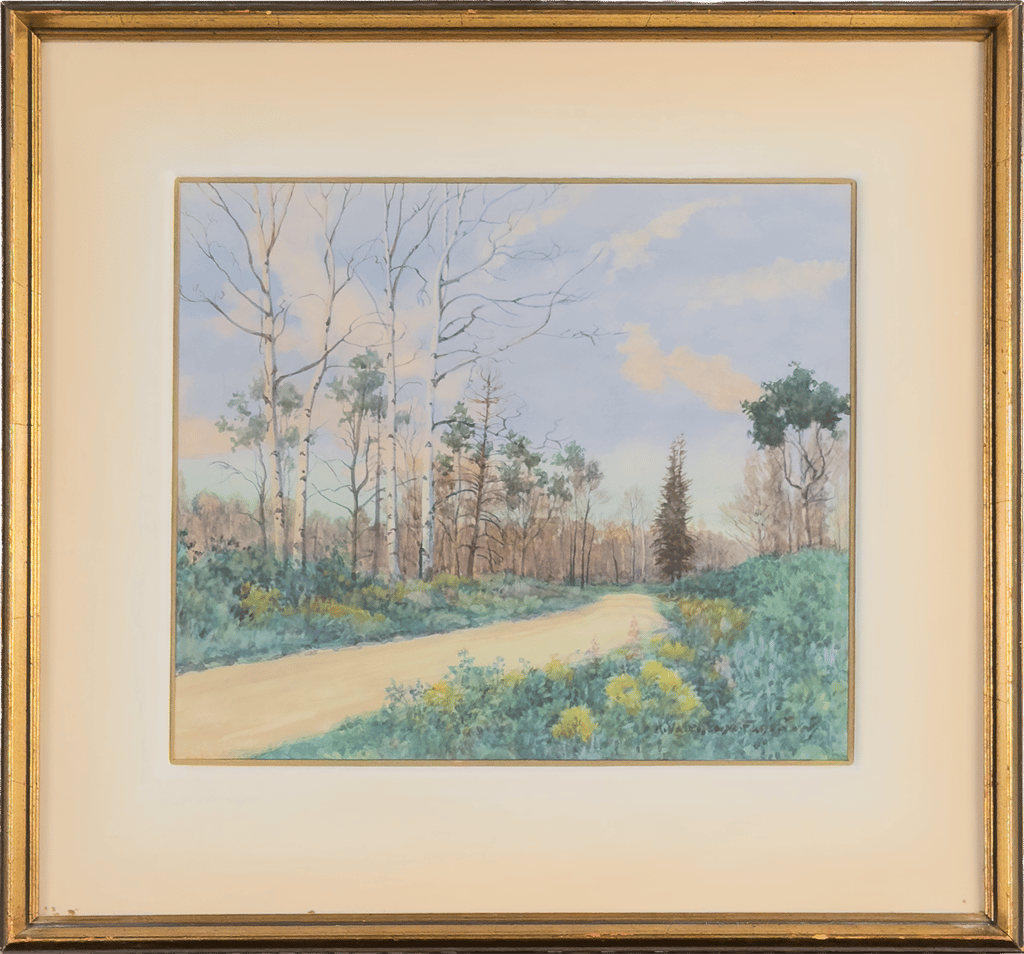
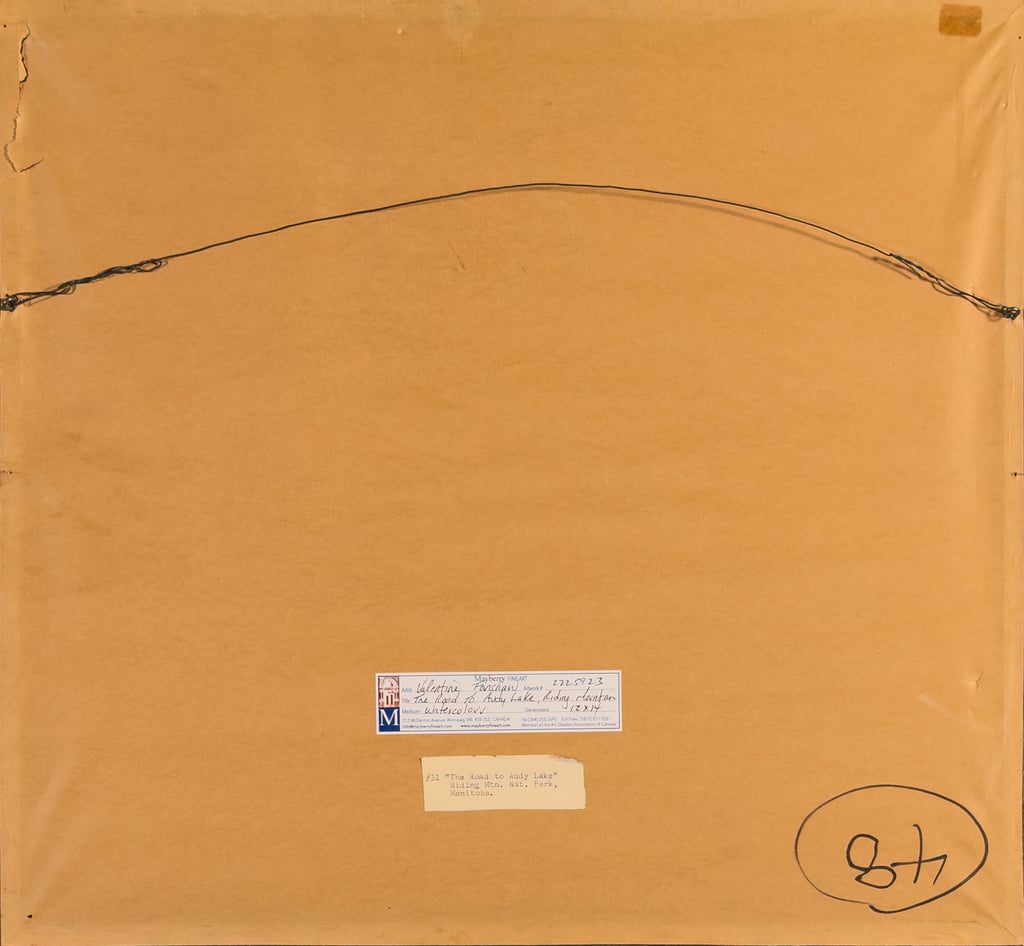
The Road to Audy Lake, Riding Mountain National Park, MB
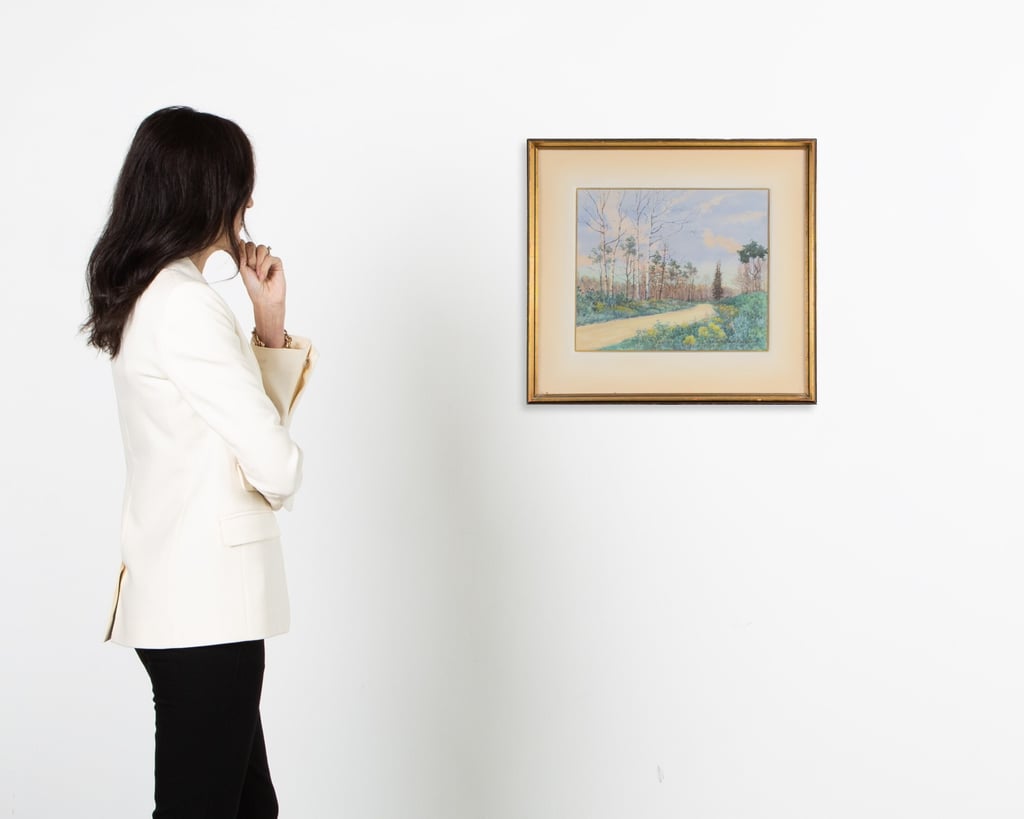
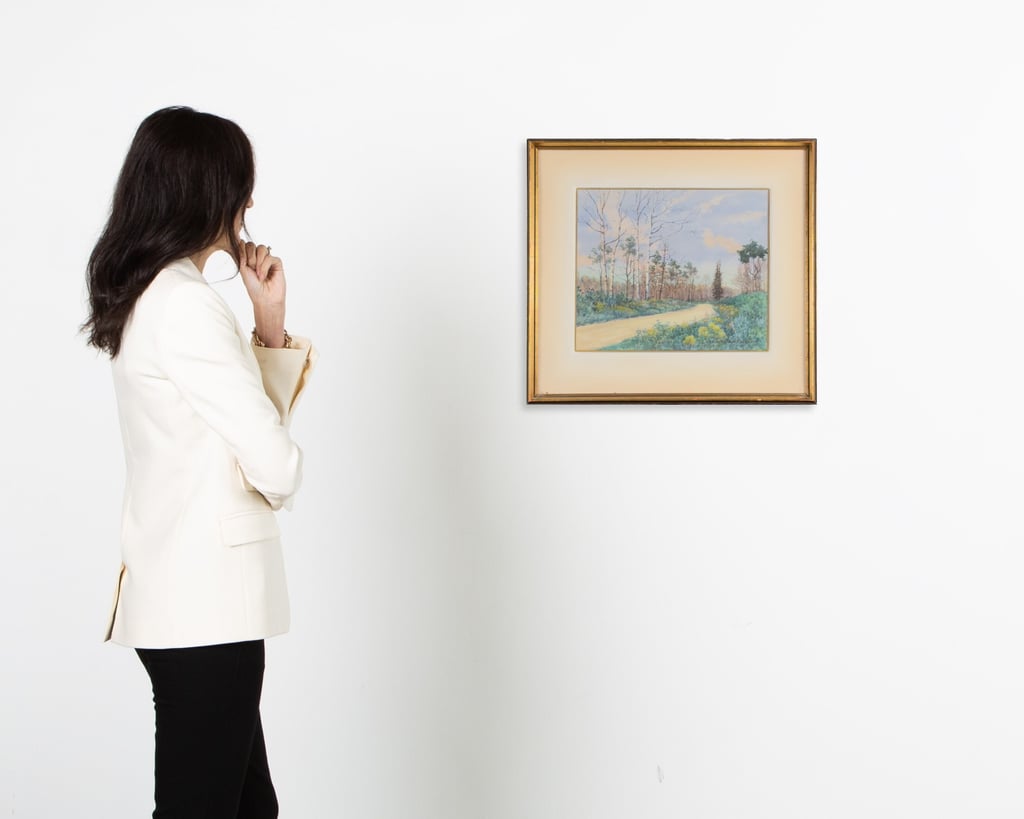
19.5 x 21.25 in (49.5 x 54 cm) including frame
A contemporary of Walter J. Phillips and Alexander J. Musgrove, Valentine Fanshaw was a significant figure in the early Manitoba art scene, known for his delicate and atmospheric watercolours of the prairie and parkland regions. The Road to Audy Lake depicts a winding dirt path leading through the characteristic mixed-wood forest of Riding Mountain National Park. The composition is framed by slender white poplars and birch trees, rendered with fine, rhythmic linework that reveals Fanshaw’s disciplined draftsmanship. Using a soft, luminous palette of pale blues, muted greens, and warm ambers, the work captures the diffused light of a Manitoba afternoon. The gentle handling of the sky and the low-lying shrubs in the foreground illustrates Fanshaw’s ability to translate the quiet, expansive quality of the Southwestern Manitoba landscape into the watercolour medium. This piece serves as a notable regional record of one of the province's most prominent natural landmarks during the early 20th century.
Valentine Fanshaw
1878 - 1940
Born in Sheffield, England, Fanshaw was the son of an artist. He studied at the Sheffield School of Art (1803-1900), the Royal College of Art in London with Gerald Moira (1900-02), and the Académie Royale des Beaux-Arts in Antwerp (1903). In 1912, he arrived in Winnipeg and became a teacher and art director at Kelvin High School, a position he held from 1913 to 1940. Fanshaw was a painter and graphic artist, specializing in woodblock engraving. In 1943, William Colgate praised his fine landscapes and woodblock engravings of western subjects. The National Gallery of Canada houses his watercolour titled “A Threat to Harvest,” depicting heavy clouds over a field of crops ready for harvest. He passed away in St. James, Winnipeg, at the age of 62.
Literature Source: "A Dictionary of Canadian Artists, Volume 1: A-F, 5th Edition, Revised and Expanded," compiled by Colin S. MacDonald, Canadian Paperbacks Publishing Ltd, Ottawa, 1997
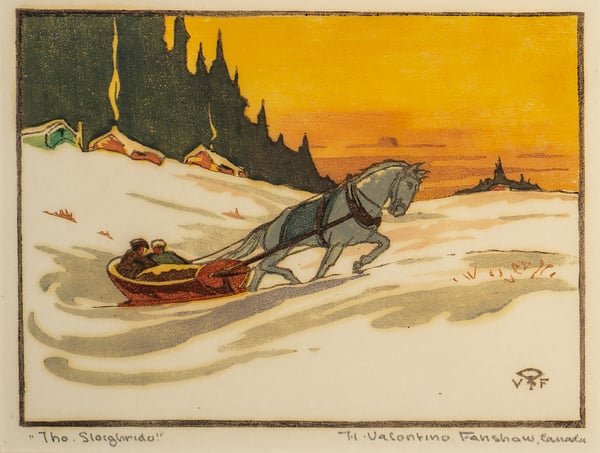
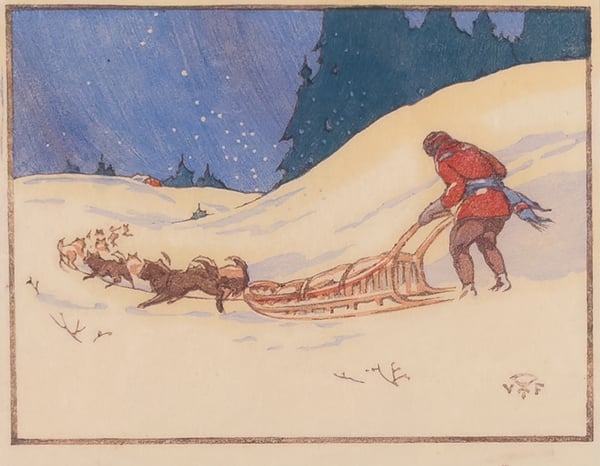
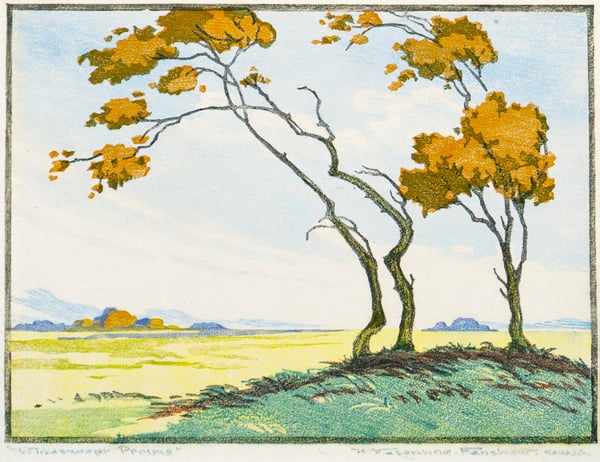
More work by Valentine Fanshaw