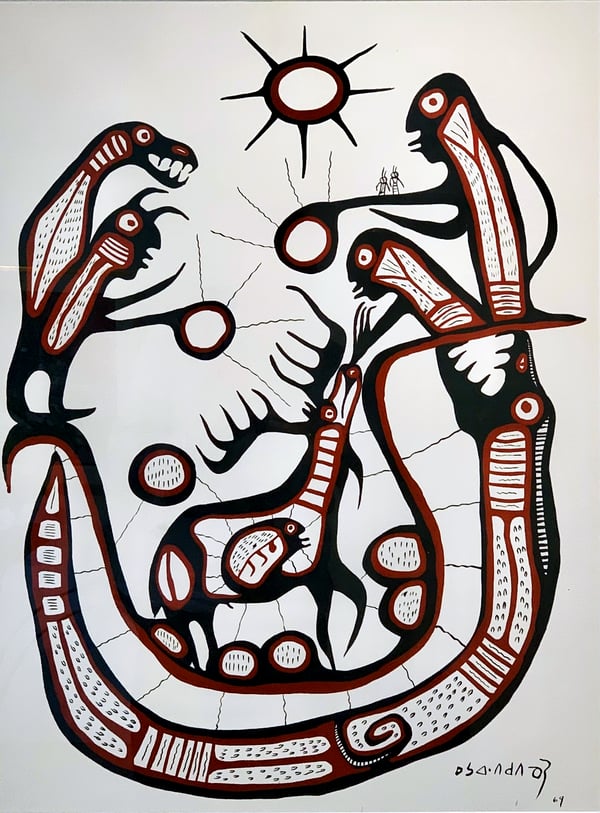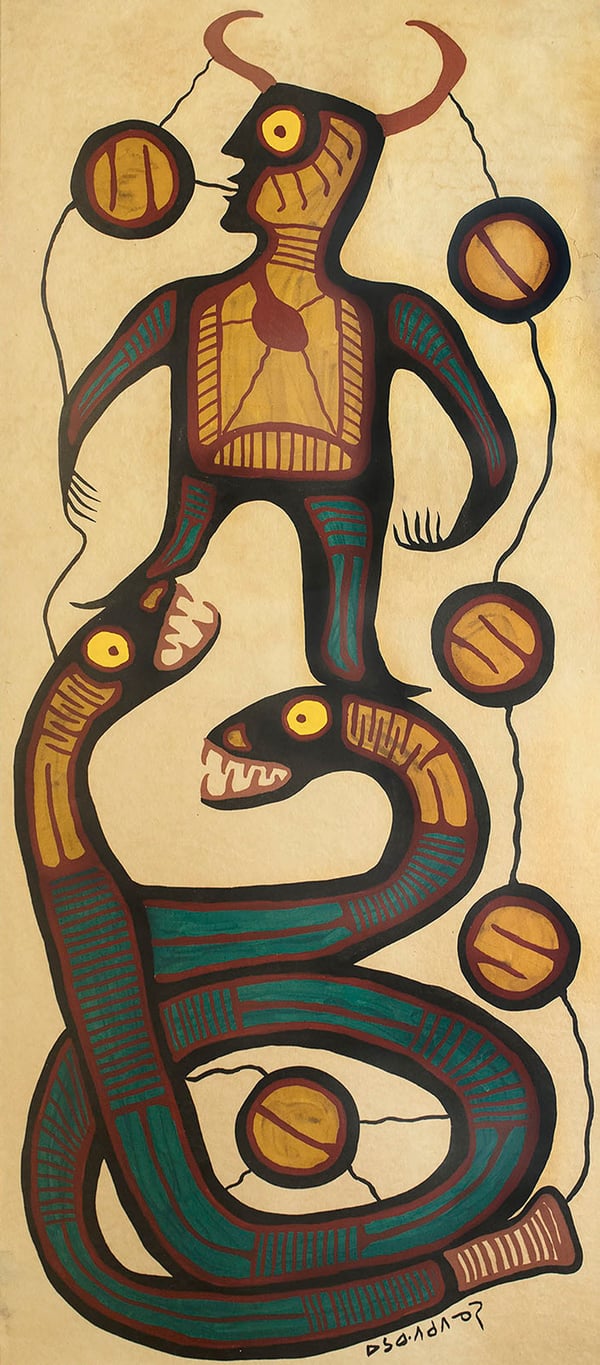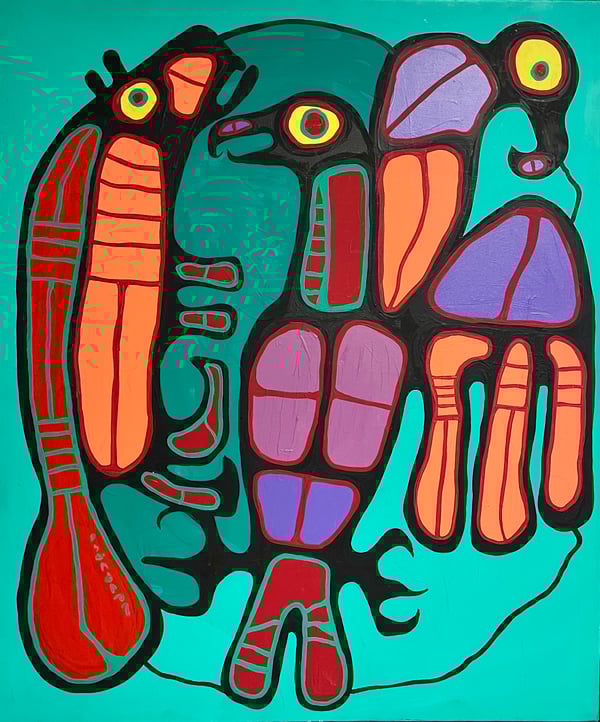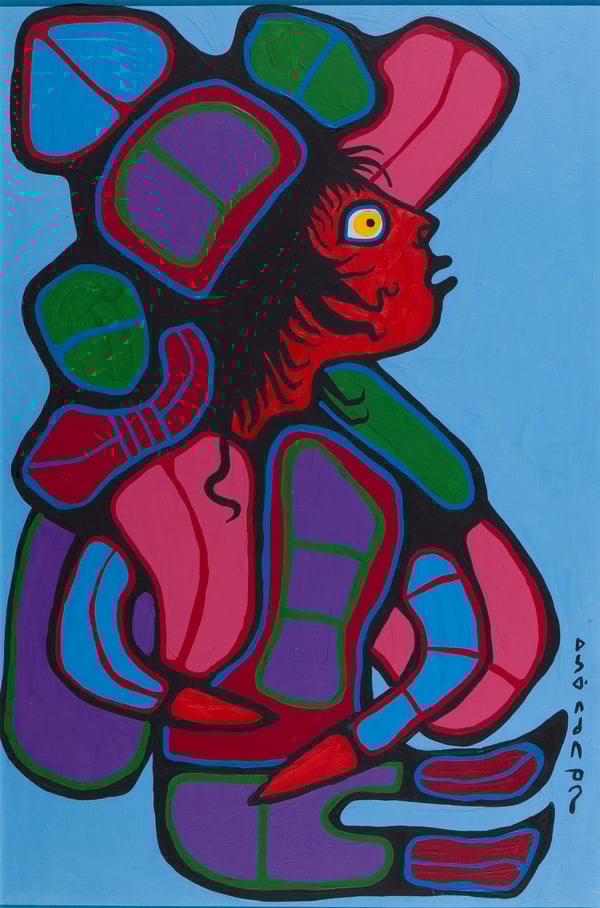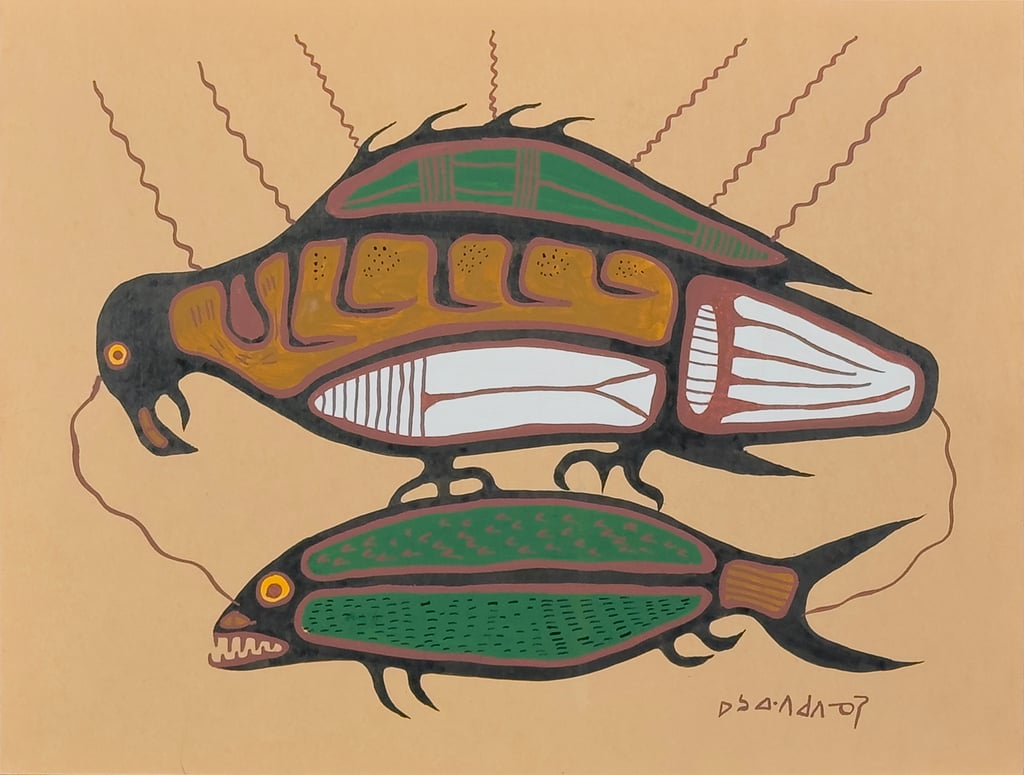
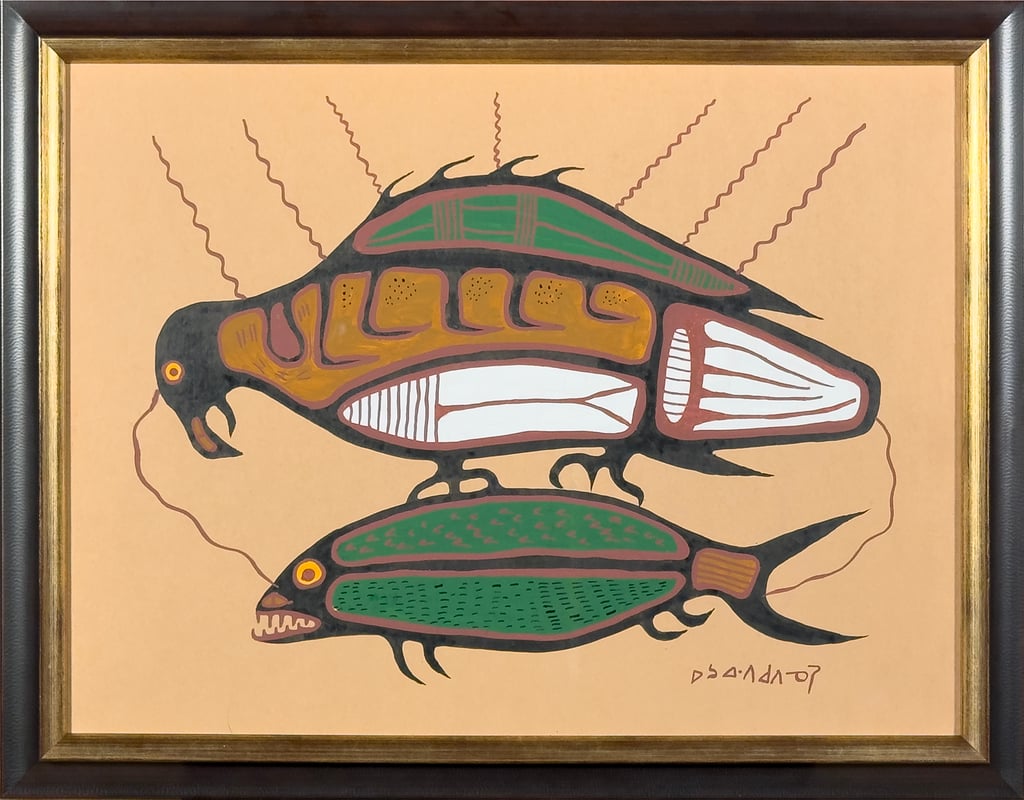
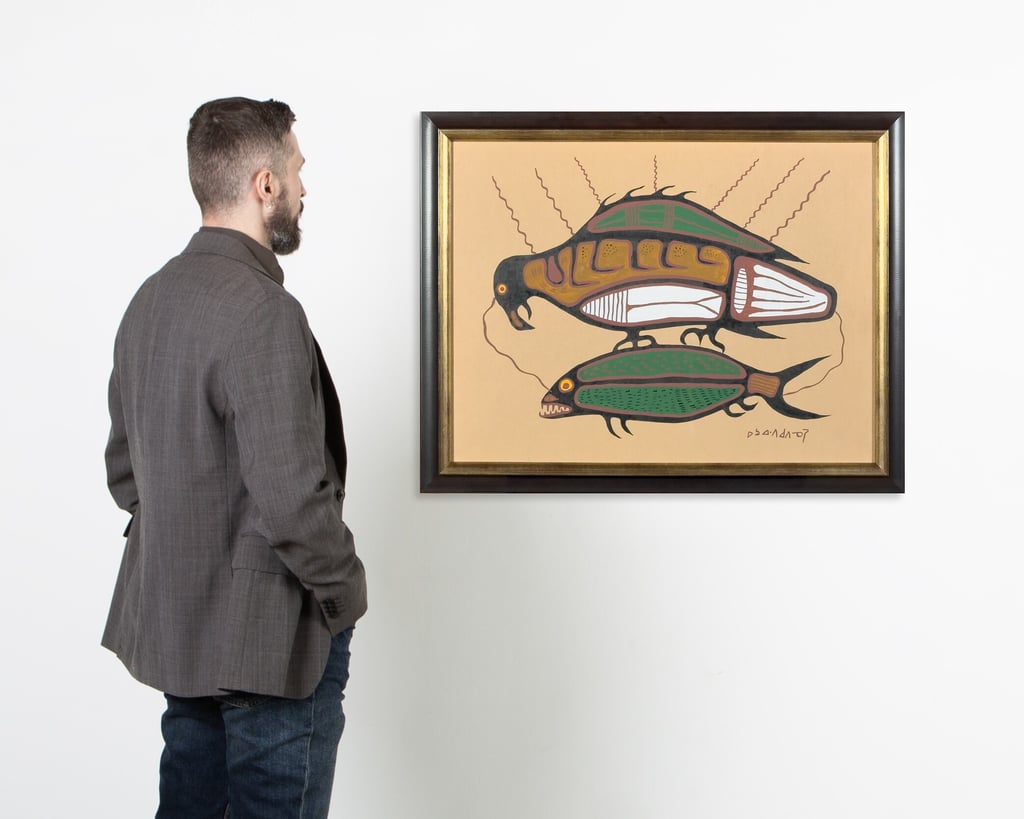
Untitled (Loon and Fish Cycle)
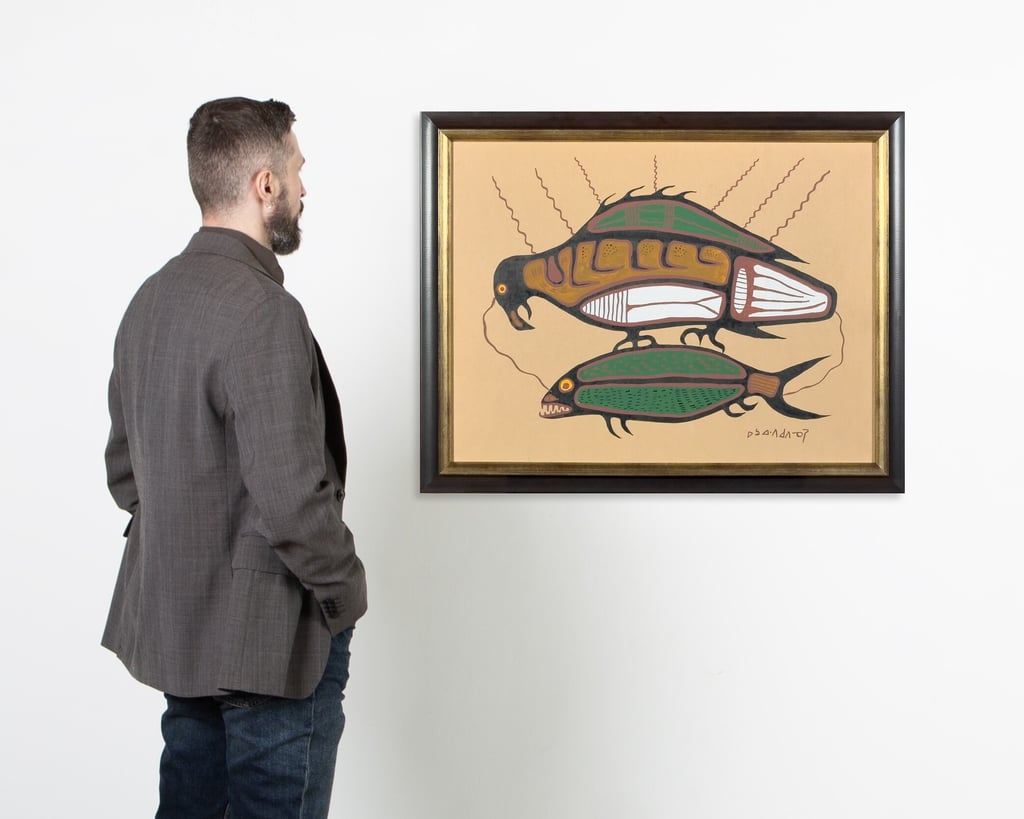
28 x 35.5 in (71.1 x 90.2 cm) including frame
Provenance:
Collection of Horst Remus, Thunder Bay; acquired from the artist directly, circa 1970;
Gift from above to Wendy Bodnar, Thunder Bay;
By decent to present Private Collection, Ontario
Analysis provided by Ritchie Sinclair:
In this painting, the Loon is elevated to a spiritual being, its hunt portrayed as a sacred ritual. With a visible, vibrating heart and radiant lines of power, the Loon enacts the eternal struggle of life and death. The fish, though humble, is bound to the Loon in a cycle of survival, spirit, and sacrifice. This is not simply predation, but a ceremony of connection and renewal. This artwork is one in a series of Norval Morrisseau paintings from the Horst Remus Collection of acrylics painted on butcher's paper. Morrisseau lived with Horst in Thunder Bay, circa 1973, and painted these during his stay there.
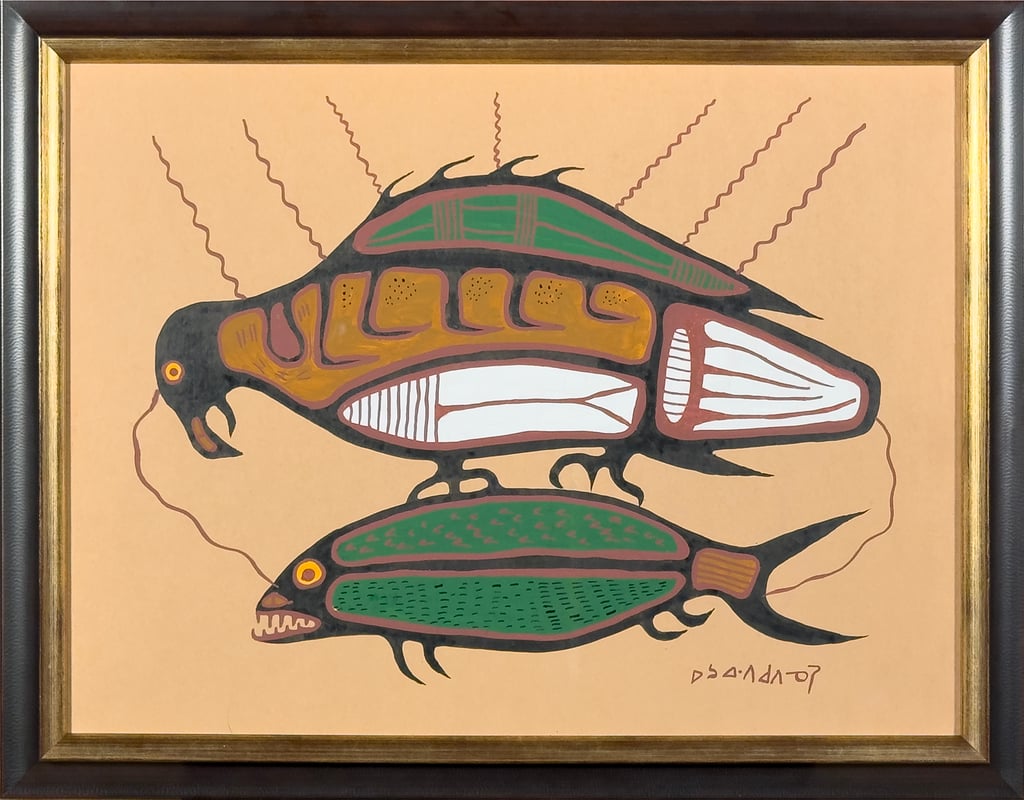
Norval Morrisseau
1931 - 2007 Order of Canada, RCA
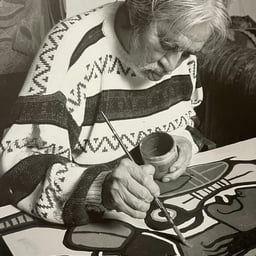
Norval Morrisseau’s work is marked by the bright colours and defining black lines of the Woodlands style, along with signing his paintings with his shaman name, Copper Thunderbird. His colour palette remained vibrant throughout his career, rarely mixing paints and working quickly with his pigments.He is referred to by some as the mishomis, (grandfather in Anishinaabemowin) of modern Indigenous Canadian art.
Born in 1932, Morrisseau expressed interest in art and learning from elders from a young age. He grew up on the Sand Point Reserve in Ontario. He left school at 10 years old, but continued drawing. Morrisseau’s vision and style remained clear throughout his career. A show of his work was displayed at the Pollock Gallery in 1962. The exhibition was the first to show an Indigenous artist in a contemporary Canadian gallery. Every single painting was sold on the first day of the show.
One of Morrisseau’s aims in his art was to create change for Indigenous people and artists in Canada. He forged a unique visual language that was shaped by Annishinabe teachings, though he was criticised for sharing sacred wisdom in his paintings. Alongside Daphne Odjig, Norval Morrisseau founded the Professional Native Artists Inc (PNAI) which came to be known as the Indian Group of 7. Its aim was to promote and support Indigenous artists throughout Canada and help shift the public’s perception of them.
Morrisseau was a complicated man and his mythology precedes him. Nevertheless, he is widely regarded as one of the finest Canadian painters to have ever lived and was hugely influential in the development of contemporary Canadian art. His work is found in museums and galleries across Canada and Morrisseau received many awards over his career, such as the Centennial Medal. He was appointed to both the Royal Academy of Canadian Art and the Order of Canada In 2006 the National Gallery of Canada organised a major retrospective of his work.
After a long battle with Parkinsons, he died in 2007 in Toronto.
More work by Norval Morrisseau