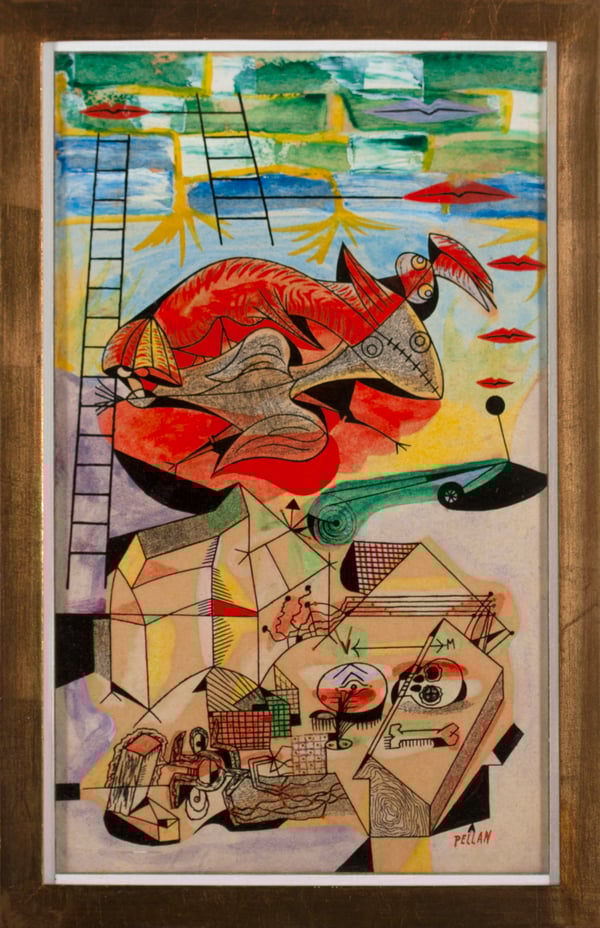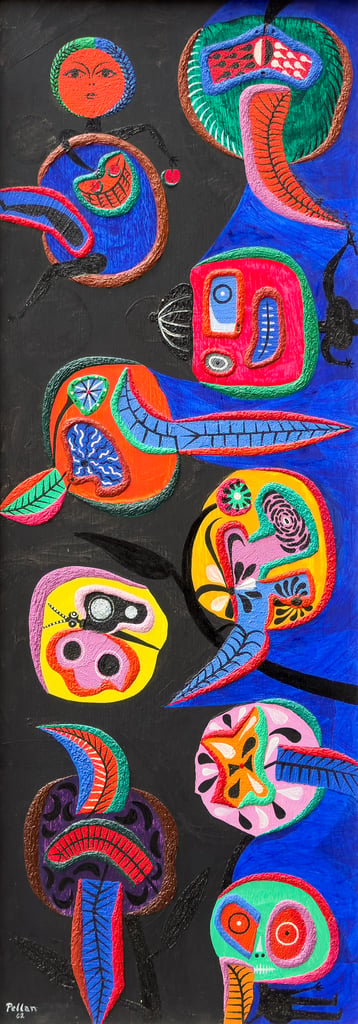
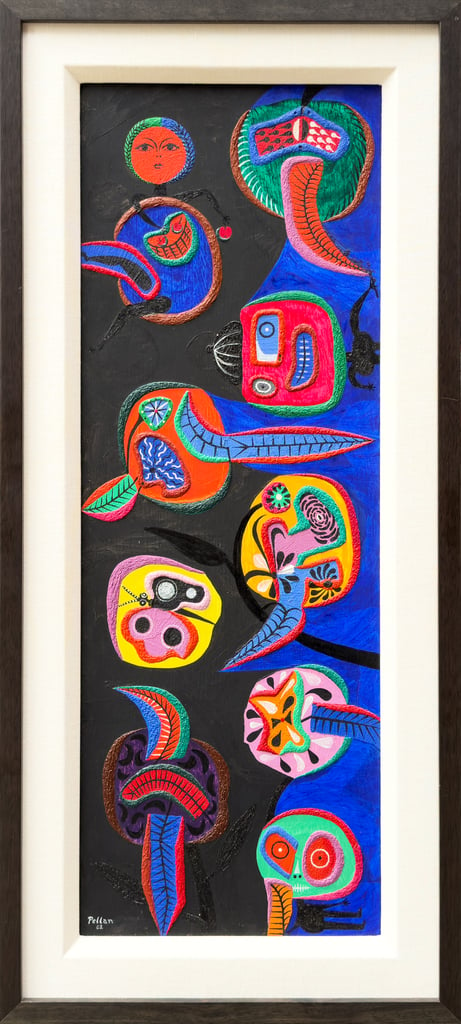
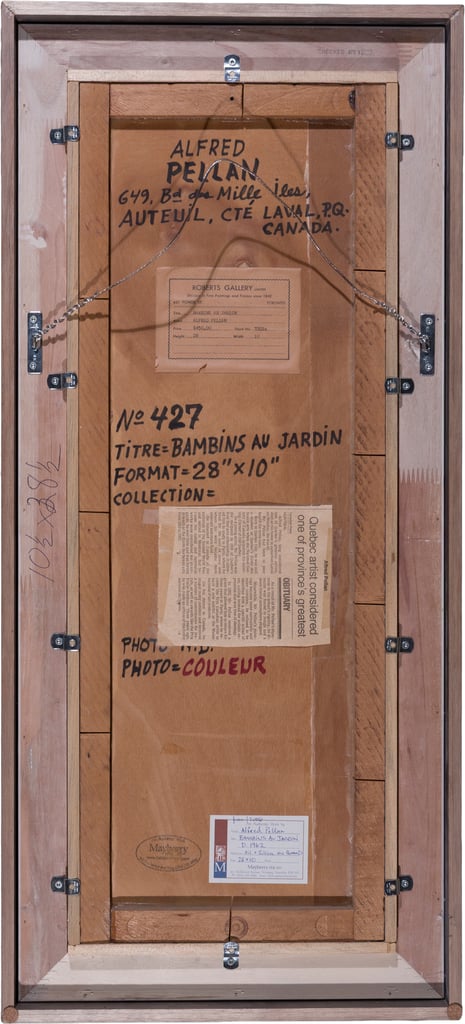
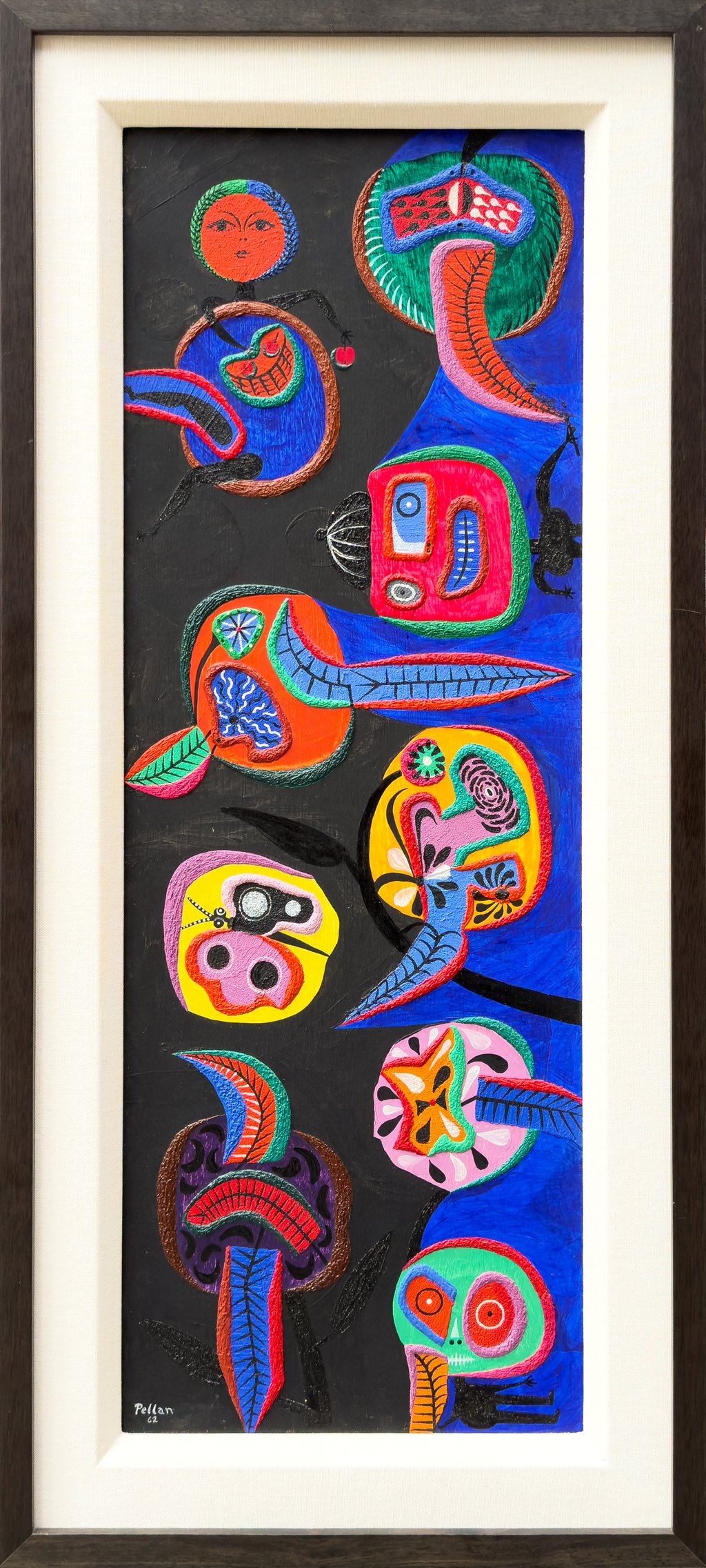
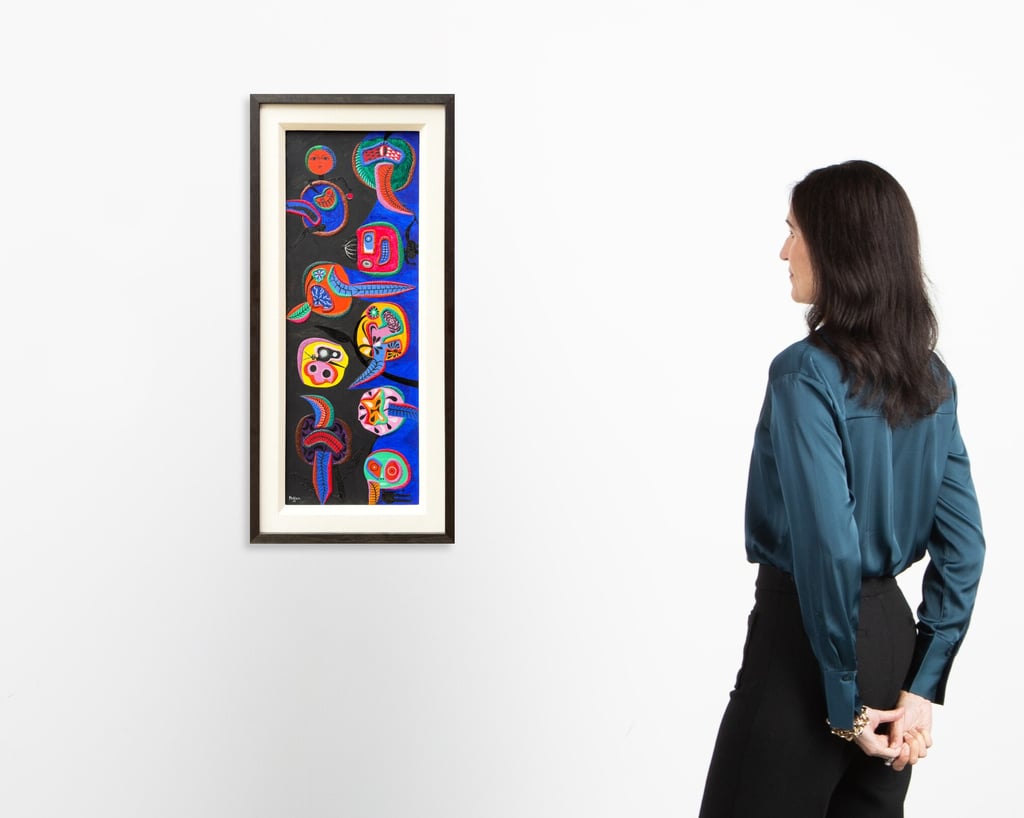
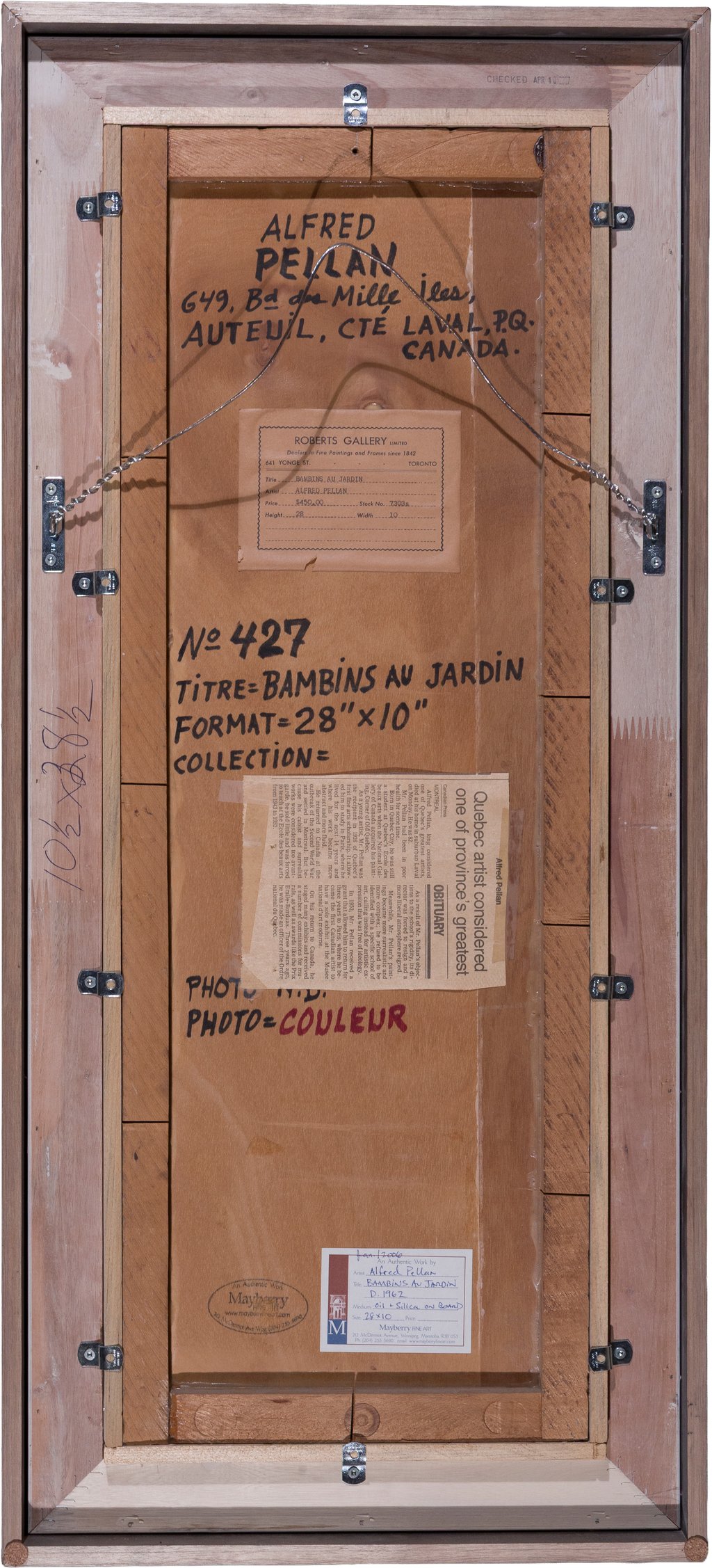
Bambins au Jardin
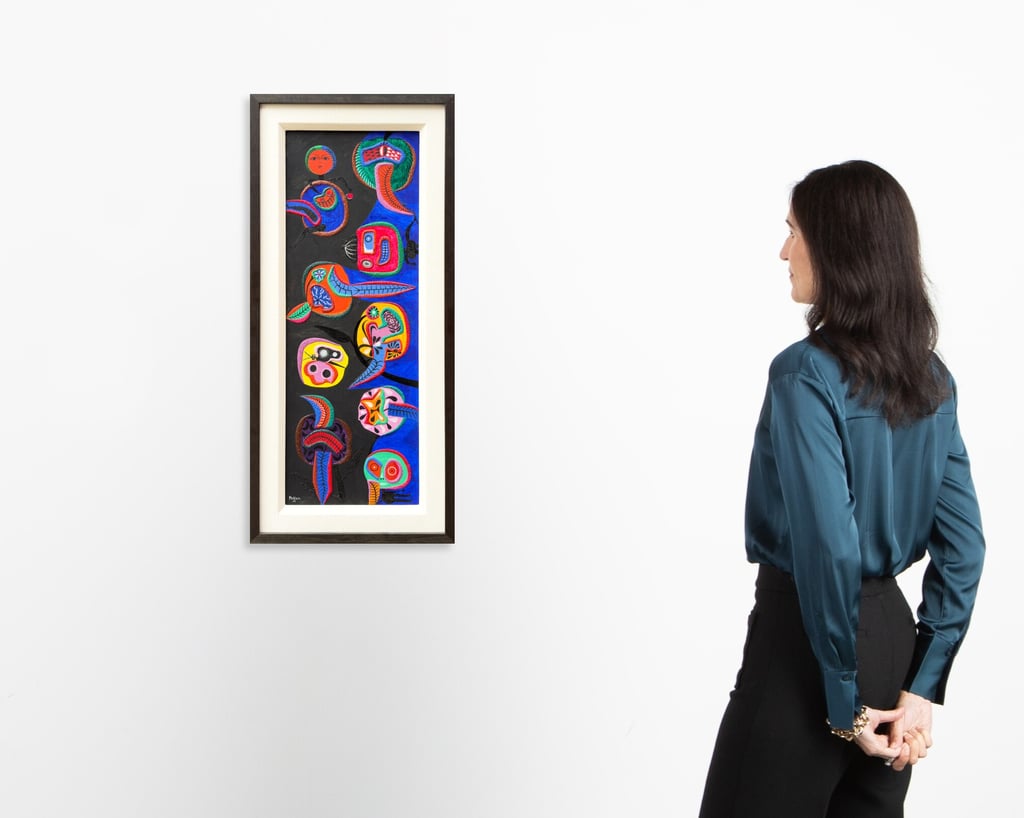
33 x 15 in (83.8 x 38.1 cm) including frame
Alfred Pellan’s prodigious talent was recognized when he was twenty and won a scholarship that gave him the chance to study in France. He left Quebec City for Paris in 1926, returned briefly in 1936 to interview for a teaching job he did not get, and returned to Paris for four more years. While abroad he worked through the history of twentieth-century French modernism on his own terms and participated in group exhibitions with Raoul Dufy, Fernand Léger and Pablo Picasso, and in 1937 had a painting acquired by Musée de Jeu de Paume (now, Musée national d’Art Moderne, Paris).
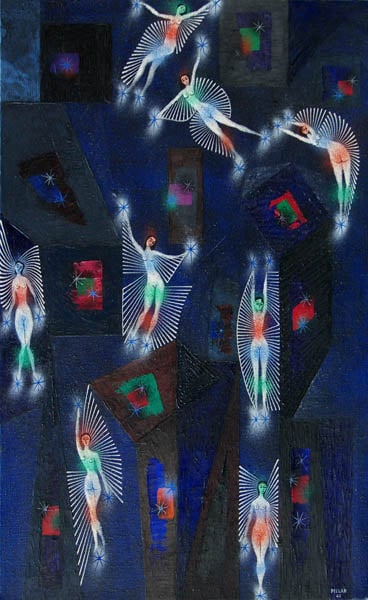
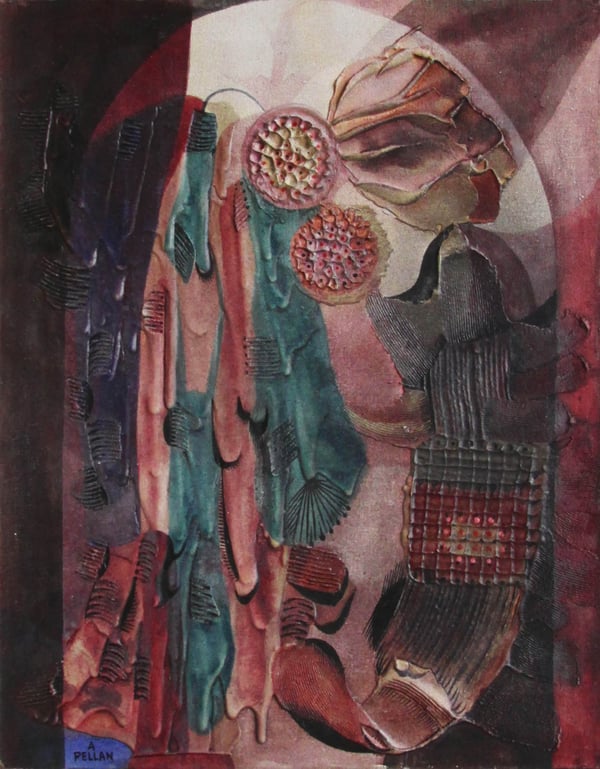
Pellan’s activity as artist and organizer of artists was ceaseless and prolific. Where his contemporaries Paul Émile Borduas and the Automatistes channeled Surrealism into abstraction with societal implications Pellan was less strident with Prisme d’Yeux. Pellan aspired for painting to address profound spiritual needs through its imagery.
When Bambins au Jardin was shown in Toronto’s Roberts Gallery in November 1964, Kay Kritzwiser’s review in The Globe and Mail quoted Pellan talking about his quest for a poetic expression of plasticity, namely the characteristic of movement within a painting, particularly into and out of the picture. He wanted vibration and vitality in his colour. With his colour pressed pure from the paint tube, sometimes mixed with silica, he succeeded in making lively paintings like Bambins au jardin that were direct, free from theorizing, and open to enjoyment.[1]
[1] Kay Kritzwiser, “Pellan: apostle of art for everybody,” The Globe and Mail (14 November 1964), p. 15.
Thank you to Gregory Humeniuk, independent art historian, consultant and curator, for contributing the preceding essay.
Alfred Pellan
1906 - 1988 RCA, CC
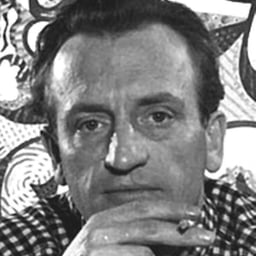
Alfred Pellan was a transformative figure in 20th-century Canadian painting and a pioneer of modern art in Quebec. Born in Quebec City on May 16, 1906, he began his formal art training at the École des beaux-arts de Québec at the age of 14. His early talent was recognized early, and in 1923, at the age of 17, the National Gallery of Canada acquired one of his paintings. In 1926, Pellan became the first recipient of the Quebec government's fine arts scholarship, which allowed him to pursue further studies at the École nationale supérieure des beaux-arts in Paris.
During his time in France, which lasted from 1926 to 1940, Pellan fully engaged with the European avant-garde. He studied the works of Surrealists, Cubists, and Fauvists, incorporating their vibrant palettes, fractured forms, and non-figurative elements into his own practice. He participated in the Parisian art scene, exhibiting alongside renowned international artists. The outbreak of World War II in 1940 compelled him to return to Montreal, where he introduced a radical modern aesthetic that challenged the conservative artistic conventions of the time.
Upon his return, Pellan became an influential educator at the École des beaux-arts de Montréal, where he advocated for artistic innovation and freedom. In 1948, he was a key signatory of the Prisme d'yeux manifesto, which called for artistic independence and an opening toward international modernism. Throughout the 1940s and 1950s, he expanded his practice beyond painting to include book illustration, costume and set design for the theatre, and mural commissions. In 1952, a research fellowship from the Royal Society of Canada enabled a second period in Paris, which culminated in a major solo retrospective of his work at the Musée d'Art moderne de la Ville de Paris in 1955.
Pellan’s career was marked by numerous honors and institutional recognition. He was named a Companion of the Order of Canada (CC) in 1967 and was a member of the Royal Canadian Academy of Arts (RCA). His work remains a staple of Canadian art history, characterized by its imaginative synthesis of Surrealist and abstract influences. Alfred Pellan died on October 31, 1988, in Laval, Quebec. His work is held in the permanent collections of major public institutions, including the National Gallery of Canada and the Musée national des beaux-arts du Québec.