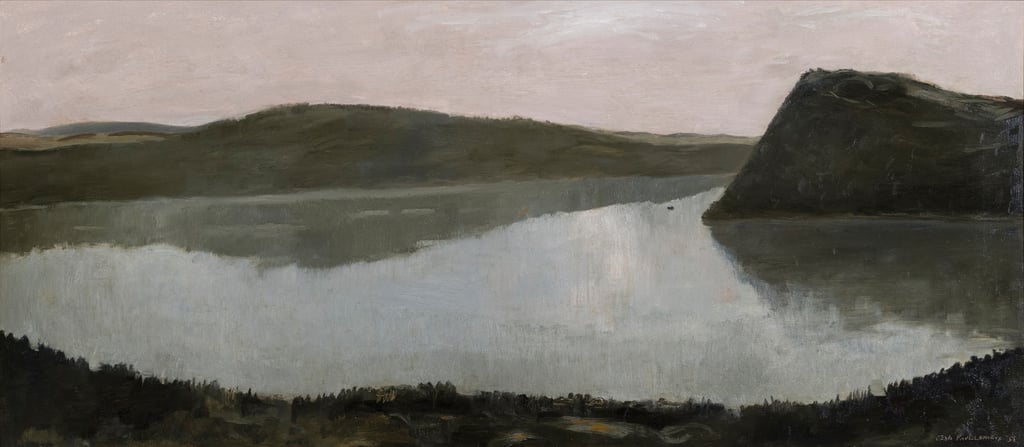
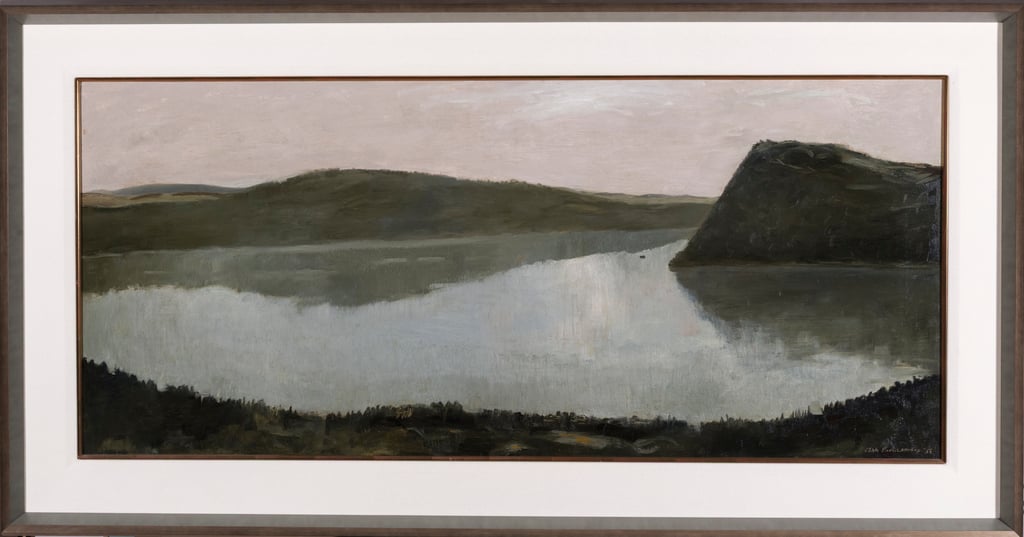
Sans Titre
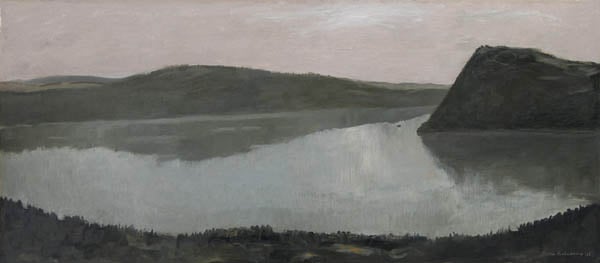
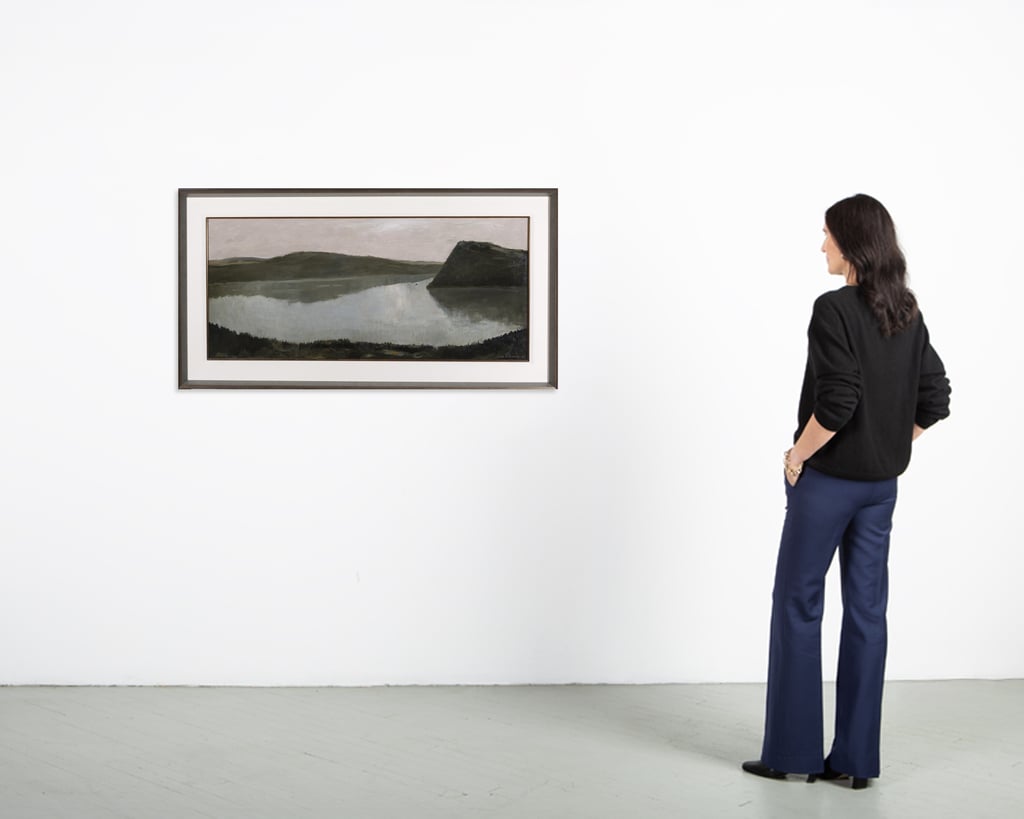
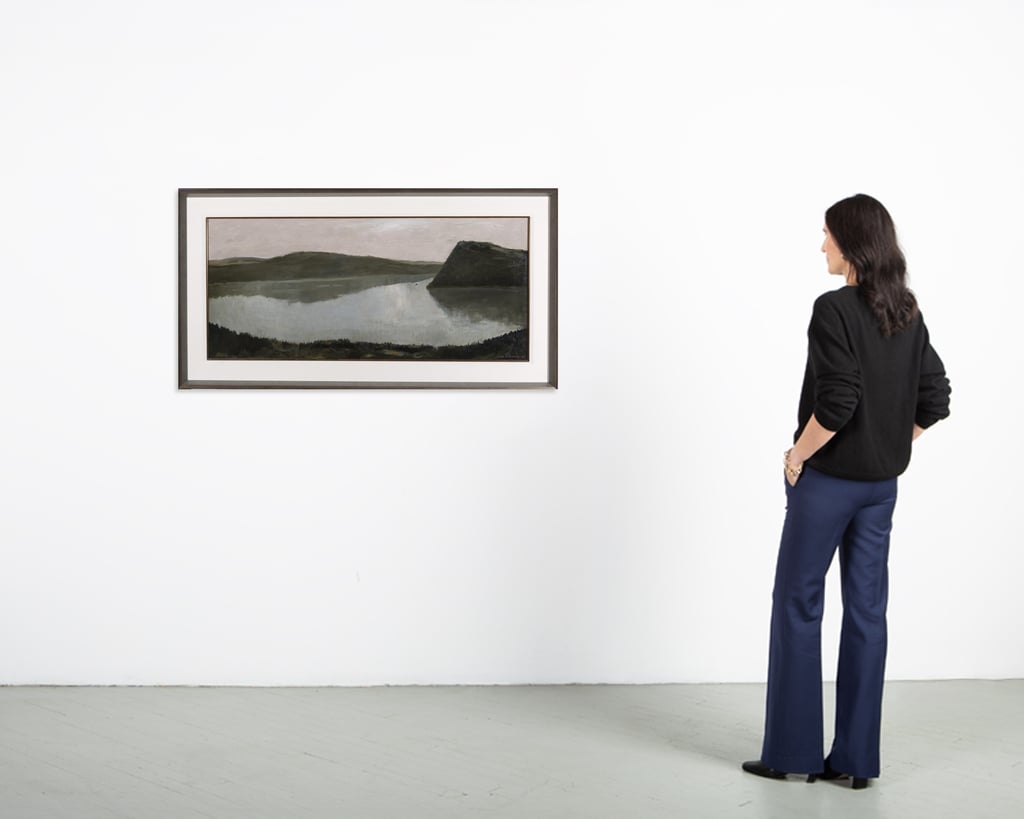
27 x 51 x 2.5 in (68.6 x 129.5 x 6.4 cm) including frame
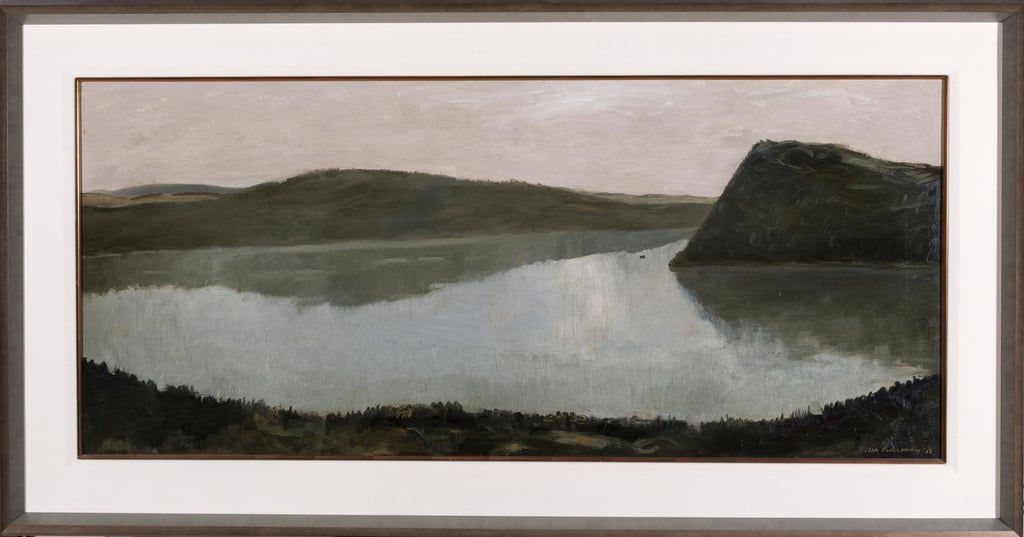
Jean Paul Lemieux is one of the most revered figures in Quebec art history, best known for his contribution to modernism through a style defined by solitude and vast, horizontal space. This 1956 oil on canvas represents a transition into his most iconic "classic period," where he abandoned traditional detail in favor of simplified, monumental forms. His landscapes often evoke a sense of timelessness and silence, reflecting the psychological depth of the Canadian North and the rural Quebec countryside. By reducing the physical world to broad bands of land, sky, and water, Lemieux captured an atmospheric stillness that became a hallmark of 20th-century French-Canadian painting.
Historically, Lemieux's importance lies in his ability to bridge the gap between traditional representation and modern abstraction. While he remained a figurative painter, his work prioritized emotional resonance over literal documentation, influencing a generation of artists in Quebec to explore identity through minimalist compositions. In this specific panoramic work, the elongated format emphasizes the scale of the environment against a small human presence—often symbolized by a distant boat or figure—highlighting the artist's career-long investigation into the themes of memory and the passage of time. His legacy remains central to the cultural heritage of Quebec, representing a unique, poetic vision of the landscape.
Jean Paul Lemieux
1904 - 1990 Companion of the Order of Canada, RCA
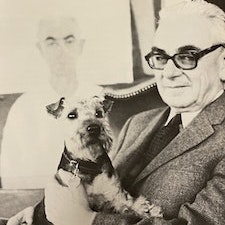
Jean-Paul Lemieux was a prominent Canadian painter, educator, and critic, widely regarded as one of the most significant figures in 20th-century Quebec art. Born in Quebec City on November 18, 1904, he spent much of his youth moving between Quebec and California. He enrolled at the École des beaux-arts de Montréal in 1926, where he studied under instructors including Edwin Holgate. Following his graduation, he traveled to Paris in 1929 to further his artistic development, an experience that introduced him to European modernism while he continued to define his personal aesthetic.
In 1937, Lemieux began a career as an educator at the École des beaux-arts de Québec, a position he held until 1965. Throughout his tenure, he exerted a profound influence on a generation of Quebec artists. His own creative work during this period evolved significantly. While his early output included genre scenes and depictions of daily life in Quebec, a trip to France in 1954 on a Royal Society of Canada scholarship prompted a shift toward a more minimalist and geometric approach.
Lemieux is best known for his mature style, which emerged in the mid-1950s. His compositions are characterized by vast, open spaces, a refined sense of color, and a recurring theme of human solitude. His paintings of isolated figures set against stark, atmospheric landscapes became his trademark, conveying a sense of silence and timelessness. Later in his career, particularly in the 1970s and 1980s, his work took on a more expressionist quality, often reflecting on human mortality and global uncertainty.
Throughout his professional life, Lemieux received extensive recognition for his contributions to Canadian culture. He was a member of the Royal Canadian Academy of Arts and was named a Companion of the Order of Canada in 1968. Major retrospectives of his work have been presented by the National Gallery of Canada and the Musée national des beaux-arts du Québec. Jean-Paul Lemieux passed away in Quebec City on December 7, 1990. His work remains represented in the permanent collections of major public institutions, including the National Gallery of Canada and the Musée national des beaux-arts du Québec.
More work by Jean Paul Lemieux