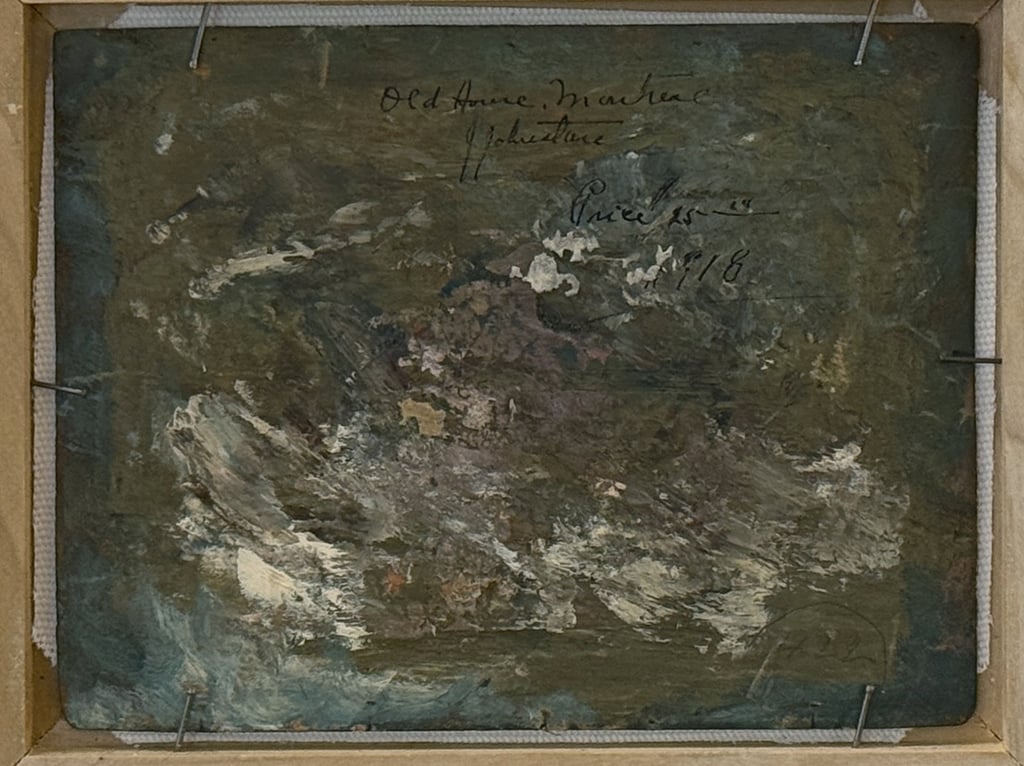
Old House, Montreal
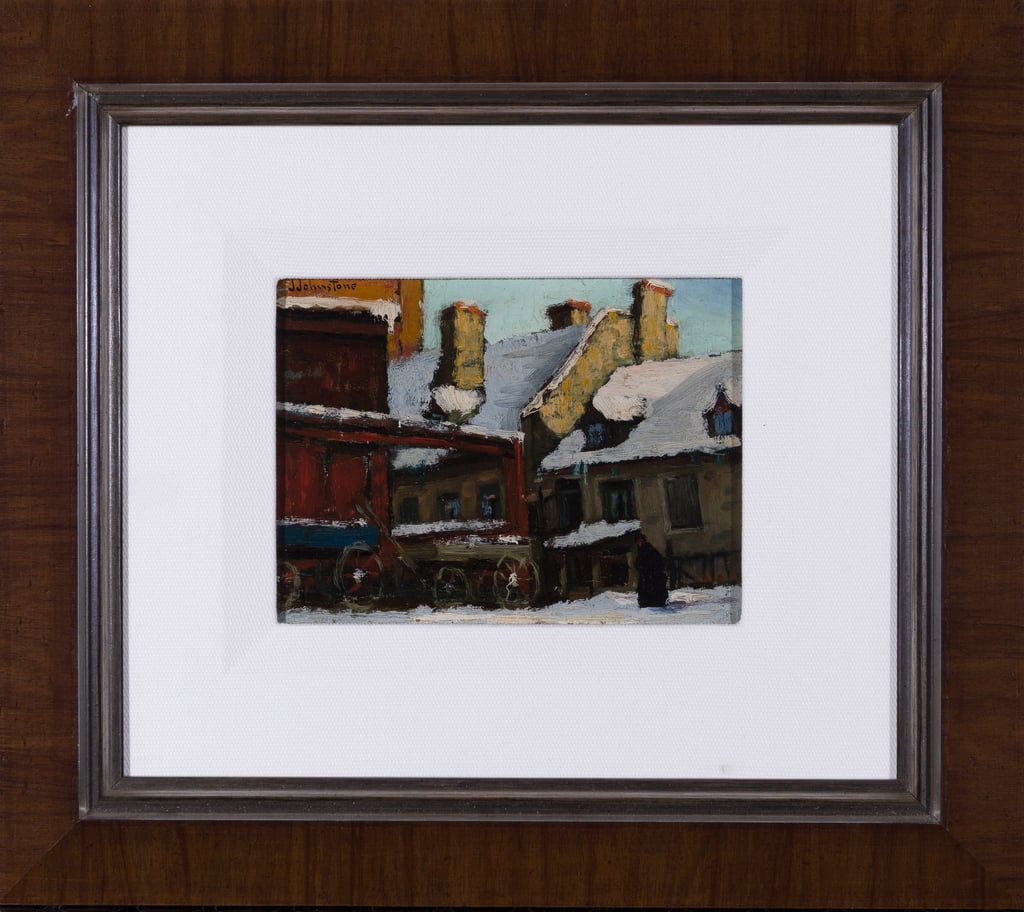
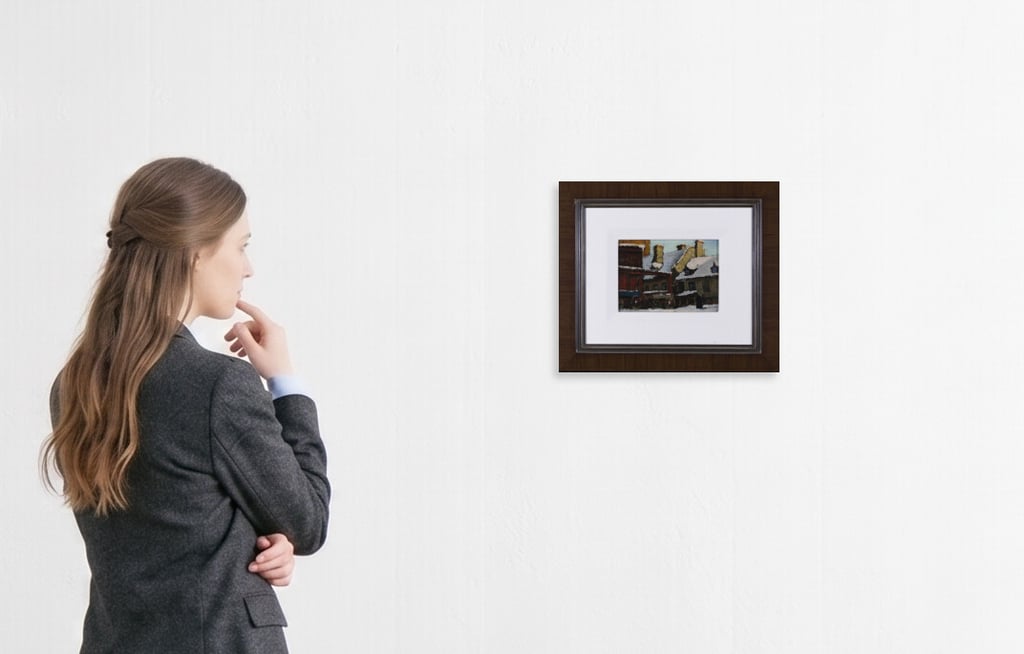
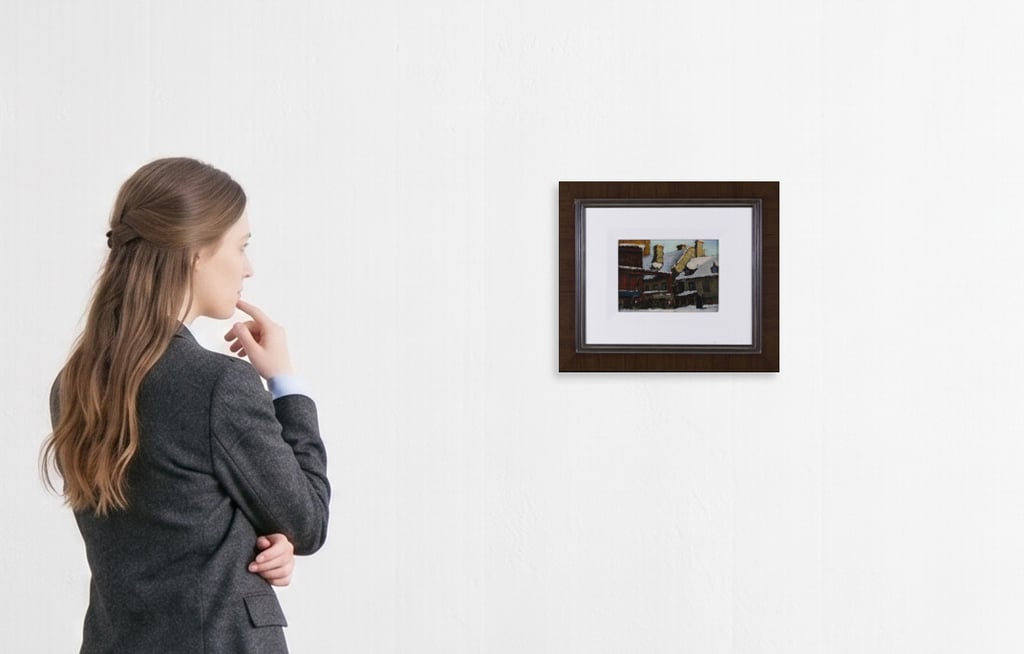
13 x 15 x 1 in (33 x 38.1 x 2.5 cm) including frame
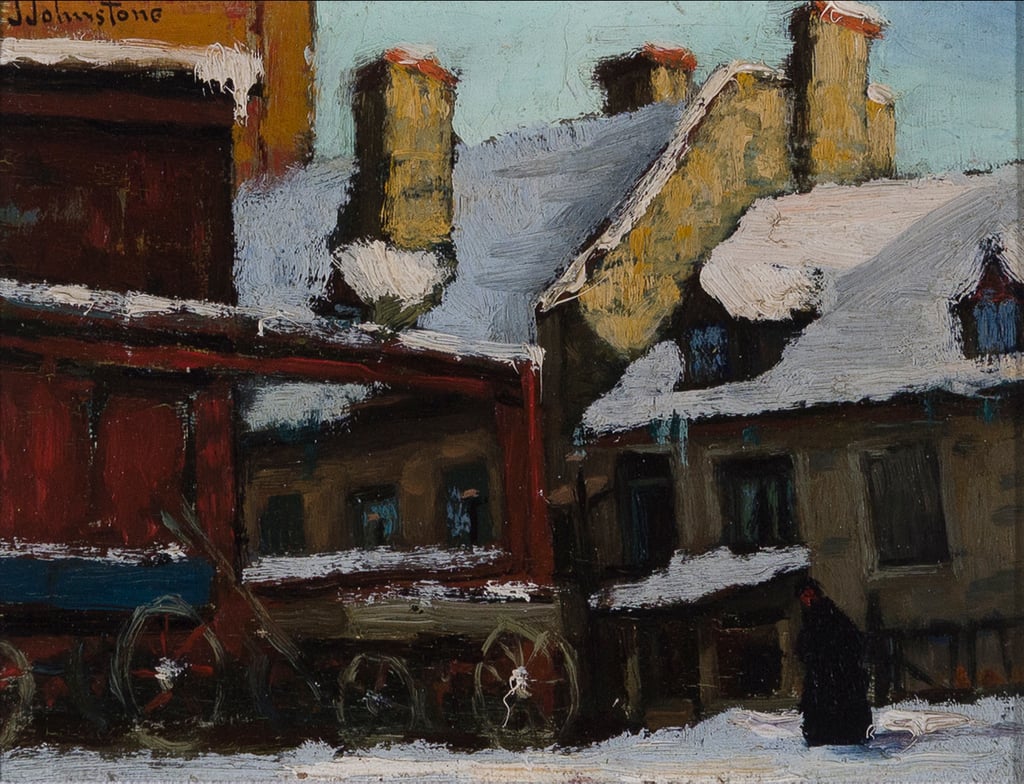
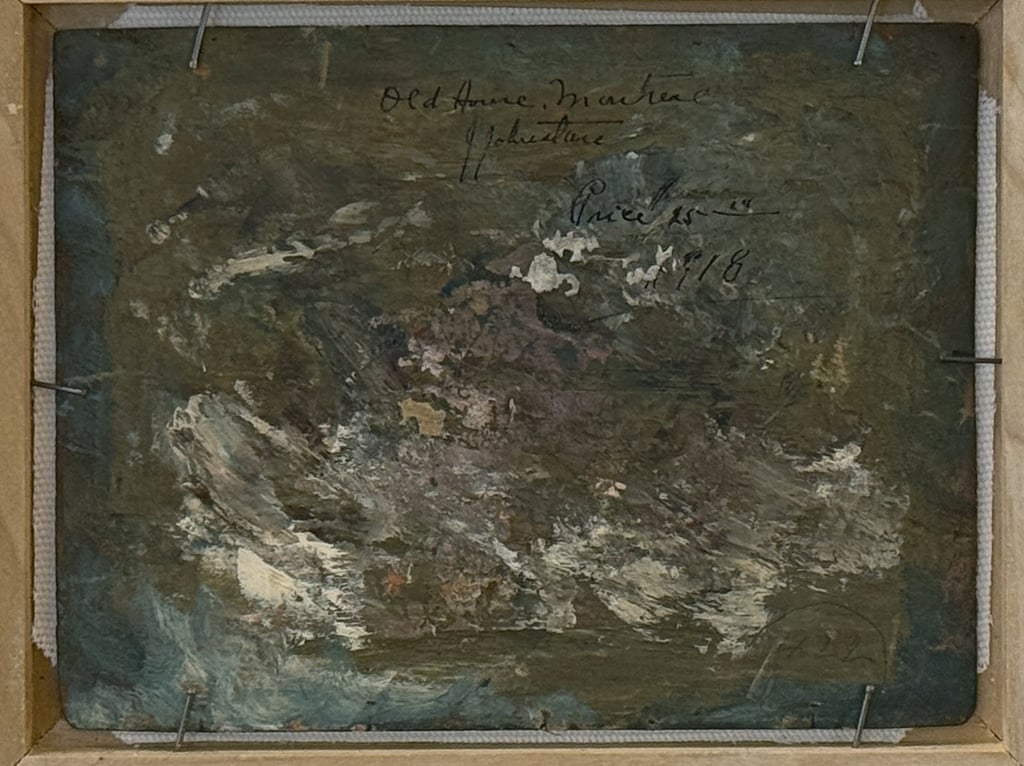
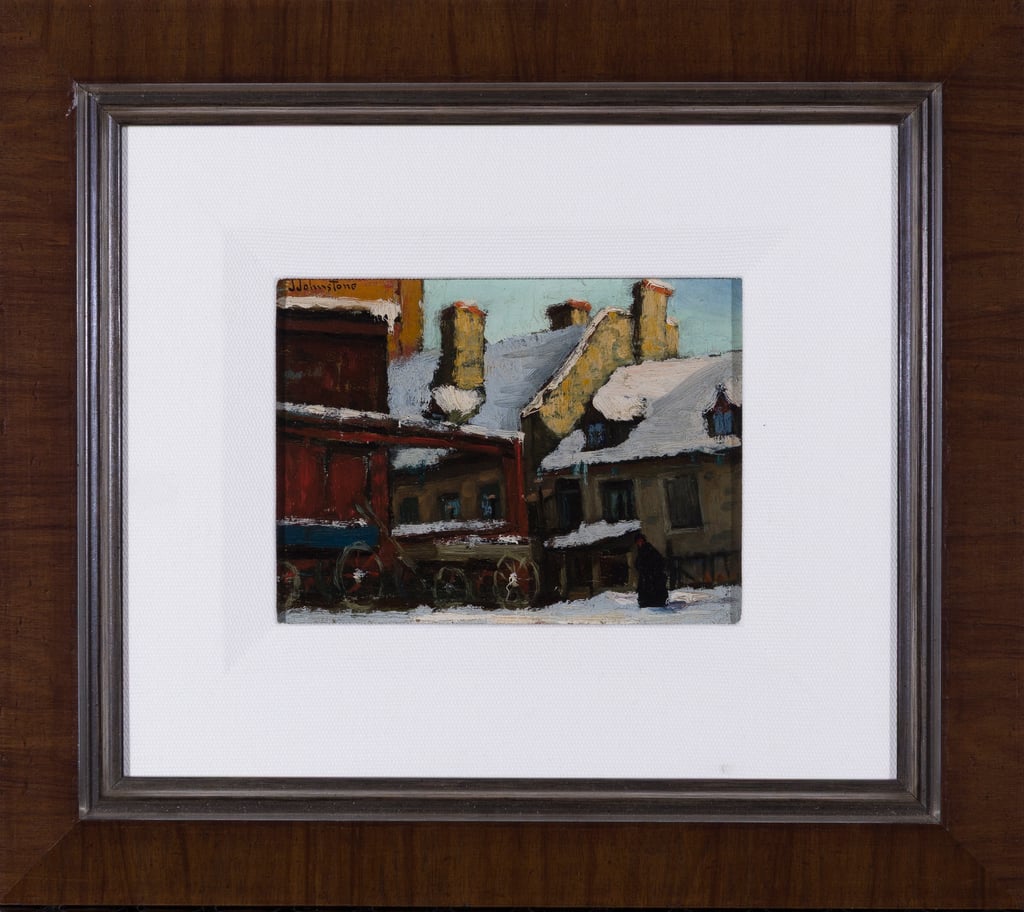
John Young Johnstone, a member of the Beaver Hall Group, was known for capturing the quiet, lived-in character of his home city. This small oil study, Old House, Montreal, feels like an intimate, firsthand glimpse into a winter day in 1918. Rather than a formal portrait of a building, it is a quick, expressive recording of heavy snow on familiar rooftops and the warm red of a cart parked on a snowy street.
The thick brushstrokes and small scale give the work a personal, sketch-like quality, as if Johnstone painted it quickly to catch the specific light of the moment. The lone figure in the corner adds a touch of human presence to the cold urban scene. It is a simple, direct observation that highlights Johnstone’s deep connection to the older, atmospheric corners of Montreal.
John Young Johnstone
1887 - 1930 ARCA
John Young Johnstone was a Canadian Impressionist painter and a significant figure in the Montreal art scene during the early 20th century. Born in Montreal on November 12, 1887, he began his formal artistic training at the Art Association of Montreal under the tutelage of William Brymner, RCA. Seeking further international experience, he traveled to Paris, where he continued his studies at the Académie de la Grande Chaumière under the guidance of Lucien Simon and Émile-René Ménard. During his time in Europe, he also visited and painted in Switzerland and Belgium, further refining his technical approach to light and atmosphere.
Upon his return to Canada, Johnstone established himself as a dedicated practitioner of landscape and genre painting. His work frequently documented the rural landscapes of Quebec and urban scenes of Montreal, including notable depictions of the city’s Chinatown. He was an active participant in the artistic community, holding memberships in the Beaver Hall Group and the Pen and Pencil Club of Montreal. In 1920, he was elected an Associate of the Royal Canadian Academy of Arts (ARCA). Beyond his studio practice, he contributed to art education in Montreal, teaching at institutions such as the Monument National between 1918 and 1928.
Johnstone’s career was marked by a distinct focus on simplified realism influenced by Impressionism, often characterized by a subdued palette and a sensitivity to the atmosphere of his subjects. While he achieved professional recognition during his lifetime, with his work acquired by the National Gallery of Canada, his later years were marked by personal instability. In 1930, he traveled to Havana, Cuba, where he died shortly after his arrival at the age of 43.
Today, his work is held in the permanent collections of major public institutions, including the National Gallery of Canada, the Musée national des beaux-arts du Québec, and the Art Gallery of Ontario. He is recognized by historians for his contributions to the development of early 20th-century Canadian modernism and his documentation of the Quebec landscape.