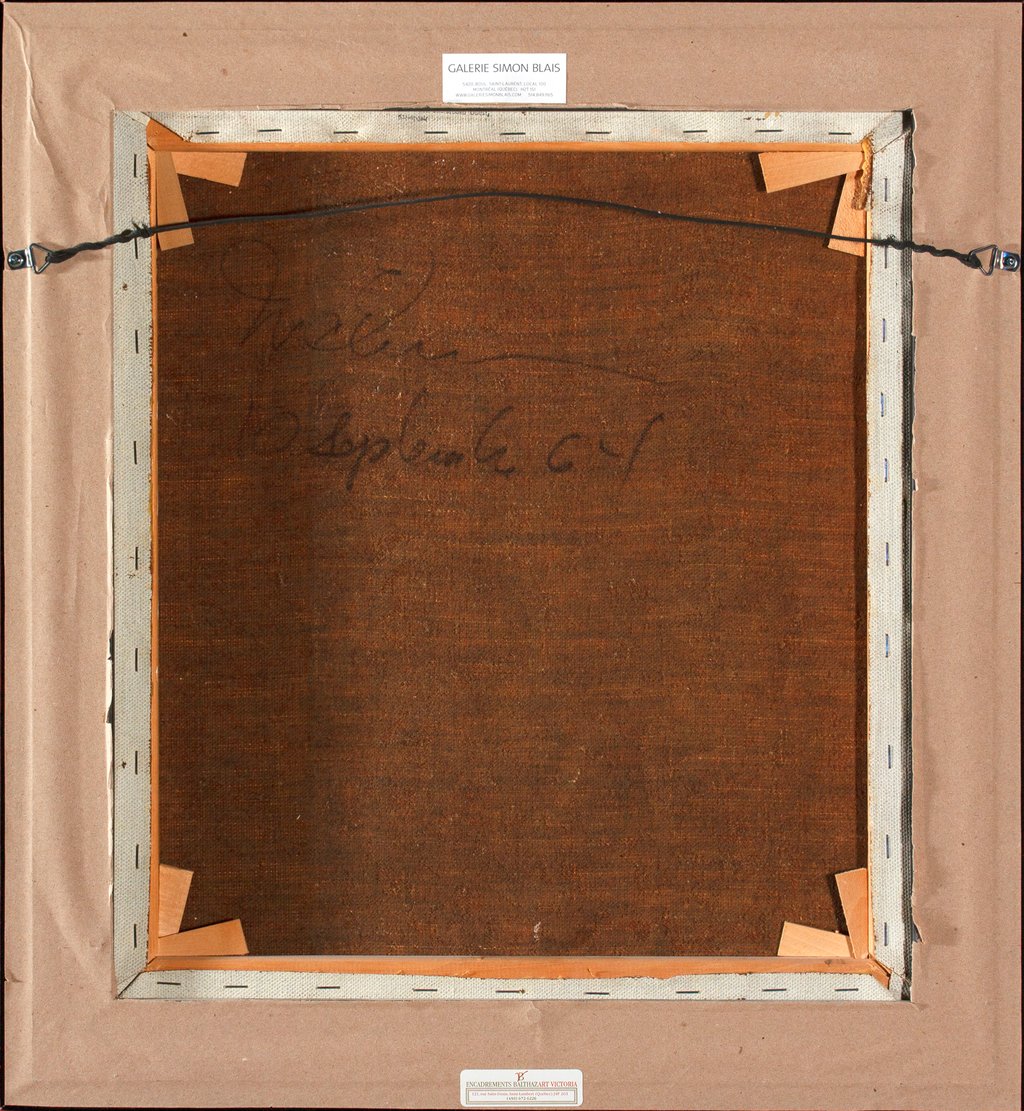
10 Septembre
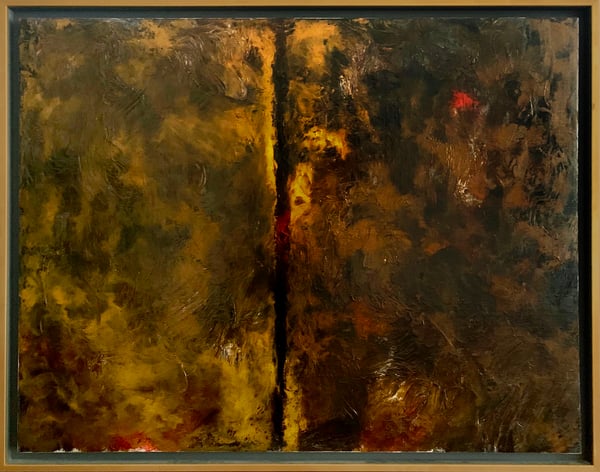
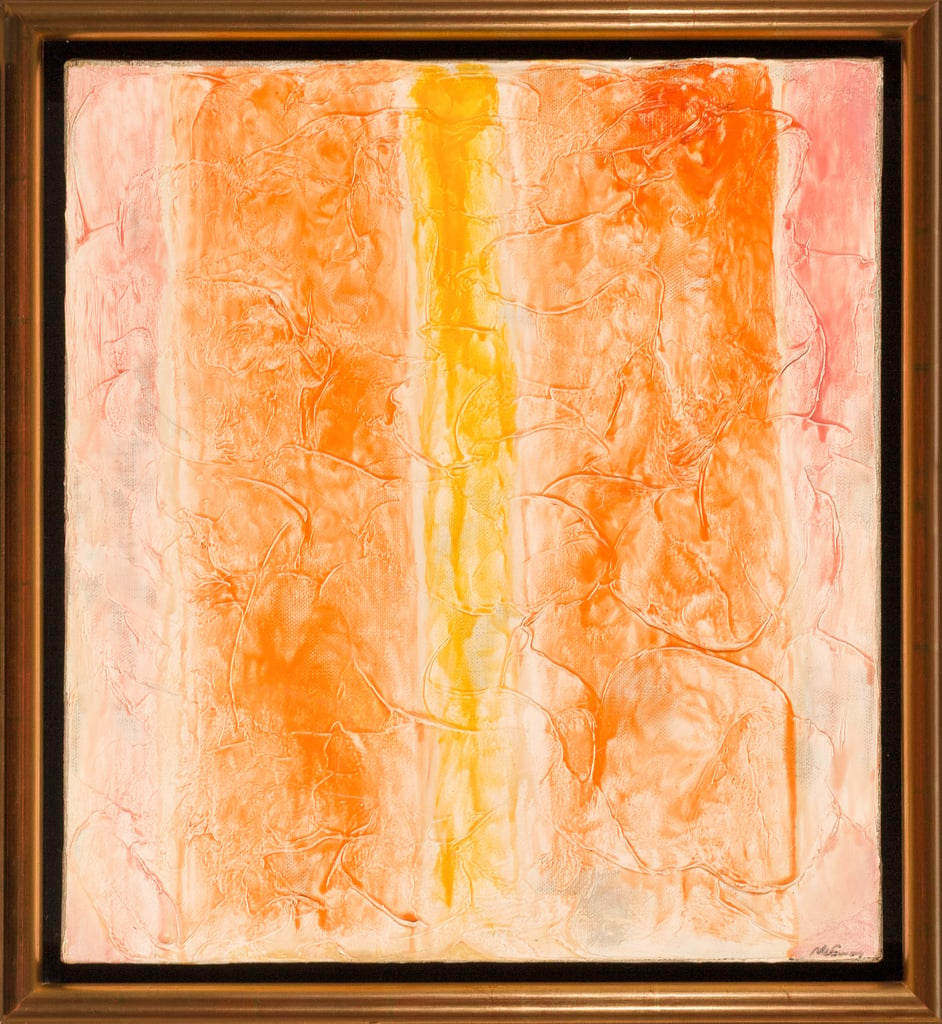
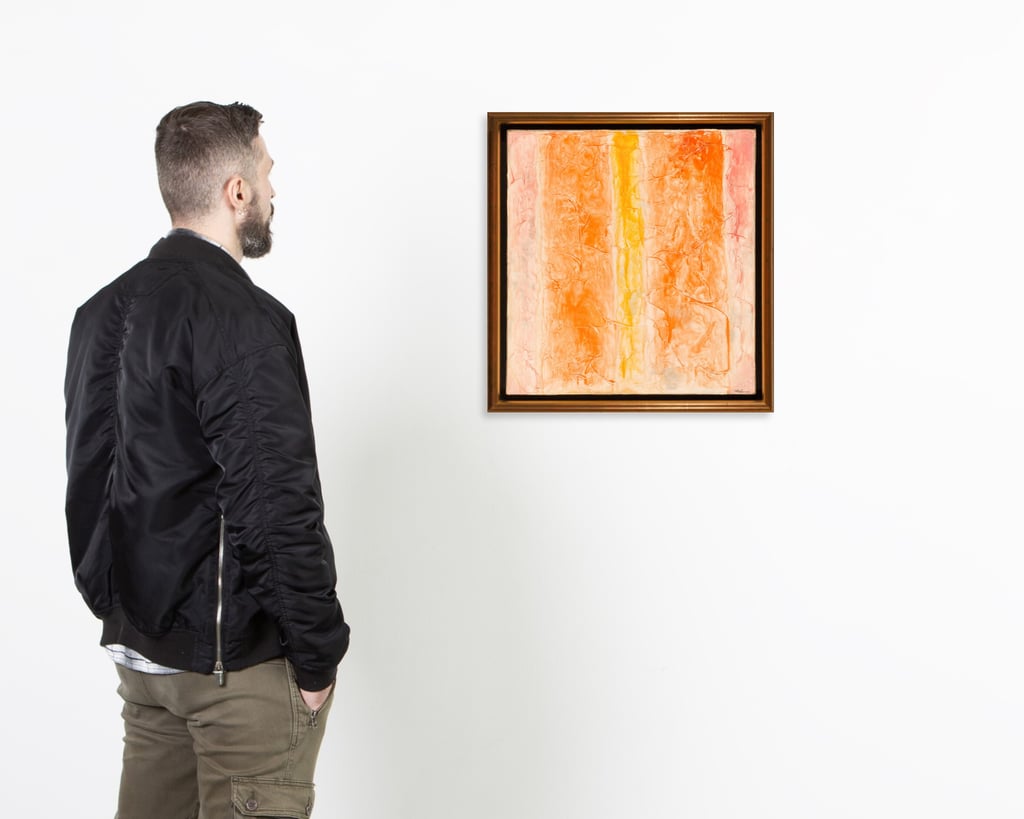
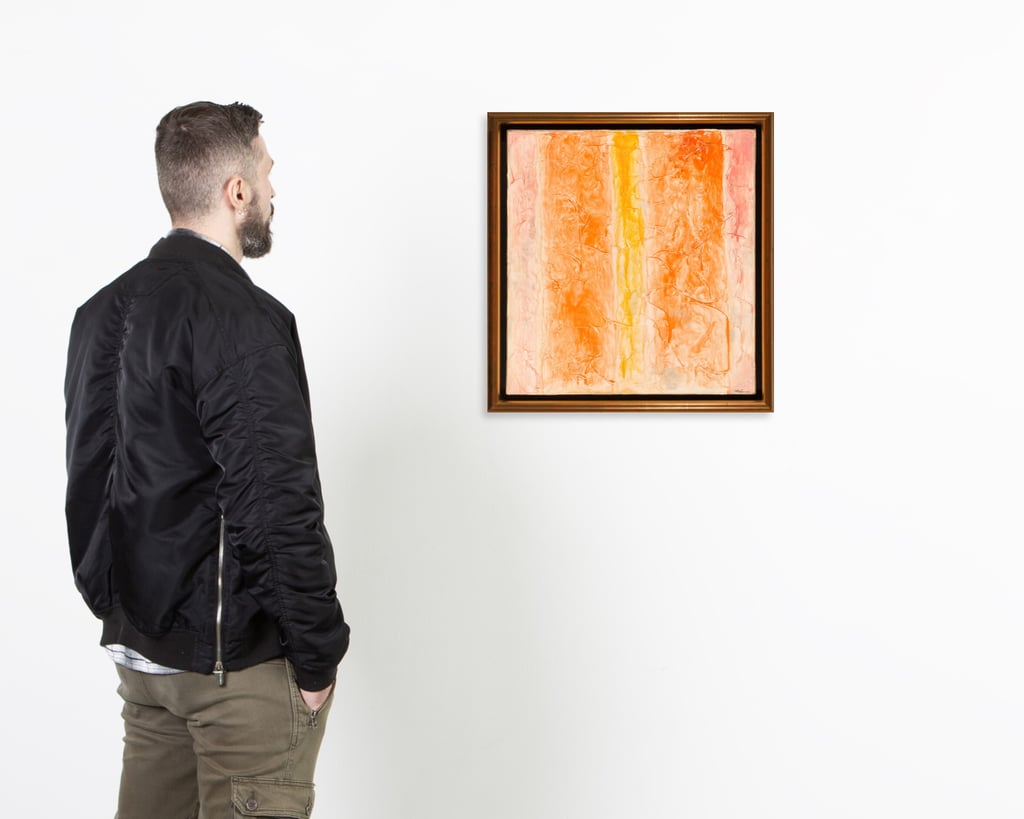
22 x 21 in (55.9 x 53.3 cm) including frame
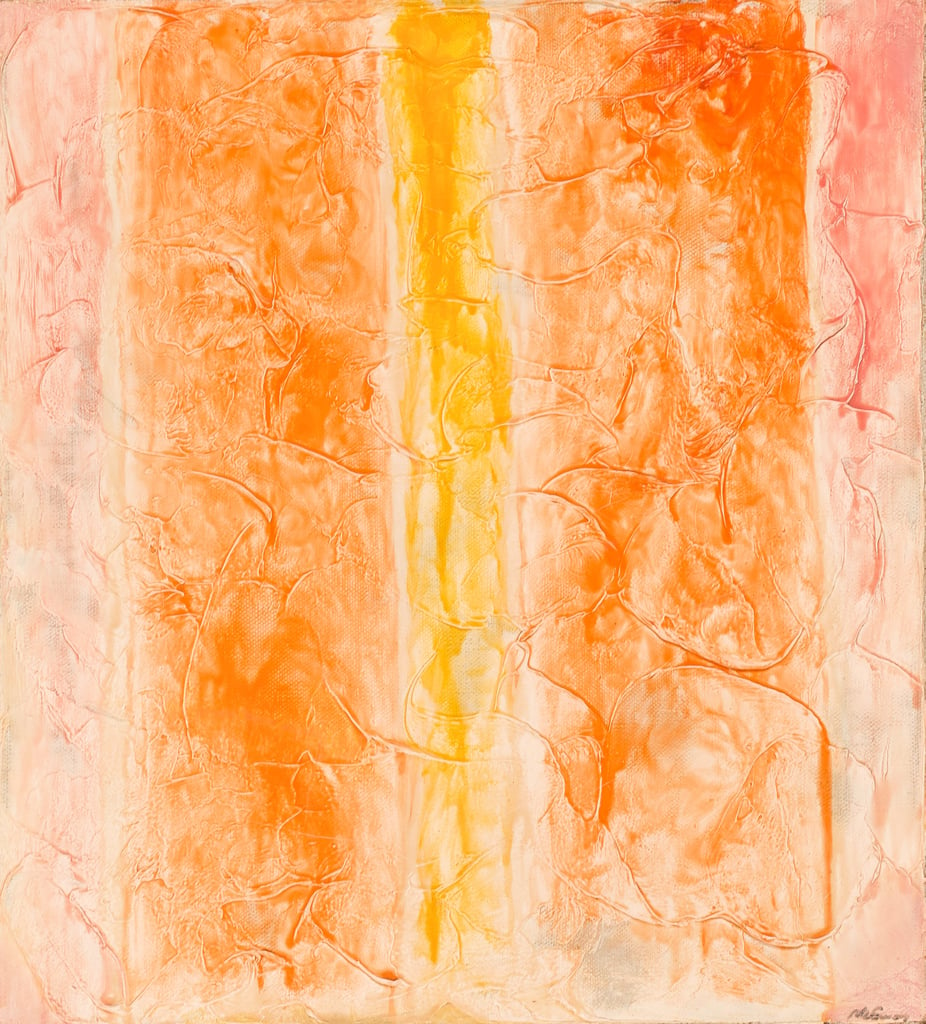
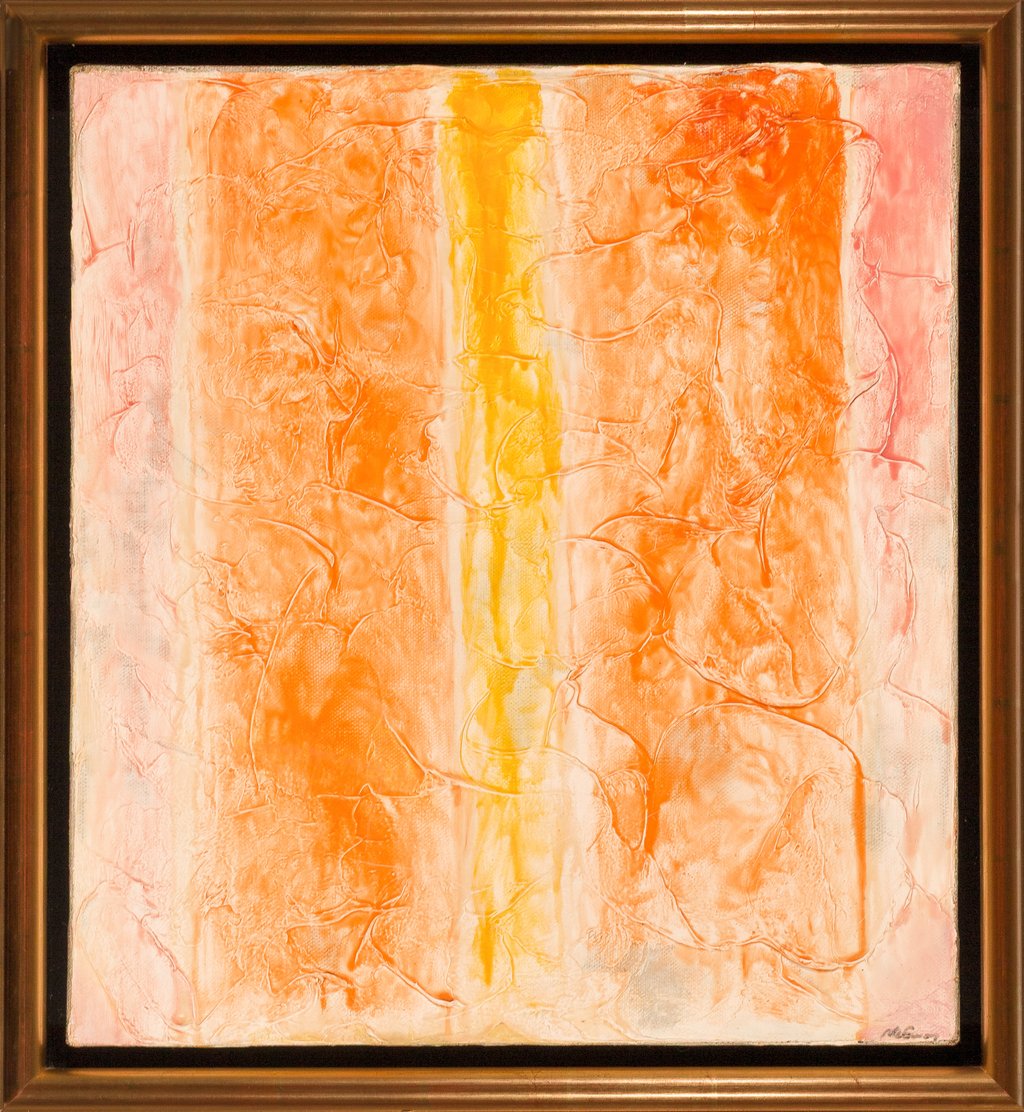
10 Septembre (1964) is a characteristic example of Jean McEwen’s exploration of color as a physical substance. The work is built around a central vertical axis, a recurring structural device in his practice, which divides the composition into soft, rhythmic columns. The palette is dominated by warm autumnal tones, with a saturated orange and yellow core that diffuses into lighter shades of salmon and off-white toward the edges of the canvas.
The surface of the painting is notably tactile, created through the application of multiple layers of oil paint. McEwen utilized a palette knife to build up an irregular impasto, resulting in a series of overlapping, petal-like ridges that catch the light. Rather than focusing on a specific subject, the work emphasizes the interaction between these translucent glazes and the varying thickness of the paint. This piece represents McEwen’s disciplined approach to abstraction in the mid-1960s, where he sought to achieve a sense of internal light through the layering and scraping of pigment.
Jean McEwen
1923 - 1999 RCA
Jean Albert McEwen was a prominent Canadian abstract painter born in Montreal, Quebec, on December 14, 1923. He initially pursued a career in the sciences, graduating with a degree in pharmacy from the University of Montreal in 1949. During his studies, he developed a significant interest in poetry and visual arts. His early paintings were accepted into the Montreal Museum of Fine Arts Annual Spring Exhibitions in 1949 and 1950, which marked the beginning of his professional artistic trajectory.
Encouraged by Quebec artist Paul-Émile Borduas, McEwen traveled to Paris in 1951, where he lived for three years. During this time, he formed professional associations with artists such as Jean-Paul Riopelle and Sam Francis. This period of European travel allowed him to visit major museums and engage with the contemporary art scenes in France, Spain, and Italy, which deeply influenced his approach to non-figurative painting and color theory.
Upon returning to Montreal, McEwen became a central figure in the development of Canadian abstract art. He joined the Association des Artistes Non Figuratifs de Montréal in 1956 and served as the organization's president in 1960. His career was marked by a commitment to the exploration of color, light, and texture, often layering opaque and translucent paint to create complex, atmospheric surfaces. In 1964, he was elected an Associate of the Royal Canadian Academy (RCA).
Throughout his career, McEwen received significant institutional recognition. In 1966, the National Gallery of Canada organized a major touring exhibition featuring his work alongside that of Harold Town. He also completed notable public commissions, including a stained glass mural for Sir George Williams University (now Concordia University) and a mural for Place des Arts in Montreal. Retrospectives of his work were presented by the Musée d'art contemporain de Montréal in 1973 and the Montreal Museum of Fine Arts in 1987.
Beyond his studio practice, McEwen contributed to the academic community, teaching at the Université du Québec à Trois-Rivières from 1980 to 1985 and at Concordia University from 1983 to 1995. In 1998, he was awarded the Prix Paul-Émile Borduas, the Government of Quebec's highest honor in the visual arts. McEwen passed away in Montreal in 1999. His work remains represented in major permanent collections, including the National Gallery of Canada and the Musée d'art contemporain de Montréal.